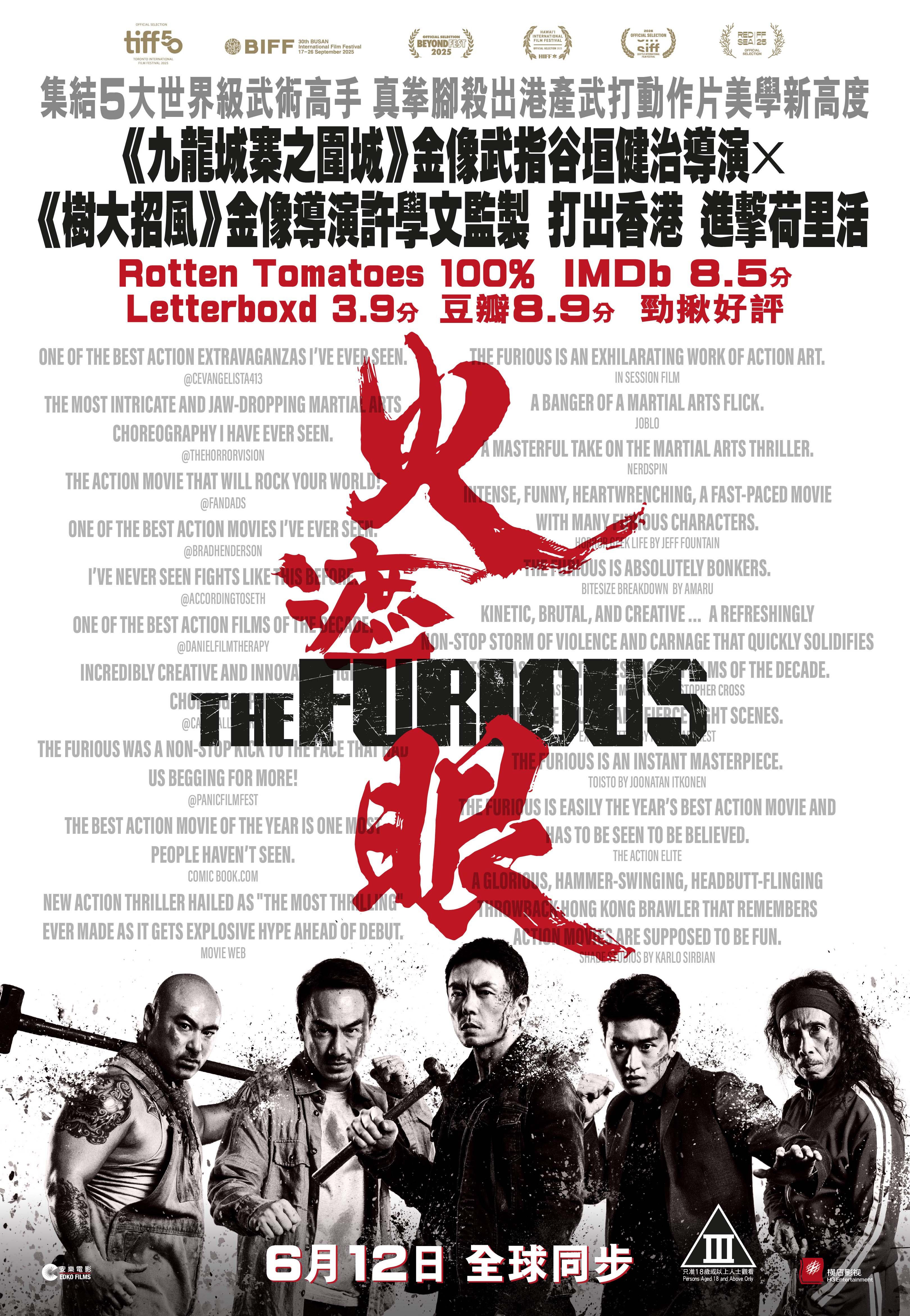
Directed by: Kenji Tanigaki || Produced by: Bill Kong, Frank Hui, Shan Tam
Screenplay by: Mak Tin-shu, Lei Zhilong, Shum Kwan-sin, Frank Hui || Starring: Xie Miao, Joe Taslim, Yang Enyou, Jeeja Yanin, Brian Le, Joey Iwanaga, Yayan Ruhian
Music by: Elliot Leung, Olivia Xiaolin, Flying Lotus || Cinematography: Meteor Cheung || Edited by: Chris Tonick || Country: Hong Kong || Language: English, Mandarin, Filipino
Running Time: 113 minutes
My taut relationship with Hong Kong cinema in general and its much respected action canon in particular amuses me. Besides science-fiction “creature features” (e.g. Alien [1979, 1986, 2024], Predator [1987, 1990, 2010], Godzilla [2014, 2016, 2021], Kong [2005, 2017] etc.), uncensored, no-holds-barred action films are my preferred genre cinema. Hong Kong holds a special place in the action genre’s development from the 1970s through at least the 1990s given its unique cultural development and freedom of expression compared to other ethnic Han Chinese nation-state(s). Auteurs from Quentin Tarantino to the Wachowskis to Gareth Evans to Edgar Wright to Chad Stahelski, to name a few, reference the works of John Woo, Jackie Chan, and others depending on how much slow-motion cinematography, gunplay, and hand-to-hand combat choreography their screenplays require.
Despite that history, my personal interest in the storied movements of Hong Kong action is limited outside of Woo and more recent auteurs like Johnnie To; the fantastical set-pieces of wuxia (e.g. Crouching Tiger, Hidden Dragon [2000], Hero [2002], House of Flying Daggers [2004]) are of complete disinterest to me, while the fabled library of star-writer-director Chan comes across more as a collection of hyper-athletic physical comedies rather than straightforward action movies.
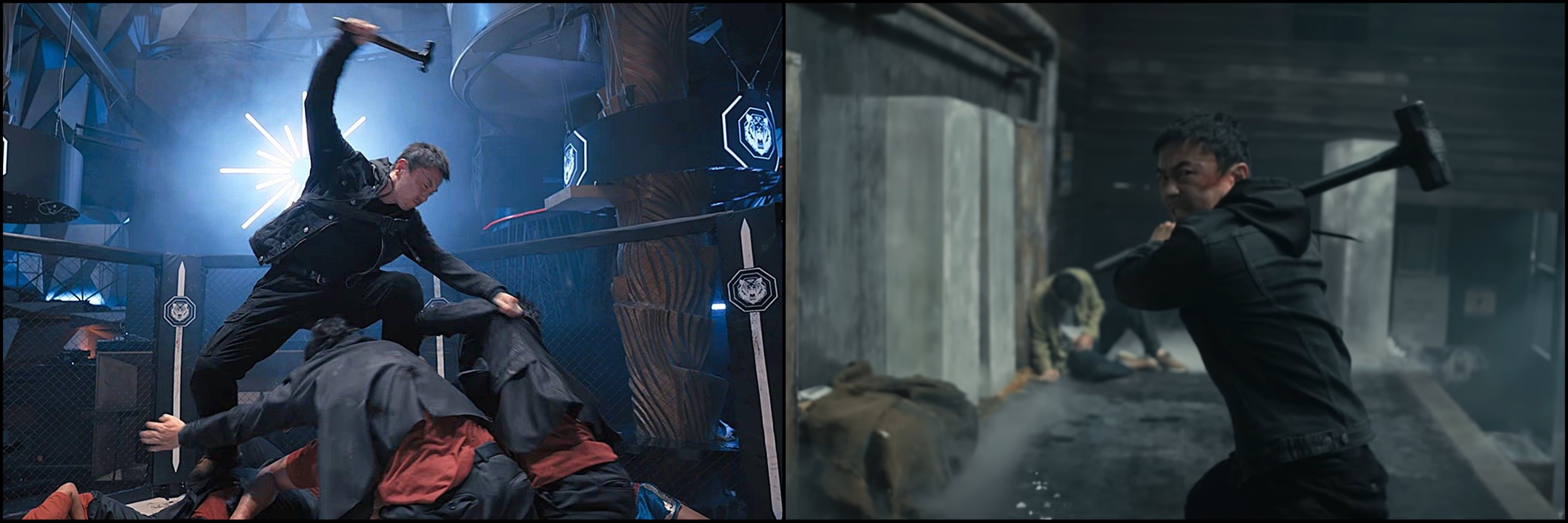
Fun times with hammers: Xie Miao adds spice to The Furious’ relentless fisticuffs with a ball-peen hammer in a mixed martial arts club (left) and a sledgehammer in an ice factory (right). The film peaks in the latter sequence, allowing Xie one of his few opportunities to emote after discovering evidence his daughter may have died.
Given the decline of the Hong Kong film industry overall throughout the past 30 years or so, cinephiles who still reference the region as the gold standard for contemporary action filmmaking always sound out of touch to me in light of the resurgence of adult-oriented Hollywood action films, the Indonesian New Wave, and modern Korean cinema. I was surprised, therefore, when The Furious crossed my radar given both its throwback kung fu film aesthetics and international cast, the latter of which include alumni of the Indonesian action darling, The Raid (2011; Joe Taslim and Yayan Ruhian). The movie’s Japanese director, Kenji Tanigaki, is also worth spotlighting, as his career spans productions across Hong Kong, Hollywood, and his native Japan as stunt coordinator and/or action director for films like Legend of the Wolf (1997; Donnie Yen’s directorial debut), The Princess Blade (2001; Shinsuke Sato’s directorial debut), Blade II (2002), and the Rurouni Kenshin (2012, 2014, 2021) films. The Furious, by contrast, is only Tanigaki’s third film as director and his second Hong Kong production.
Dated in ways both good, bad, and in between, Tanigaki’s The Furious recalls elements of the surprise successes that were Gareth Evans’ The Raid and Chad Stahelski and David Leitch’s John Wick (2014). The Furious boasts action choreography as complex, if not more so, than either of those features, but I maintain that action filmmaking complexity is not necessarily equivalent to action filmmaking quality. That philosophy may sound heretical to many genre acolytes, including and especially Hong Kong action fans, but The Furious’ sheer lack of action variety and its repetitive final showdown did not amaze this particular action junkie. Combine all the above with bad dubbing, forgettable villains, and a dull protagonist who doesn’t speak a word (Xie Miao), and you get a hyperspecialized action experience that drags whenever the fists don’t fly.
So what explains the almost universal critical and audience acclaim the film has received? On the one hand, The Furious features multiple bonkers set-pieces that garner considerable mileage from their fast-paced, intricate hand-to-hand combat. What the film lacks in terms of overall action diversity (i.e. practically no gunplay or vehicle chase elements of any kind), it doubles-down in creative production-locations, fun melee weaponry (mallets and sledgehammers galore,), and buttloads of stuntmen. You won’t find any dull, unmotivated one-on-one fights here a la Ip Man (2008) or Xtreme (2021), nor any cornball mumbo jumbo about martial arts honor, dumb training montages, and least of all, showy acrobatics and “backflip porn” a la the Star Wars prequels (1999, 2002, 2005) and Ong Bak (2003). In other words, I appreciated The Furious almost as much for the genre cliches in which it did not indulge as for the action strengths it did show off.
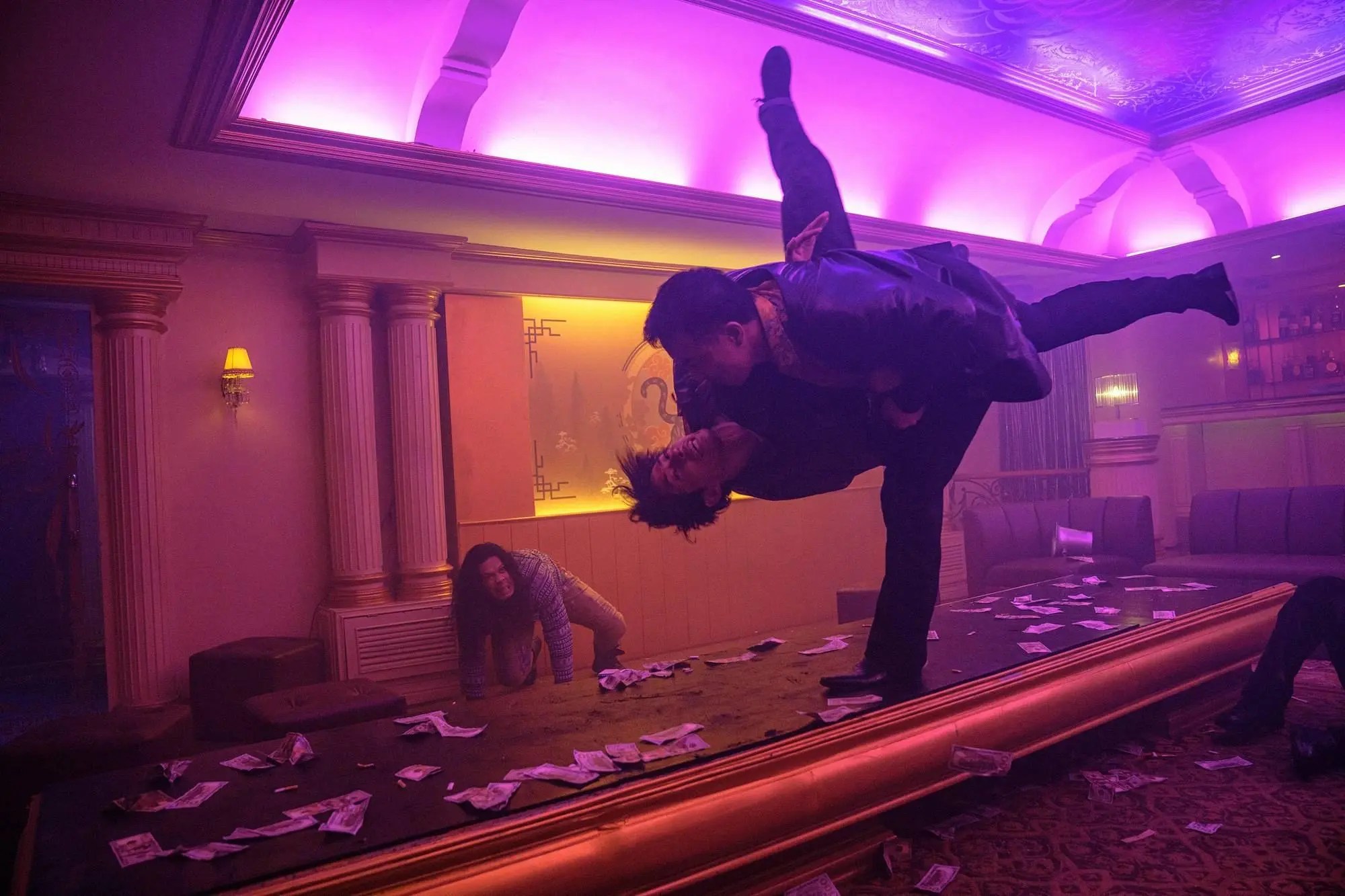
Joe Taslim’s standing judo combat style contrasts with the kung fu background of his costar, lead Xie Miao.
All in all, The Furious has enough narrative momentum to work for most general audiences and more than enough action filmmaking tenacity to appeal to most action fans. I maintain my general disinterest in the Hong Kong action canon, however, despite my overwhelming personal affection for action movies in general, as the style of cinematic violence featured here is too one-note for my tastes. That being said, one cannot deny director Kenji Tanigaki’s vision nor the gnarly physical grit of its main castmembers. The cinematic style of The Furious never apologizes for itself and delivers on the passionate emotion of its title.
———————————————————-
SUMMARY & RECOMMENDATION: Lead Xie Miao is no Jorma Tommila from Sisu (2022, 2025; a much more effective mute action star), and you’ll find little action variety here a la my preferred Indonesian New Wave features (e.g. The Night Comes for Us [2018], The Shadow Strays [2024]), new millennium Korean cinema (e.g. The Man from Nowhere [2010], Night in Paradise [2020], Ballerina [2023], The Witch [2018]), the versatile nuttiness of Shinsuke Sato (e.g. Alice in Borderland [2020, 2022], I Am a Hero [2015]), and the John Wick gun-fu off-shoots (e.g. Extraction [2020, 2023]), let alone the emotional resonance of a film like Kill [2023]… but what The Furious does well, it does extremely well. Its scrappy close-quarters-combat set-pieces thrust the ho-hum narrative from one act to the next, with propulsive stunts and dedicated extras making the action spectacle feel tactile and relatable within a lived-in setting.
— However… as I have indicated, the story and characters of The Furious, even when grading their personality on the action movie-curve, are nothing to write home about. Xie Miao in particular has the screen presence of a brown paper bag, which dulls the impact of the movie’s nearly 20-minute long finale, at least for yours truly.
—> All problems I have with the film aside, The Furious is too good at what it does best to not RECOMMEND to most viewers.
? Speaking of dated qualities, that end credits hip-hop track by Captain Murphy, Flying Lotus, et al. feels straight out of the 2000s.


Discussion
No comments yet.