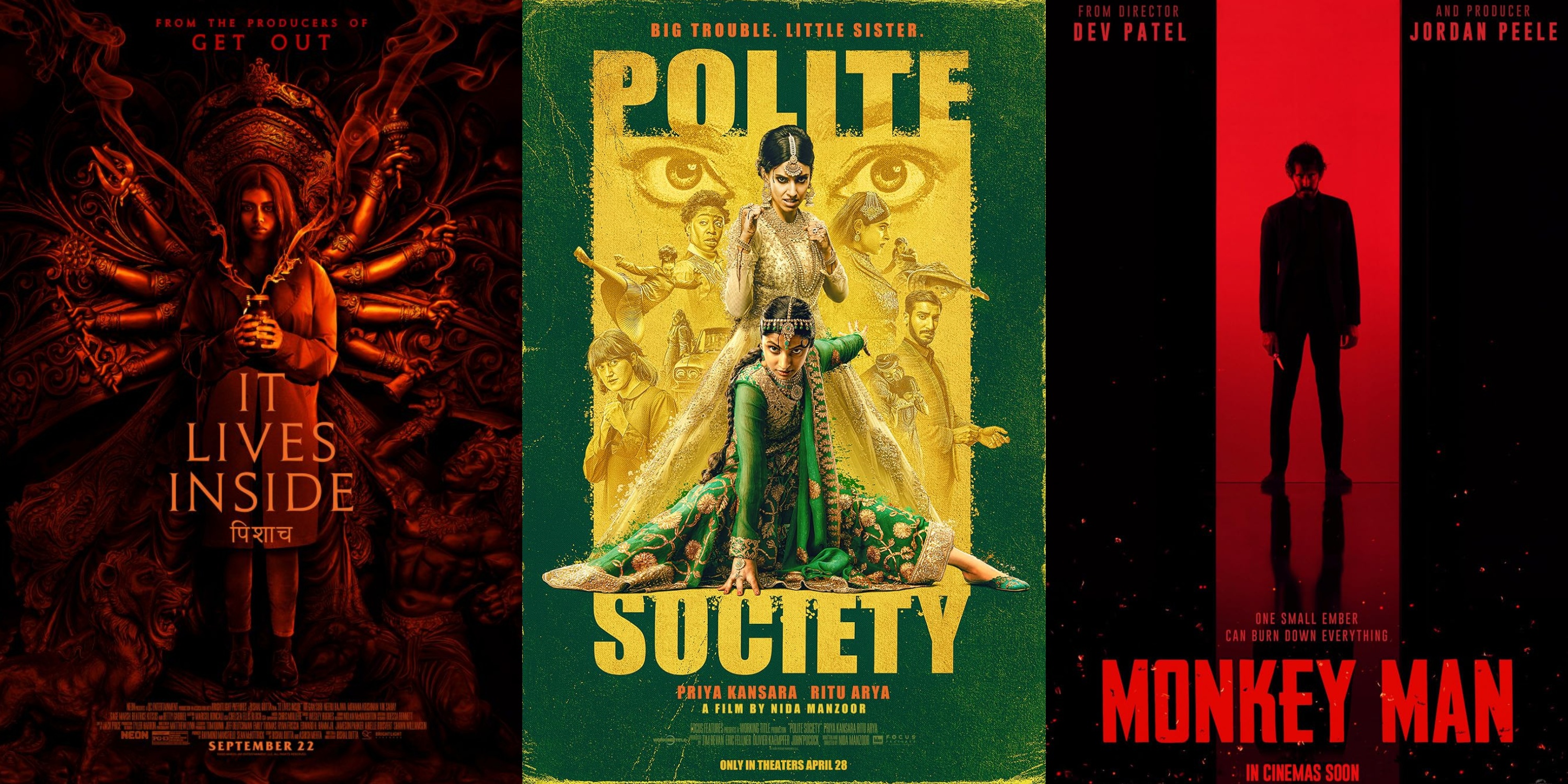
Directed by: Bishal Dutta [1], Nida Manzoor [2], Dev Patel [3] || Produced by: Raymond Mansfield, Sean McKittrick [1], Tim, Bevan, Eric Fellner, Olivier Kaempfer, John Pocock [2], Dev Patel, Jomon Thomas, Jordan Peele, Win Rosenfeld, Ian Cooper, Basil Iwanyk, Erica Lee, Christine Haebler, Sam Sahini, Anjay Nagpal, Abhinath Maurya [3]
Screenplay by: Bishal Dutta [1], Nida Manzoor [2], Dev Patel, Paul Angunawela, John Collee [3] || Starring: Megan Suri, Neeru Bajwa, Mohana Krishnan, Vik Sahay, Gage Marsh, Beatrice Kitsos, Betty Gabriel [1], Priya Kansara, Ritu Arya [2], Dev Patel, Sharlto Copley, Pitobash Tripathy, Vipin Sharma [3]
Music by: Wesley Hughes [1], Tom Howe, Shez Manzoor [2], Jed Kurzel [3] || Cinematography: Matthew Lynn [1], Ashley Connor [2], Sharone Meir [3] || Edited by: Jack Price [1], Robbie Morrison [2], Dávid Jancsó, Tim Murrell, Joe Galdo [3] || Country: United States, Canada [1, 3], United Kingdom [2] || Language: English
Running Time: 99 minutes [1], 104 minutes [2], 121 minutes [3] || 1 = It Lives Inside, 2 = Polite Society, 3 = Monkey Man
In my review of M. Night Shyamalan’s Trap (2024), I mentioned how much I preferred Shyamalan’s genre film (re: mostly psychological thriller)-background to the semi-autobiographical dramas many second-generation American or US immigrant directors released throughout the 2010s-2020s. The hyper-specific cultural subject-matter of films like Brooklyn (2015), Crazy Rich Asians (2018), or Best of the Best (2026), not to mention long-form television series like Fresh Off the Boat, (2015-2020) rarely, if ever, connect with me; they seem to rely more on the subjective cultural merit of their premises rather than the artistic merit of their cinematography, editing, or screenplays. The filmography of genre filmmakers like the Pondicherry-born, Pennsylvania-raised Shyamalan, on the other hand, seem appropriately judged according to the cinematic effectiveness of their stories.
I therefore took a risk and strode somewhat outside my comfort zone when exploring the likes of It Lives Inside, Polite Society, and Monkey Man this year. On the one hand, the former and the latter are both straightforward genre films (Inside is horror; Monkey Man is action), while Polite Society is an absurdist action-comedy drama in the style of Everything, Everywhere, All at Once (2022). All three films’ narratives are heavily rooted in their filmmakers’ immigrant family-backgrounds, however, to the point where I suspected a large degree of the critical praise surrounding them was akin the bonkers debut of Get Out (217) by Jordan Peele, a film about which my opinion has cooled in the years since its release.
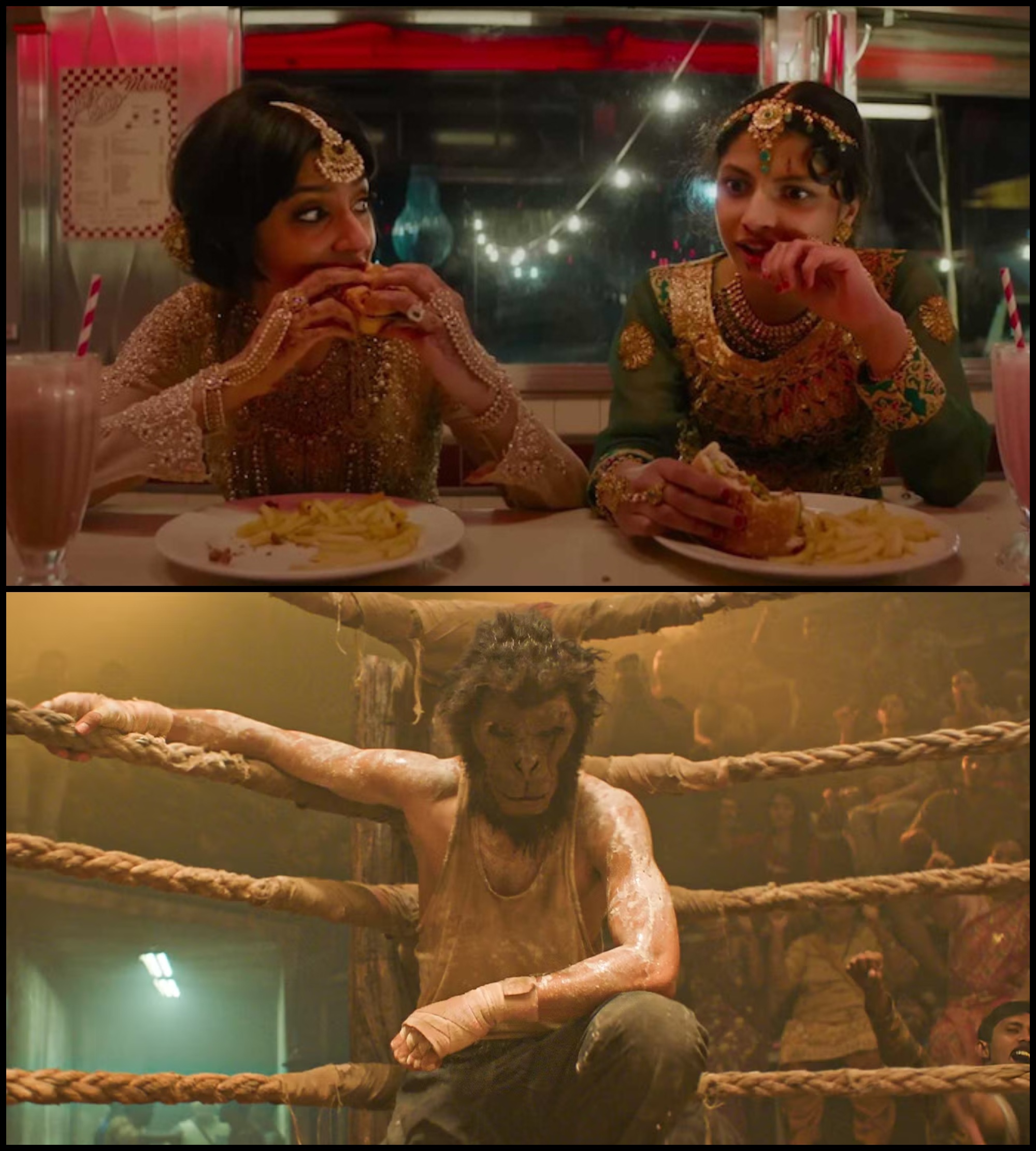
Top: Priya Kansara (right) and Ritu Arya (left) have great chemistry in Polite Society, but the haphazard tonal mishmash of the plot and dull action set-pieces let them down. Bottom: Dev Patel’s titular wrestling mask is an arresting image of Monkey Man. It is too bad, then, that many of these brawls are narratively pointless after the film’s first act.
It Lives Inside (ILI) is perhaps the simplest in concept of these three films: An Indian-American “final girl,” Megan Suri, struggles with cultural assimilation into her US suburban community as her traditionalist family stresses her ethnic heritage. These conflicting personal agendas of Suri come to a head when she confronts an ethnic South Asian demonic force affecting another South Asian classmate of hers (Mohana Krishnan), which later sets its predatory sights on her.
Not bad in concept or creature-design, ILI works best when emphasizing the creeping dread of its supernatural antagonist and when lead Suri works opposite costars with whom she has chemistry. The design of the titular demon is given enough vague backstory to feel threatening and its costume-design feels tangible. Supporting actor Mohana Krishnan surprises in particular given how the story twists and turns about her fate, leaving her survivorship a legitimate point of tension throughout the narrative. Other costars, however, leave many of Suri’s dialogue-driven scenes stilted and flat, while the overall pace of the 99-minute picture feels lethargic for such a short runtime.
Next up is Polite Society, one of the better titled movies I’ve seen, independent or major studio production, in years. A coming-of-age yarn about a Pakistani-British teenager (Priya Kansara, an obvious surrogate for writer-director Nida Manzoor) with a disaffected older sister (Ritu Arya) and highly specific dreams of becoming a film stunt performer, Polite Society blends absurdist comedy and goofy, slow-motion kung fu-fights in equal measure. It is a shame, therefore, how predictable and bland the story’s three-act structure feels given how Manzoor chooses the silliest, least interesting story twists imaginable in order to shoehorn as many tame, herky-jerky fistfights as possible. Like the critically beloved Everything, Everywhere, All at Once, I found myself wishing that Society would diverge from its lame action genre-ambitions and, ironically, commit to its more dramatic undertones like many of the purebred “immigrant experience”-movies I derided above.
Last of these three unabashed indie-auteur genre projects is Monkey Man, the directorial debut of Dev Patel. I have long appreciated Patel’s varied taste in feature-films since his breakout role in Danny Boyle’s Slumdog Millionaire (2008), while his directorial debut’s uncensored violence and revenge-driven narrative are right up my alley, recalling everything from the new millennium “classics” of the New French Extreme (e.g. Inside [2007], Martyrs [2008]) to Quentin Tarantino’s filmography.
In total, however, Patel’s directorial debut is another mixed bag like ILI and Polite Society. Monkey Man’s first half builds suspense with smart screenwriting and deliberate, relatable action sequences, which peak in a second act scrap between Patel and chief antagonist Sikandar Kher, followed by a great escape/chase sequence. Unfortunately, the film loses steam thereafter once Patel lounges around a hijra commune to recuperate; the third act-finale, by association, pales in comparison to the pacing and choreography of the earlier action sequences. Most distracting of all is how claustrophobic and darkly lit much of the movie feels outside of its set-pieces, where concrete edifices, murky shadows, and trashy landmarks obscure scene geography. Perhaps the decision to set the story in India while obviously not shooting there (Monkey Man’s production took place in Indonesia) contributed to the movie’s visual incoherence.

Megan Suri confronts the Pishacha, a flesh-eating demon based in Hindu and Buddhist folklore, in It Lives Inside.
In hindsight, I am reluctant to judge this trio of projects from first-time filmmakers too harshly given how M. Night Shyamalan himself didn’t hit his stride until his third film (The Sixth Sense [1999]). All three of these second-generation Indian-diaspora auteurs do not lack for cinematic style, which I respect, yet the execution of It Lives Inside to Polite Society to Monkey Man ranges from inconsistent to frustrating. I would not recommend any of them outright save for the most specific of audiences thirsty for immigrant family narratives on screen and, as evidenced above, those are no longer in short supply in English-language film industries. No, maybe the most meaningful takeaway from these directorial debuts is how (1) genre movies can, like any type of cinema, benefit from a diversity of voices from behind the camera, and (2) that genre movies can bore me as much as dramas can.
—————————————————————
SUMMARY & RECOMMENDATION: Focused in genre style and yet ambitious in narrative tone, the filmmaking debuts of Bishal Dutta, Nida Manzoor, and Dev Patel highlight the broad storytelling interests of the children of non-resident Indian/South Asian diaspora communities in the West. It Lives Inside is one of countless notable horror movies that have come to define modern Hollywood; Polite Society reflects the appreciation for absurdist humor and action-comedy throughout the United Kingdom’s film industry; and Monkey Man emphasizes the ongoing marketability of grounded, brutal action sagas.
— However… none of the aforementioned tell cohesive stories that work from beginning to end. ILI’s forgettable characters, dialogue, and inconsistent cast do it no favors, while the mid-story pivots of Polite Society and Monkey Man make their stories less interesting.
—> All three films leave me ON THE FENCE.
? Speaking of hijras, they and rhesus macaque monkeys are my two primary nemeses whenever I visit India.


Discussion
No comments yet.