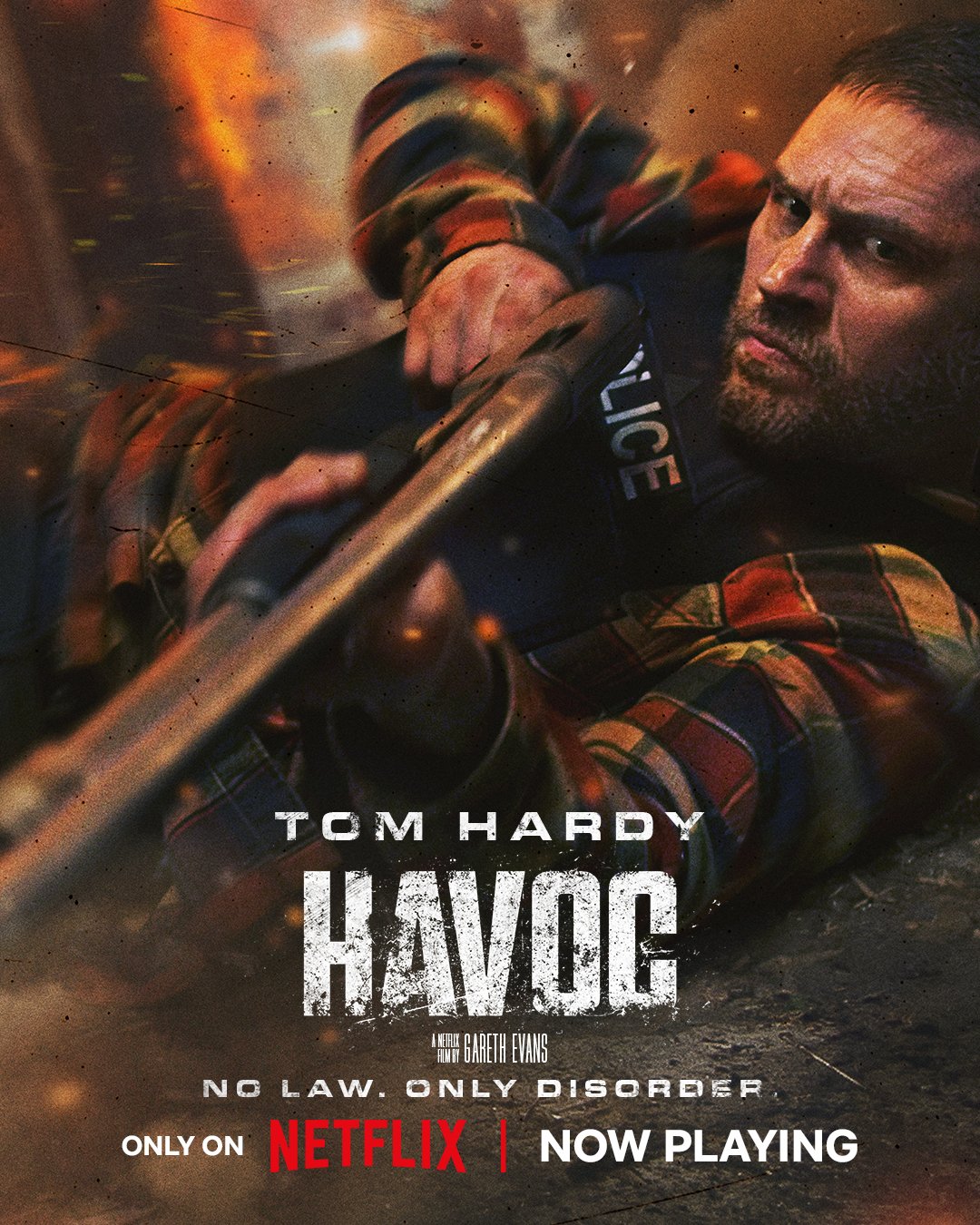
Directed by: Gareth Evans || Produced by: Ed Talfan, Gareth Evans, Aram Tertzakian, Tom Hardy
Screenplay by: Gareth Evans || Starring: Tom Hardy, Jessie Mei Li, Justin Cornwell, Quelin Sepulveda, Luis Guzmán, Yeo Yann Yann, Timothy Olyphant, Forest Whitaker
Music by: Aria Prayogi || Cinematography: Matt Flannery || Edited by: Sara Jones, Matt Platts-Mills || Country: United States, United Kingdom || Language: English, Cantonese
Running Time: 107 minutes
The more often I rewatch them, the more I respect The Raid (2011) and the more I tire of The Raid 2: Berandal (2014). While that may puzzle action fans, seeing as how that pair of Indonesian action titles helped popularize an entire nation’s film industry in overseas markets, I argue that should not surprise too much given their disparate narrative formats: The former is a tight, expertly paced action extravaganza formatted in the now classical premise of Assault on Precinct 13 (1976) and Die Hard (1988); the latter, on the other hand, is a broad, ambitious crime epic stretched over a large cast, featuring multiple principle villains. Various pacing issues aside, I feel the wandering narrative focus of The Raid 2 distracts too much from its tenacious action to the point where even the development of its lead, Iko Uwais, is compromised.
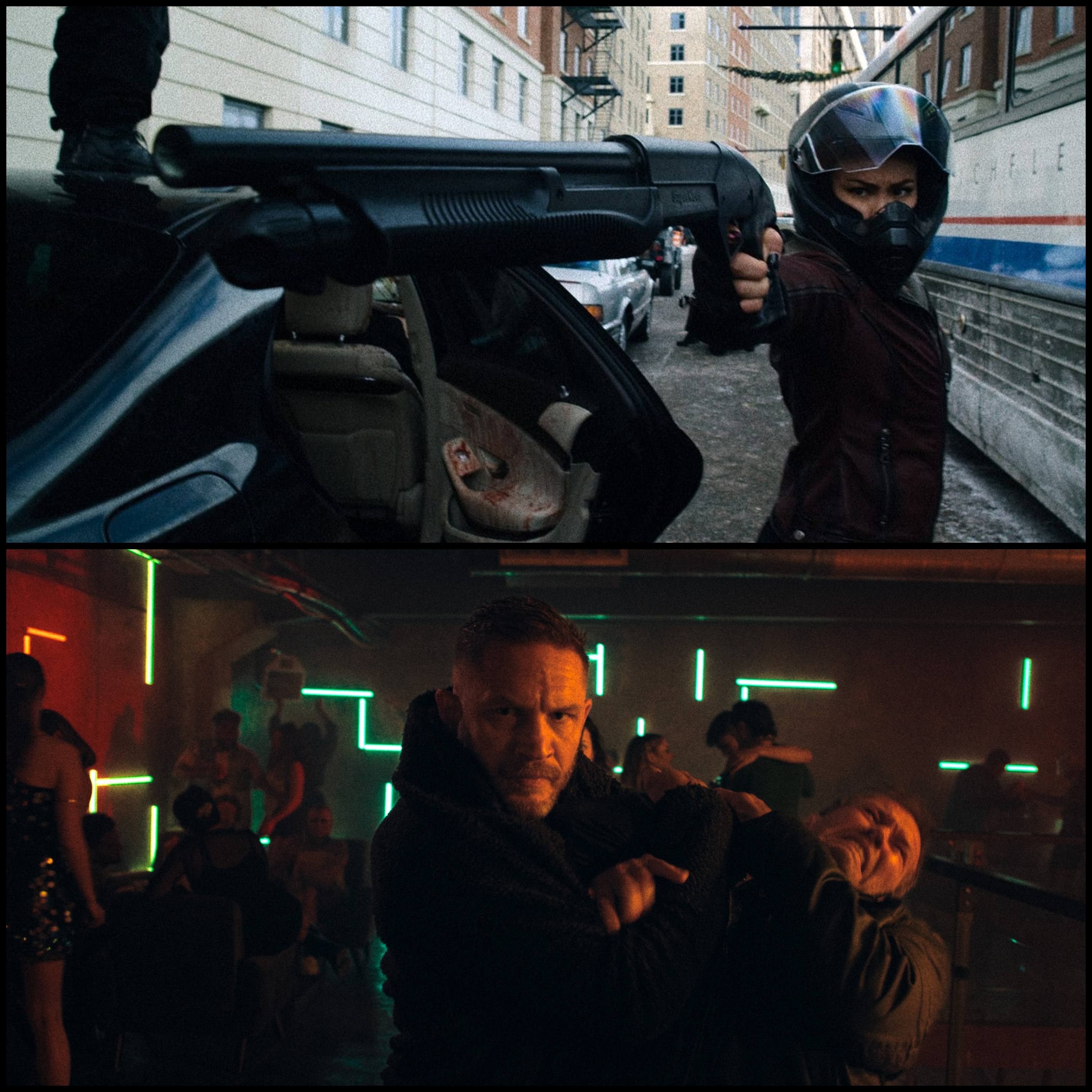
Top: Former professional mixed martial artist, Michelle Waterson-Gomez, stars as a Hong Kong Triad enforcer. Bottom: In the best action sequence of Havoc, lead Hardy (center) navigates a three-way brawl between several corrupt law enforcement colleagues and an onslaught of Triad goons.
Fast-forward over a decade later, The Raid franchise’s Welsh director, Gareth Evans, returns with his first feature-length action film since Berandal. His latest movie, Havoc, dovetails with the most recent franchise expansion, Ballerina (2025), of another notable contemporary action series, John Wick (2014–2023), in that both pail in comparison to their parent artist’s or parent intellectual property’s greatest hits. Havoc, though I think it gets a raw deal from general audiences thanks to a variety of biases, ain’t no Raid by a longshot (I do think it compares well to The Raid 2, so take that how you will); by the same token, I found Evans’ latest feature far more digestible, self-contained, and less pretentious than the likes of, say, the critically beloved yet bloated (148-minute) box office flop that was Furiosa (2024; hot take!). I always appreciate a genre film’s dedicated focus to its base genre components so long as the pacing works and the story doesn’t overstay its welcome.
In between The Raid 2 and Havoc, Evans directed his first outright horror feature and Netflix Original, Apostle (2018), starring Dan Stevens, and created the British crime series, Gangs of London (2020-), both of which feature impressive set-pieces. Not content to rehash the pencak silat of his critically acclaimed Raid movies, Evans has diversified his cinematic violence across his career, and that flexibility is a the major reason why Havoc works so well despite its lethargic narrative backdrop. Of the movie’s three main set-pieces, two are some of the better and most diverse action sequences I have seen since the coronavirus pandemic, while a scattering of smaller sequences flaunt different flavors of ultraviolence in traffic jam assassinations and slow-motion hitjobs. Perhaps the strongest aspects of Havoc revolve around how (1) its story develops organically into its action showstoppers unlike many lesser action flicks, and (2) its two strongest fight sequences crescendo and decrescendo in scale: An urban club riot escalates into a massive firefight, while a later shootout at a rural cabin devolves into a desperate melee scrap once everyone runs out of ammunition.
So, what’s the problem, here? Nothing, really, beyond of course the forgettable characterizations saved only by a terrific cast (e.g. Tom Hardy, Timothy Olyphant, Forest Whitaker, Sunny Pang, Luis Guzmán, etc.) and a plethora of questionable digital FX, including entire backgrounds created through obvious computer generated imagery (CGI), Star Wars prequel (1999, 2002, 2005)-style. Perhaps the most egregious example of the latter is the movie’s opening chase sequence, which is well choreographed and appropriately chaotic… despite being produced almost entirely with digital FX, and obvious ones at that. Havoc commits so hard to its exaggerated graphic novel-esque setting, comparable in tone to the over-the-top “heroic bloodshed” theatres of John Woo classics like The Killer (1989) and Hard-Boiled (1992), that I struggle to decide whether the movie just looks plain bad or that Evans has produced the most faithful Max Payne (2001, 2003, 2012) ripoff. I mean, were all those digital composite shots worth it when the winter shots of principle filming location, Cardiff, look great, or when you could’ve just shot in portions of Chicago?
In other words, Havoc often looks and sounds fun, or stylized at least, even when it looks and sounds bad. That may not entice viewers with little to no interest in action filmmaking, yet I found myself overlooking the occasional obvious CGI background or tired cops-and-robbers cliches to focus on the smooth establishing shots that transitioned from CGI to SteadiCams, not to mention the gruff, amusing, and occasionally heartfelt chemistry of the veteran cast. Again, the fact that all of the above wraps in well under two hours (Havoc is 107 minutes long) feels like a breath of fresh air nowadays, even relative to similar action movies on the same platform (see also: The Shadow Strays [2024]).
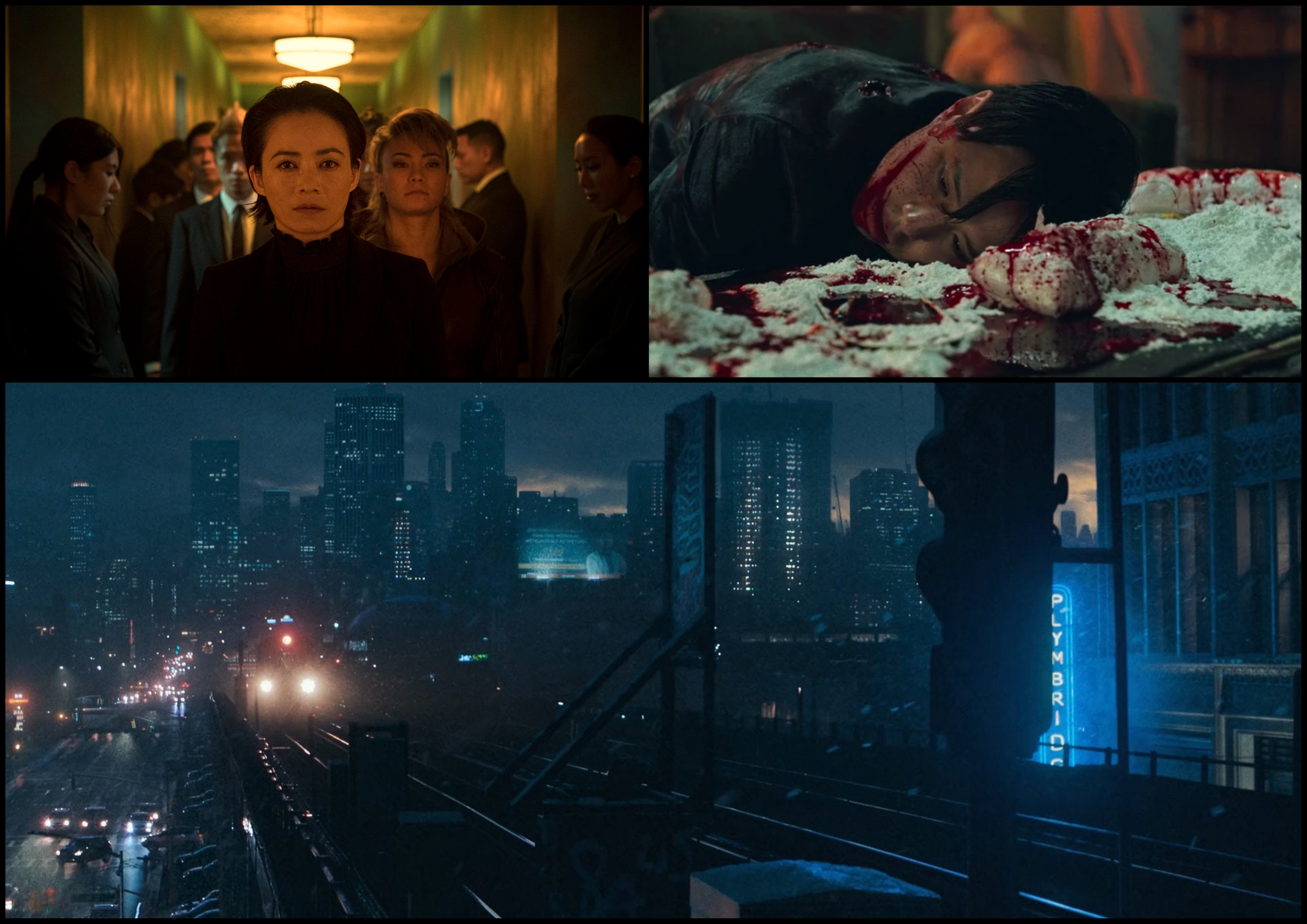
Malaysian actress Yeo Yann Yann stars as the big bad (top left), whose forces “wreak havoc” on the film’s unnamed North American city after her upstart son is assassinated (top right). Bottom: This digitally created cityscape is one of the film’s better examples of CGI, recalling the elevated trainlines of Chicago.
It is interesting to reflect on how an entertaining movie like this might never have been on my radar were it not for the impact that The Raid movies had on me. As I have stated before, Gareth Evans’ breakout Indonesian movies paved the way for my young adult fascination with hardcore action movies, specifically those beyond monster-movies. I like to think I can appreciate similar films even when they do not come together as neatly as the first Raid movie, including its sequel. Havoc is the latest in a long line of descendants, both direct and indirect, from Evans’ seminal Indonesian take on the Die Hard-premise; while I cannot wholeheartedly recommend it to general audiences, action fans should find plenty on which to feast throughout its versatile, creative set-pieces. As Mark Kermode might say, “It does what it says on the tin.“
———————————————————
SUMMARY & RECOMMENDATION: Havoc is grimy and gritty on the eyes — and not always in a respectable way — yet provides a broad variety of action flavors, from airborne appliances to gunfire to melee weaponry, to justify a blood-soaked sampling of its ultraviolence. The all-star cast and great pacing help the generic, predictable narrative go down, too.
— However… Havoc’s boilerplate crime drama setup might operate better if its CGI elements were more effective. As they stand, however, composite backgrounds in numerous wide shots and more or less the entire opening car chase distract the viewer with their 2000s-era quality.
—> Havoc, despite several terrific action set-pieces, leaves me ON THE FENCE.
? Havoc’s club centerpiece features not one, not two, not three, but five (5) consecutive Gesaffelstein tracks!


Discussion
Trackbacks/Pingbacks
Pingback: ‘The Furious’ (2026): Kung Fu Cinema Comes Back Swinging – Express Elevator to Hell - September 22, 2026