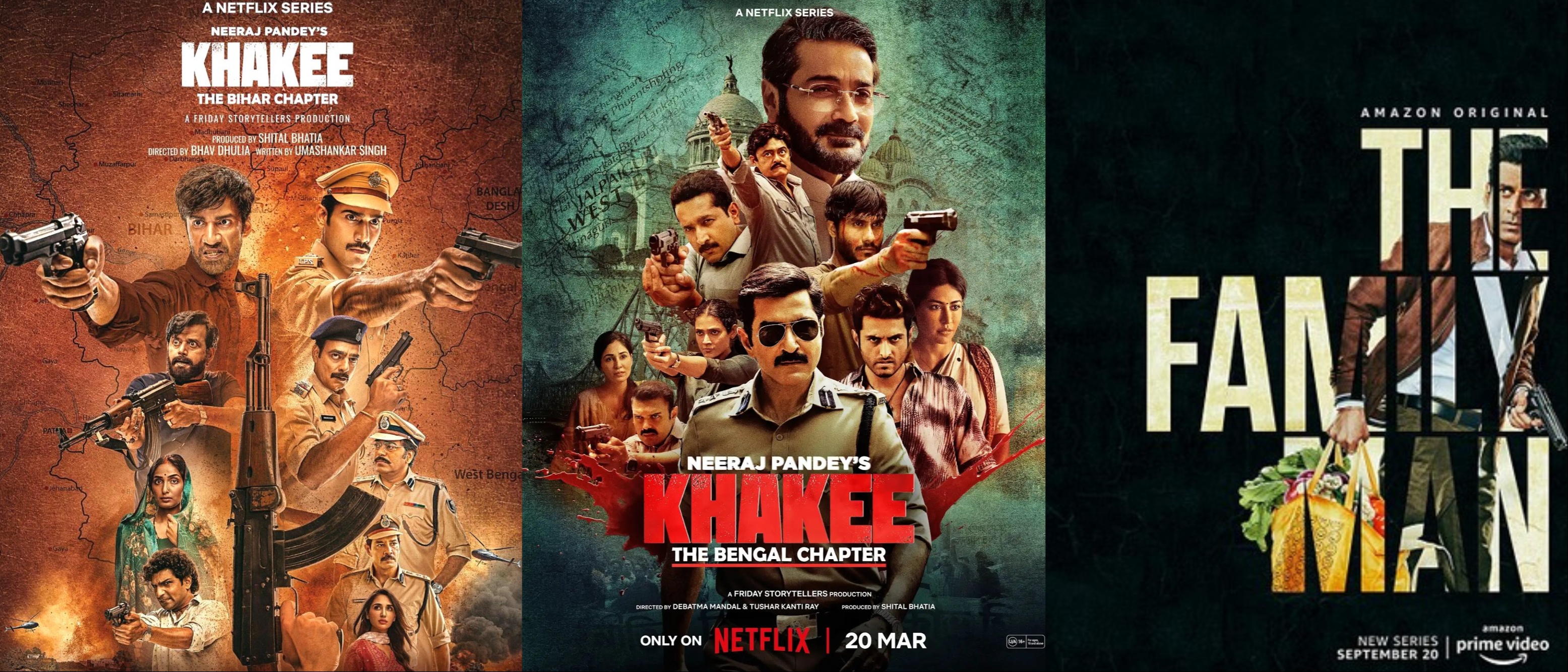
Created by: Neeraj Pandey [1, 2], Raj Nidimoru, Krishna Dasarakothapalli [3] || Written by: Uma Shankar Singh [1], Neeraj Pandey, Debatma Mandal, Samrat Chakraborty [2], Raj Nidimoru, Krishna Dasarakothapalli, Suman Kumar, Tusshar Seyth, Suparn Verma, Sumit Arora, Manoj Kumar [3]
Directed by: Bhav Dhulia [1], Debatma Mandal, Tushar Kanti Ray [2], Raj Nidimoru, Krishna Dasarakothapalli, Suparn S. Verma, Tusshar Seyth, Suman Kumar [3]|| Starring: Karan Tacker, Avinash Tiwary, Abhimanyu Singh, Jatin Sarna [1], Jeetendra Madnani, Prosenjit Chatterjee, Saswata Chatterjee, Ritwik Bhowmik, Chitrangada Singh [2], Manoj Bajpayee, Priyamani Raj, Sharib Hashmi, Ashlesha Thakur, Vedant Sinha, Neeraj Madhav, Sharad Kelkar, Dalip Tahil, Samantha Ruth Prabhu [3]
No. of Seasons: 1 [1], 1 [2], 2 [3] || No. of Episodes: 7 [1], 7 [2], 19 [3] || 1 = Khakee: The Bihar Chapter, 2 = Khakee: The Bengal Chapter, 3 = The Family Man
I have mentioned before how I feel that most foreign-language (re: non-English language) feature-film productions, Indian ones in particular, exclusive to the Netflix streaming service appear to boast a higher average quality than American (re: Hollywood) ones. That is not to say the vast majority of English-language or United States Netflix Original Films are not worth the average viewer’s time — I am as much a defender of Netflix exclusives of all formats and nationalities as anything — but rather that your average Indian auteur really seems to bring their A-game to Netflix (e.g. Vikramaditya Motwane’s Sacred Games [2018-2019] and Black Warrant [2025]; Anvita Dutt’s Bulbbul [2020]; Richie Mehta’s Delhi Crime [2019], etc.) relative to most Hollywood filmmakers.
This brings me to the latest Indian Netflix Original Series I have enjoyed, Khakee, so named after the distinctive uniform of law enforcement throughout India, and The Family Man, the latter the first major Indian streaming show developed for Amazon Prime Video I have sampled. While I enjoy limited (e.g. The Green Frontier [2019]; My Name [2021]) and anthology series (e.g. Love, Death, & Robots [2019-2025]) for the most part, the former is a tale of two seasons thus far, featuring a great first installment and an anemic bore of a second season. Family Man, by contrast, is comparable in narrative quality to the works of Motwane’s best on Netflix — it is a long-form, multi-season series, yet its first two seasons form a distinctive story arc — but features one of the most inconsistent directorial styles I have seen across modern South Asian filmmaking.
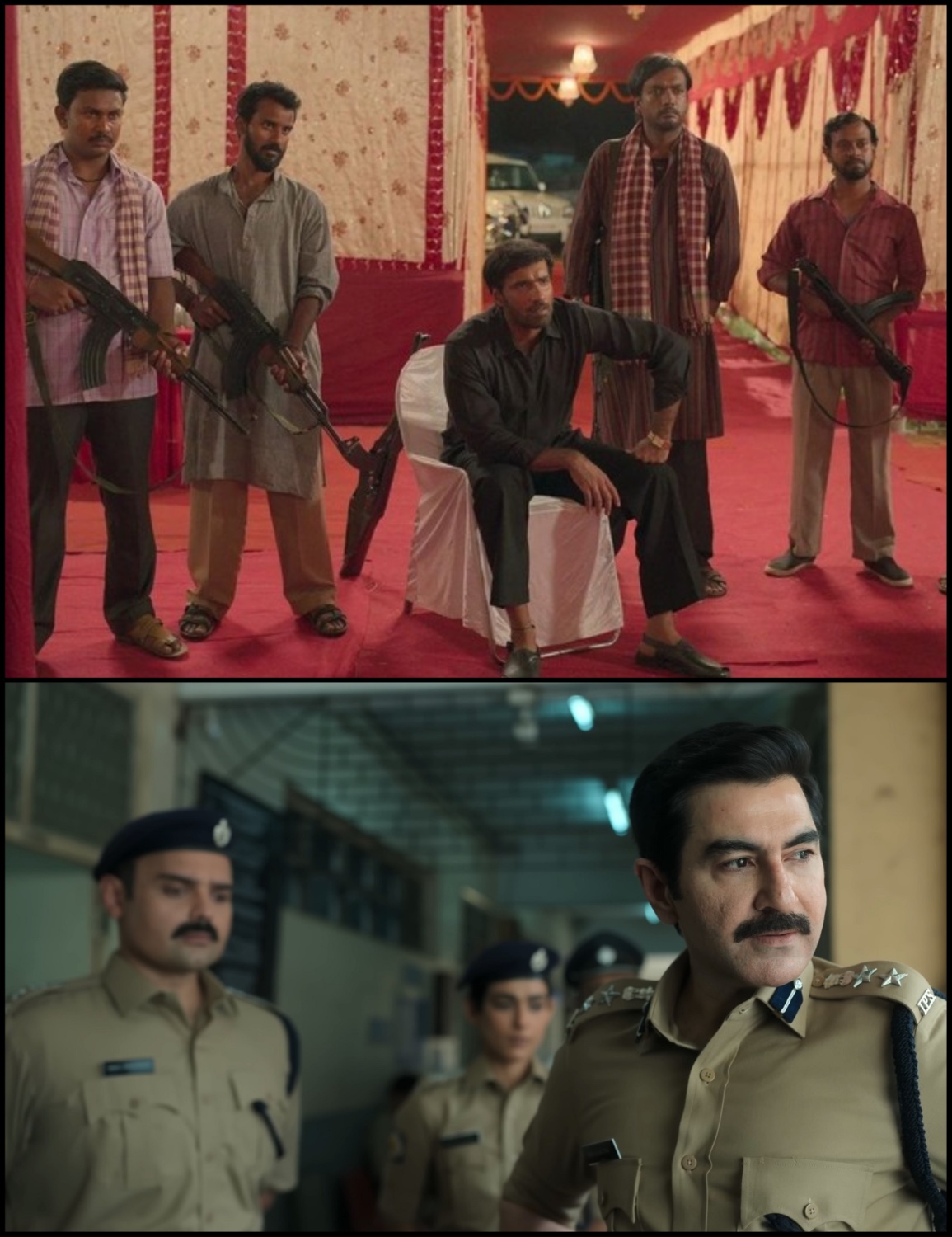
Top: Avinash Tiwary (center) stars as a dramatized version of an actual Bihari gangster pursued by lead Karan Tacker (not pictured) in the 2000s in the first season of Khakee. Bottom: Jeetendra Madnani (far right) takes over the lead law enforcement role in Khakee’s standalone sequel season set in West Bengal.
Khakee is an anthology project thus far limited to two seasons, the first subtitled as The Bihar Chapter, set in the eponymous Hindi-speaking state, and based on the accounts of former Indian Police Service officer Amit Lodha; the second and most recent season as of this writing (March 2026) is subtitled The Bengal Chapter, which takes place in the eponymous Bangla ethnolinguistic state in eastern India but is mostly shot in Hindi, and is, by contrast, an original work of fiction. The blueprint of a real-life investigative narrative, Lodha’s Bihar Diaries: The True Story of How Bihar’s Most Dangerous Criminal Was Caught (2018), clearly benefits the first season in terms of pacing, themes, and well defined characters. Although the first season thrives on elegant nonlinear storytelling and subtle edits across multiple interesting subplots, the overall cinematographic look and feel of The Bihar Chapter does not contrast that much with The Bengal Chapter; what hurts the latter, it seems, are overexaggerated, borderline cartoony characterizations on both sides of the hero-villain divide, most of whose actions subvert narrative tension to either resolve haphazard character arcs or pad out the season’s runtime. Primary villains Ritwik Bhowmik and Aadil Zafar Khan are realized through memorable performances but inconsistent, contrived character development, while Jeetendra Madnani’s lead operates like a Bengali Punisher (2017, 2019) to such a farcical degree that his character loses all sympathy. Given the predisposition of heroes in The Bengal Chapter to use extrajudicial punishment to solve most of their problems, the justification for the entire second season’s longwinded criminal investigation is thin at best. If it was not for Khakee’s visuals, consistent editing, and strong performances, I would have shut off the The Bengal Chapter halfway through.
The Family Man, on the other hand, looks far uglier than either of the standalone seasons of Khakee from a cinematographic standpoint, but its narrative pace and editing rhythm are comparable, and its overall story, far more interesting. Manoj Bajpai’s titular character personifies the show’s premise, a national security agent who struggles to balance his domestic and professional obligations; The Family Man’s narrative execution, however, propels it far beyond the reductive, cliched likes of, say, Khufiya (2023) by Vishal Bhardwaj even when the show’s visuals struggle to live up to the palpable tension of the overarching crime saga.
These first two seasons operate on classical political thriller premises that fans of Tom Clancy should enjoy. If you take to the adventures of Jack Ryan, for example (e.g. The Hunt for Red October [1990], Patriot Games [1992], Clear and Present Danger [1994], The Sum of All Fears [2002]), you will feel right at home with The Family Man as Bajpai navigates over-the-top yet still relatable national security threats from Kashmiri terrorists, rogue Pakistani military officers, and Sri Lankan-Tamil rebels. Complimenting all this sociopolitical intrigue are a great cast of characters with Priyamani Raj, Ashlesha Thakur, and Ashlesha Thakur as Bajpai’s immediate family and Sharib Hashmi, Sunny Hinduja, Dalip Tahil, and others as Bajpai’s professional colleagues. All boast great chemistry with each other and balance the domestic and geopolitical thriller plotlines well.
My primary gripe with the series, in stark contrast with Khakee, is how drab it looks and cheap its set-pieces feel. The Family Man features some of the ugliest color-grading and daytime lighting this side of the Marvel Cinematic Universe (2008-2019), bleaching the vibrant colors typical of most South Asian film and television productions’ costume, set-design, and physical landscapes. In addition to its unappealing desaturated color palette, Family Man’s digital plugin FX for muzzle flashes and blood squibs, combined with the poor direction of actors throughout its prevalent shootouts, make its action sequences feel amateurish regardless of the number of fluid handheld long-takes used.
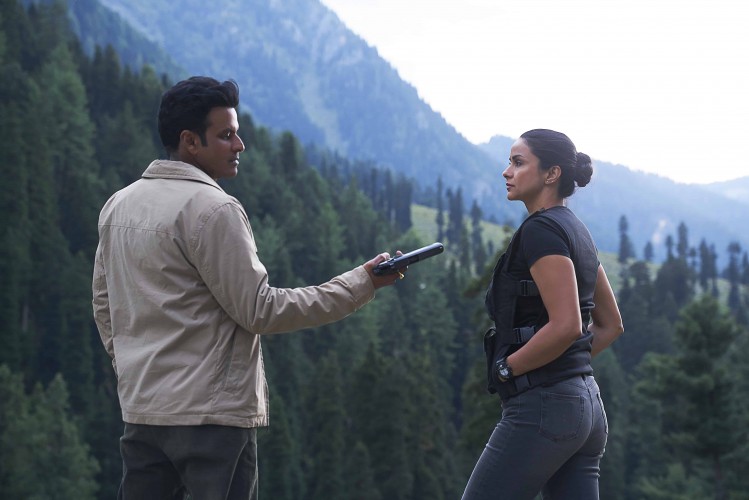
Manoj Bajpayee’s charismatic, relatable protagonist (left) forms the heart of The Family Man’s nontraditional thriller narrative, spanning memorable covert government operations and domestic family drama in equal measure.
Compared together, the freshmen and sophomore seasons of these two series exemplify the enduring strengths yet occasional pitfalls of contemporary Hindi television in the streaming era. Khakee sports the iconic locations, stylish visuals, and proficient editing common to Indian Netflix Original properties, while The Family Man benefits from perhaps the most expansive, ambitious narrative scope of any Hindi streaming show since Sacred Games. The two suffer opposite weaknesses, interestingly enough, with the weak story and characters of the standalone sophomore season of the former making it nearly unwatchable, and the special FX and general action-design of the latter comparable to an Asylum mockbuster. If you have time, check out the portions of each specified below, but beware of both Khakee’s and The Family Man’s overall inconsistent execution.
——————————————————-
SUMMARY & RECOMMENDATION: The Bihar Chapter is perhaps the most consistent of any of the narratives discussed here from both a telewriting and directorial perspective. The Bengal Chapter ruined any anticipation I had, however, for future seasons of the Khakee anthology series thanks to its bizarre, unlikable, and/or inexplicable characterizations. Last of all, The Family Man’s strong story arcs and memorable characters make it the most entertaining property of this bunch, in my assessment, but one must beware of its cheap, rudimentary set-pieces and generally unattractive appearance before watching.
—> The Bihar Chapter and Family Man come RECOMMENDED, while I do NOT RECOMMEND The Bengal Chapter.
? Either psychotherapy has a much different ethos in South Asia, or that marriage counselor in The Family Man is the most unprofessional shrink I have ever seen.

 Express Elevator to Hell
Discussion
No comments yet.