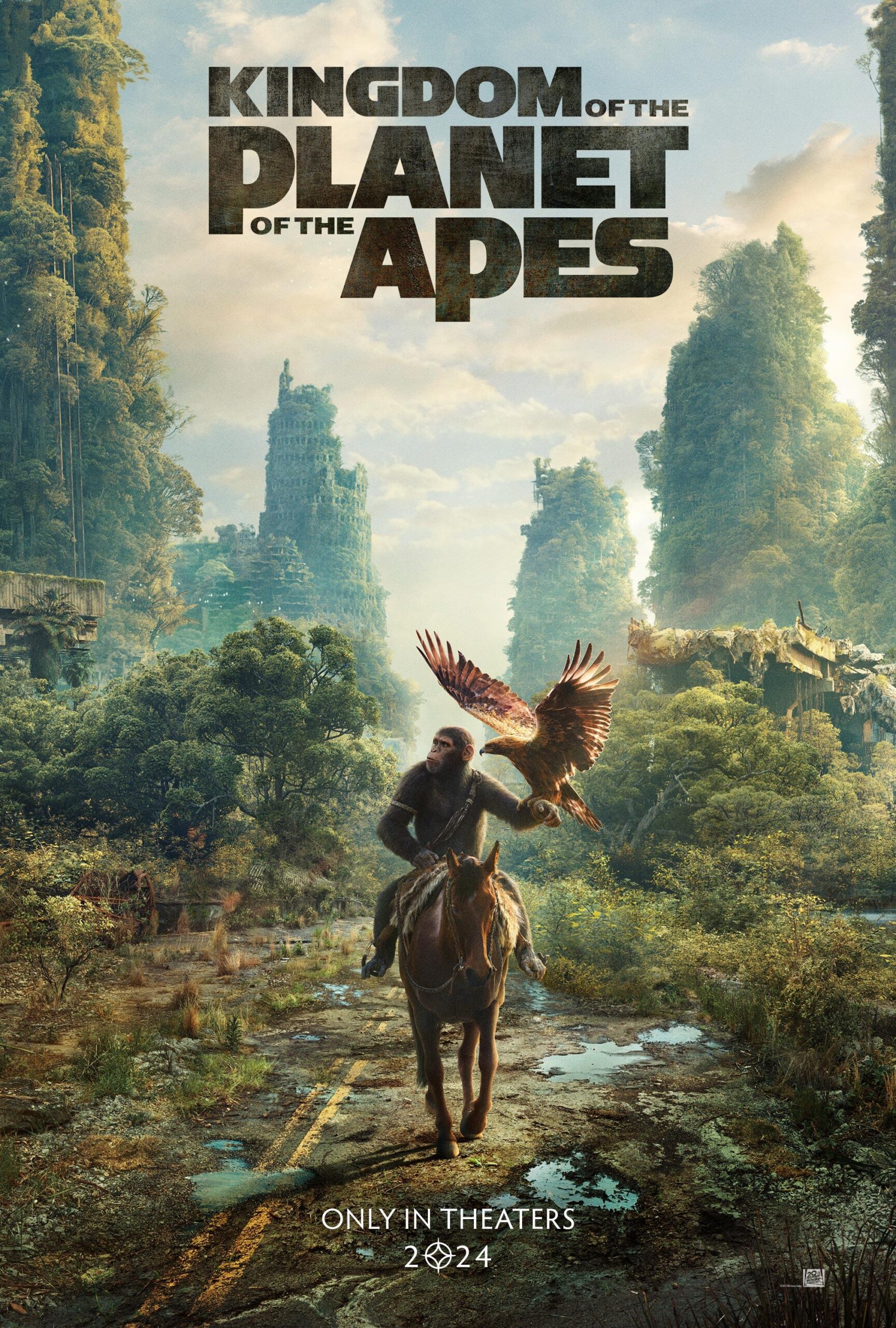
Directed by: Wes Ball || Produced by: Wes Ball, Joe Hartwick Jr., Rick Jaffa, Amanda Silver, Jason T. Reed
Screenplay by: Josh Friedman || Starring: Owen Teague, Freya Allan, Kevin Durand, Peter Macon, William H. Macy
Music by: John Paesano || Cinematography: Gyula Pados || Edited by: Dan Zimmerman, Dirk Westervelt || Country: United States || Language: English
Running Time: 145 minutes
The question cinephiles and fans of popular Hollywood studio filmmaking should ask themselves is not whether the rebooted Planet of the Apes (2011, 2014, 2017) series, led by the married screenwriting duo of Amanda Silver and Rick Jaffa and the direction of filmmakers Rupert Wyatt and Matt Reeves, is the best executed intellectual property (IP) of the past decade. The 2010s era Apes movies are more consistent than any recent superhero franchise, Marvel (2008-2019) or DC (2013-2023) included, have better, more creative action sequences than The Fast and the Furious (2001-2026), and follow characters far more complex and interesting than newer, smaller genre IP brands like The Conjuring (2013-2025) or John Wick (2014–2024). Instead, fans should ask themselves, “How long can the best blockbuster franchise of the 2010s last into the 2020s?“
As of the moment, the Apes’ future remains as unclear as it did following the conclusion of War for the Planet of the Apes (2017), which ended the 2010s reboot trilogy. Matt Reeves, director of the trilogy’s latter two installments, handed off the reins to Maze Runner (2014, 2015, 2018)-director Wes Ball as the newly reformatted 20th Century Studios, once 20th Century Fox prior to their 2019 acquisition by Walt Disney, proposed plans for a standalone trilogy of Apes movies that followed the rebooted films’ narrative continuity. I couldn’t have been happier given the IP’s contemporary track record, though I remained apprehensive at a new, much less experienced filmmaker stepping into the shoes of Reeves.
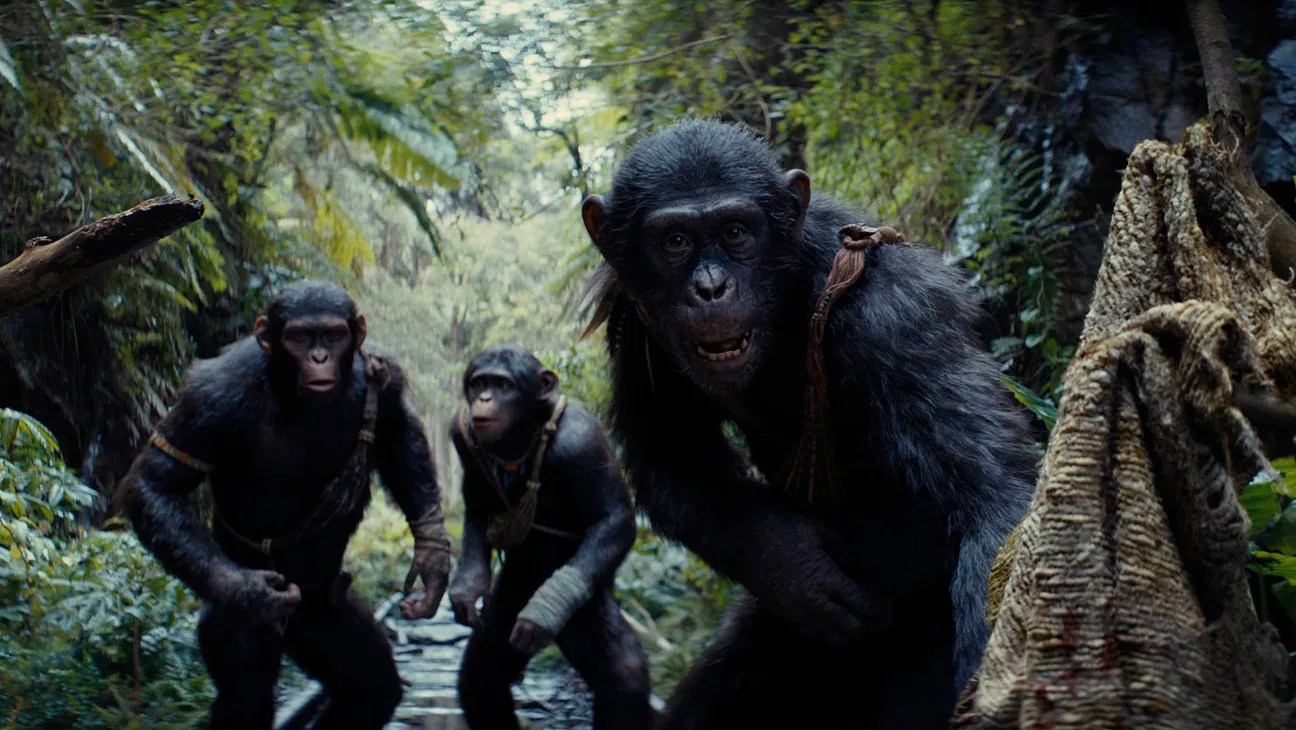
In full motion-capture gear, Owen Teague (left), Lydia Peckham (center), and Travis Jeffery (right) investigate a manmade train tunnel they are forbidden to enter by their elders in the first act of Kingdom.
While the box office performance of the newest film, Kingdom of the Planet of the Apes, has me doubting the longevity of the series in today’s post-COVID-theatrical environment, I am happy to report that Kingdom is comparable in quality to its immediate predecessors. It is superior in overall cast performances and chemistry to Rise of the Planet of the Apes (2011), the first of the 2010s reboot films, as entertaining in terms of action spectacle as Reeves’ first Apes feature, Dawn of the Planet of the Apes (2014), and is much less depressing than War. The only major accomplishment of which Kingdom cannot boast is figuring out how to shorten these installments’ titles…
… but I digress. Kingdom adheres to the strong, multifaceted, relatable characters of previous films while showcasing impressive, realistic action sequences supported by heady philosophical themes. It is Hollywood’s best contemporary big-budget combination of brains (accomplished screenwriting and effective direction) and brawn (unparalleled computer generated imagery [CGI] and memorable location-photography), still.
To get more specific, Kingdom describes a post-apocalyptic — or, at least a post-human civilization — diegesis many generations after War, where hyper-intelligent, genetically engineered apes have fractured into numerous tribes with varying degrees of cultural interconnectivity, shared history, and political violence. Primary characters of the 2010s rebooted trilogy are treated as legend by certain newer characters (e.g. Peter Macon as a traveling religious preacher and orangutan; Kevin Durand’s bonobo antagonist and warlord) and forgotten by others (e.g. Owen Teague’s chimpanzee protagonist and member of an ape falconry clan). This plausible science-fiction future extends organically from the narrative fallout of the previous three movies but also works as a standalone sequel; spectacular Australian location-photography as well as impressive indoor set-designs meld with this enticing diegetic premise to produce some of the most memorable sci-fi worlds I’ve seen in a while. Kingdom’s lush narrative backdrop is the opposite of the iconic yet overplayed desert wastelands of, say, Mad Max (1979, 1981, 1985), Star Wars (1977, 1980, 1983), and their many copycats (e.g. Kalki 2898 AD [2024]), yet is also more diverse, creative, and believable than the overblown FX wizardry of Avatar (2009, 2022).
As for the characters and their development, their adventures make the movie. While Macon’s early removal from the story frustrates me, every character, human and non-human, makes logical decisions that adhere to their established personalities; Teague’s protagonist arc in particular is satisfying, and his effective chemistry with all major costars maintains the pace of dramatic sequences that constitute the bulk of the narrative. Even the set-pieces are creative and dovetail with either character development or advance the plot, such as a chase sequence with Freya Allen in a tallgrass meadow and the final showdown between Teague, his tribe of falconer apes, and Durand’s villain.
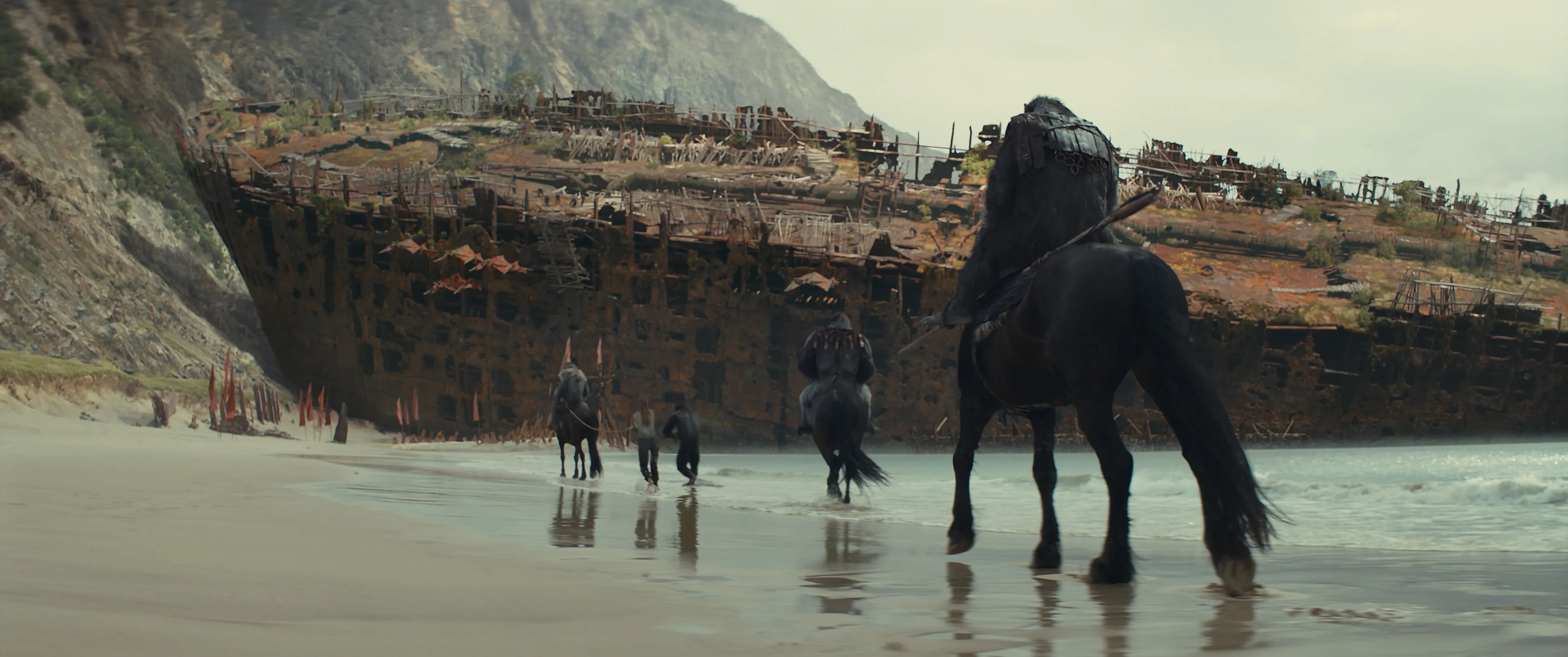
Agents of Kevin Durand’s warlord antagonist, Proximus Caesar (not pictured), escort Teague and Freya Allen (background center) as prisoners of war.
Top to bottom, Kingdom of the Planet of the Apes (… can we please shorten these titles?) continues the cinematographic, screenwriting, and special FX legacy of the 2010s reboot films. Despite limited reservations I have regarding an underused or even misused major character (Peter Macon) and the film’s intimidating 145-minute runtime (the longest in the franchise, pre- or post-reboot), director Wes Ball executes the franchise handoff from Matt Reeves with aplomb. Are there movies released this decade, original or established IP, that I’ve liked more than this particular Apes installment? Yes and yes, but not by considerable margins, and certainly not in terms of multipart, big-budget tentpole blockbusters. In that latter category, the modern Apes series stands alone.
——————————————————————————————————————————————————————————
SUMMARY & RECOMMENDATION: With CGI so seamless as to be wholly immersive and characters whose motivations drive the story in aggressive forward manner, Kingdom of the Apes (see how much better of a title that is?) is the complete package. Impressive set-designs and live physical backdrops further sell this movie’s believable world and build upon past series installments without being dependent on extraneous franchise minutiae.
— However… Peter Macon’s interesting orangutan philosopher is either underutilized or needed to be written out of the script altogether, while I still don’t approve of this franchise, like most contemporary Hollywood blockbuster IPs, extending its average feature’s runtime.
—> RECOMMENDED
? Are these ape societies still located along the Pacific Coast of the United States?

 Express Elevator to Hell
Discussion
Trackbacks/Pingbacks
Pingback: ‘Alien: Romulus’ (2024): Back to Formula | Express Elevator to Hell - August 31, 2024
Pingback: Horror Never Dies: ‘The First Omen,’ ‘Longlegs,’ & ‘Smile 2’ (2024) | Express Elevator to Hell - November 9, 2024