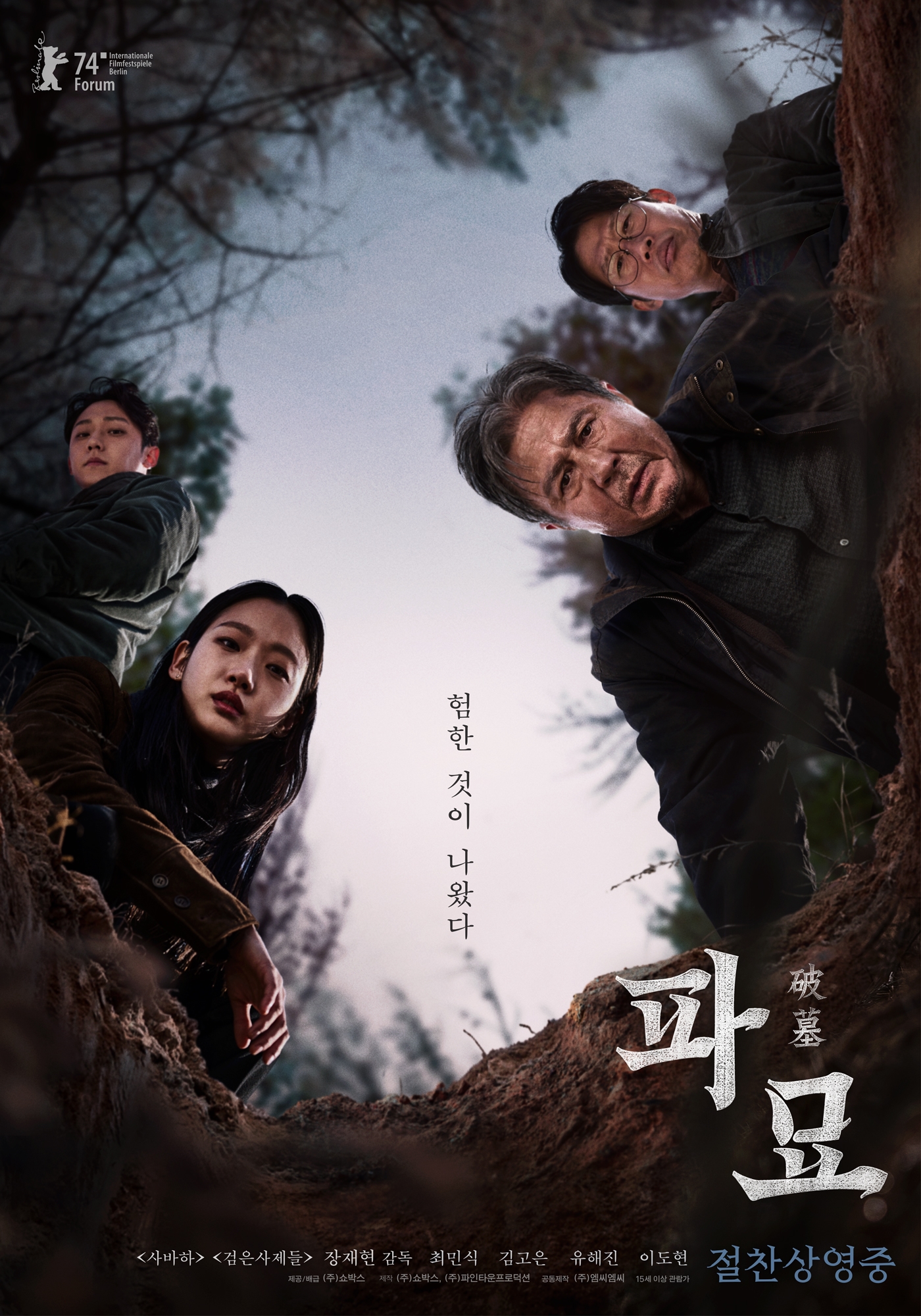
Directed by: Jang Jae-hyun || Produced by: Park Hyeong-jin, Kwon Ji-yong
Screenplay by: Jang Jae-hyun || Starring: Choi Min-sik, Kim Go-eun, Yoo Hae-jin, Lee Do-hyun, Kim Jae-cheol
Music by: Kim Tae-seong || Cinematography: Lee Mo-gae || Edited by: Jung Byung-jin || Country: South Korea || Language: Korean, English, Japanese
Running Time: 134 minutes
I’ve stated before that I don’t much care for narratives about colonialism, revolutions, or nationalist uprisings on film because they tend to (1) limit their appeal to a predetermined audience by design, (2) weigh themselves down with heavy-handed dialogue and on-the-nose, preachy monologues, and (3) reduce their characters, antagonists most of all, to one-dimensional stereotypes. Even good movies I otherwise enjoy (e.g. RRR [2022], Border [1997], A Fistful of Dynamite [1971]) are taken down a notch via their simplistic, caricatured villains and are effective movies in spite of their revolutionary themes, I argue, not because of them. Movies that address the aforementioned topics with nuance are the exception to the rule (e.g. Hunger, Che [both 2008], The Wind that Shakes the Barely [2006], The Battle of Algiers [1966]), as romanticizing historical rebellions tends to sell to a given film industry’s domestic audience like hotcakes.

Mortician Yoo Hae-jin (left) and renowned Feng shui geomancer Choi Min-sik (right) examine an excavated grave in Act One prior to their contact with the rest of the main cast.
A notable Korean film that tackles patriotic sentiments and recent (20th century) colonial history of its patronage in an interesting way is Exhuma by writer-director Jang Jae-hyun, so named after the practice of “exhumation” or the removal and subsequent relocation of buried human remains. Well known for his filmography of occult and supernatural horror works only four movies (3 directorial credits + 1 screenplay credit) into his career, his fourth directorial effort became a local smash success this February and the highest grossing Korean movie so far of 2024. My immediate reaction to the movie after an initial viewing was similar to my response to Top Gun 2 (2022), whose comparable box office success Stateside impressed but did not blow me away; on the other hand, Exhuma, with its impeccable editing, narrative pace, subtle camerawork, and memorable cast is head and shoulders above most of the recent Korean thrillers I’ve seen both on and off Netflix.
As far as tone is concerned, Exhuma scratches the Occultist supernatural horror itch The Wailing (2016) teased for over two and a half incoherent hours but never delivered for me. The movie’s well paced, 134-minute script opens with two Korean shamans (Kim Go-eun and Lee Do-hyun) flying on a Japanese airline to advise a wealthy Korean-American family in southern California on a spiritual curse related to a long dead family patriarch now passed to their newborn son. Once exhumation of said patriarch’s grave is deduced to be the most likely solution to the family’s curse, Kim and Lee then recruit lead Choi Min-sik, an expert Feng shui “geomancer,” to lead the titular exhumation. Every little detail of this opening act pays off in the rest of the movie, which is divided into six chapters a la Zack Snyder’s Justice League (2021) and is edited down to the bare narrative essentials for the plot to function. Each act (every two chapters or so) reveals additional details of the client family’s enigmatic history related to Korea’s 20th century occupation by the Empire of Japan as well as the Japanese invasions of the Korean peninsula toward the end of the 16th century, all of which build the narrative’s overarching tone of dread. How the movie refreshes its story every act maintains the story’s pace as well as provides new motivation for our three main characters to continue their investigation as effective audience-surrogates.
On the audiovisual front, Exhuma avoids flashy camera movements like distinctive handheld shots or long-takes in favor of diverse lighting schemes and memorable mise-en-scène (e.g. ghosts who only appear in reflections, backlit fiery smoke illuminating a tree at night) as well as intense montage sequences (e.g. the shaman ritual prior to the eponymous burial excavation). Even digital FX, which are one of the few ubiquitous cinematic tools modern Korean cinema isn’t great at, work well enough here; whether we’re talking about several computer generated (CG) foxes scurrying amongst the forest underbrush in shadow or an undead ghoul transforming into a ball of fire at night, the modest CG imagery doesn’t have to build Exhuma’s diegetic backdrop because the practical FX and low-key lighting dominate the movie’s more fantastical sequences. The film’s overall directorial aesthetic almost feels out of place in today’s international film industry dominated by bigger budgeted, FX-driven franchise films, but its cinematographic restraint is what keeps its supernatural plot-devices grounded and therefore more threatening.
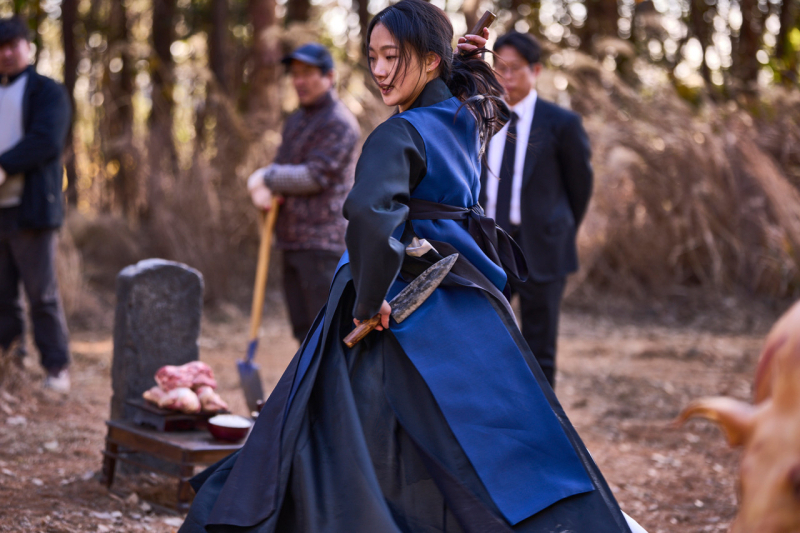
Kim Go-eun portrays an experienced shaman who specializes in diagnosing spiritual maladies in Exhuma.
Combine all the aforementioned with memorable acting direction across the main cast, and you’d be hard pressed to find a significant weakness of Exhuma to warrant not recommending it to most audiences. The movie never reaches the absurd heights of bonkers Korean classics like Oldboy (2003), I Saw the Devil (2010), or Parasite (2019), but that’s the only real “complaint” I have about it, as its more reliable, straightforward structure compared to something like the bloated, disorganized Wailing helps its colonialist subject-matter shine given its memorable cast. In other words, Exhuma uses its touchy historical backdrop to enhance its characterizations and central narrative rather than cheapen them; cinematic dramatizations of past nationalist uprisings, revolutions, or independence movements tend to force viewers into their default ethnoregional camps, but with the proper auteur restraint and the right genre bent, you can channel those historical grievances into memorable storytelling. The film comes first with Exhuma, and then its political considerations follow.
——————————————————————————————————————————————————————————–
SUMMARY & RECOMMENDATION: Patient in its cinematography as its screenplay is layered, Exhuma takes its paranormal shamanism premise seriously without using over-the-top performances or excessive special FX to the benefit of its horror tone. Each act unveils new mysteries for the cast to solve that build on previous events like any creative story with forward momentum should, making its otherwise loaded anticolonialist sentiments feel relatable regardless of viewers’ backgrounds.
— However… various minutia of Korean shamanism may fly over the heads of audiences unversed in modern Korean folklore or traditional Chinese divination, which are some of the few plot details writer-director Jang Jae-hyun doesn’t bother explaining to his audience.
—> RECOMMENDED for a spooky good time.
? I understand that veteran actor Choi receives top billing here, but shouldn’t Kim Go-eun be considered the protagonist?

 Express Elevator to Hell
Discussion
Trackbacks/Pingbacks
Pingback: ‘Kingdom’ & ‘Ashin of the North’ (2019-2021): Unique Genre-Blending Joseon Drama | Express Elevator to Hell - May 25, 2025