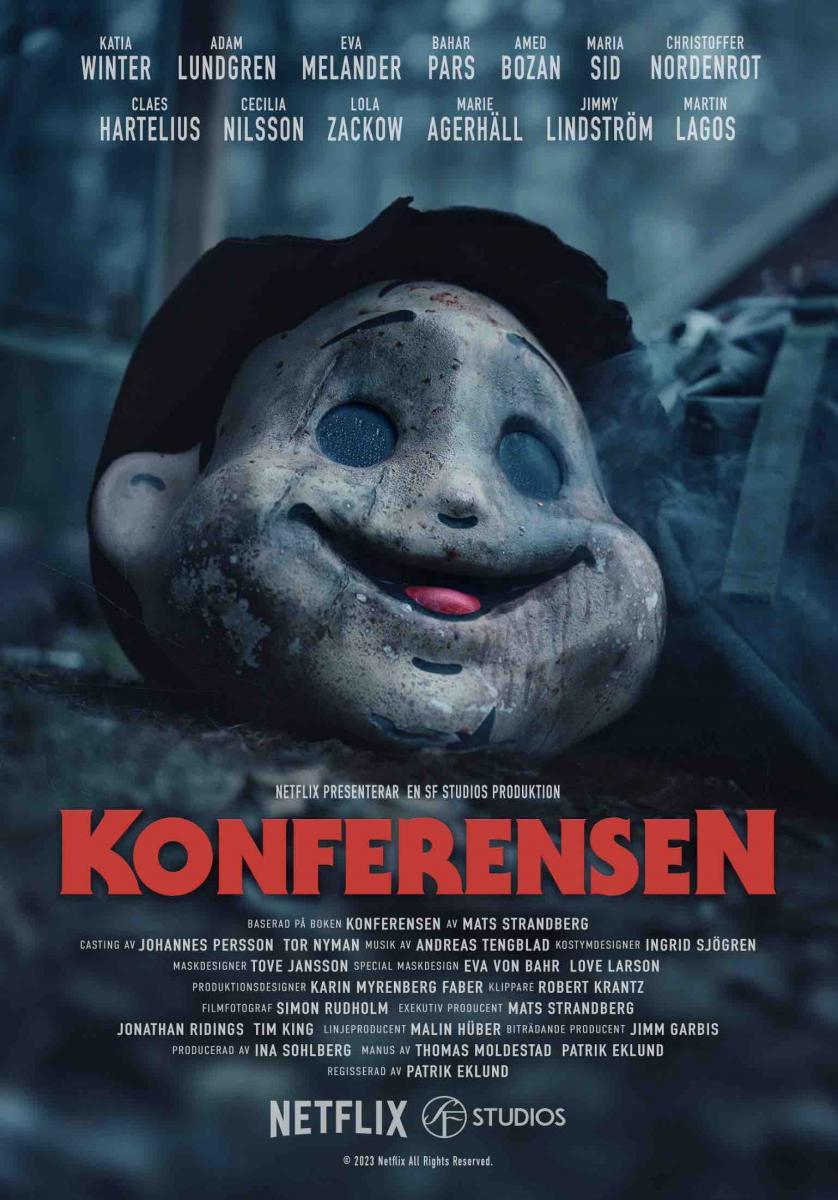
Directed by: Patrik Eklund || Produced by: Ina Sohlberg
Screenplay by: Patrik Eklund, Thomas Moldestad || Starring: Katia Winter, Adam Lundgren, Eva Melander, Bahar Pars, Amed Bozan, Maria Sid, Christoffer Nordenrot
Music by: Andreas Tengblad || Cinematography: Simon Rudholm || Edited by: Robert Krantz || Country: Sweden || Language: Swedish
Running Time: 100 minutes
If The Exorcist (1973) and The Evil Dead (1981, 1987, 1992) are the progenitors of much of contemporary supernatural horror and the same can be said for George A. Romero’s Dead Trilogy (1968, 1978, 1985) for zombie horror on film, then the trendiness of the Friday the 13th (1980-2002) franchise gave rise to slashers, which became all the rage throughout the 1980s before petering out with a notable metatextual revival in the 1990s thanks to Wes Craven’s New Nightmare (1994) and Scream (1996-2000). Forerunners of the screenplay formula featuring a crazed serial murder armed with edged or stabbing weapons occur as early as Psycho (1960), The Texas Chainsaw Massacre (1974), and Halloween (1978), with the latter two films almost acting as slasher prototypes in many ways. However, the franchise that kicked off the subgenre in earnest is arguably the Friday the 13th series, which itself started as an homage to/rippoff of John Carpenter’s most famous film. Everything from the hulking heavy metal monstrosity that is primary antagonist Jason Voorhees to the whiny, unlikable personalities of most slasher victims to the sleazy, uncensored gore of the creative (in better movies) to forgettable (in lesser installments) kills were popularized in Friday the 13th.
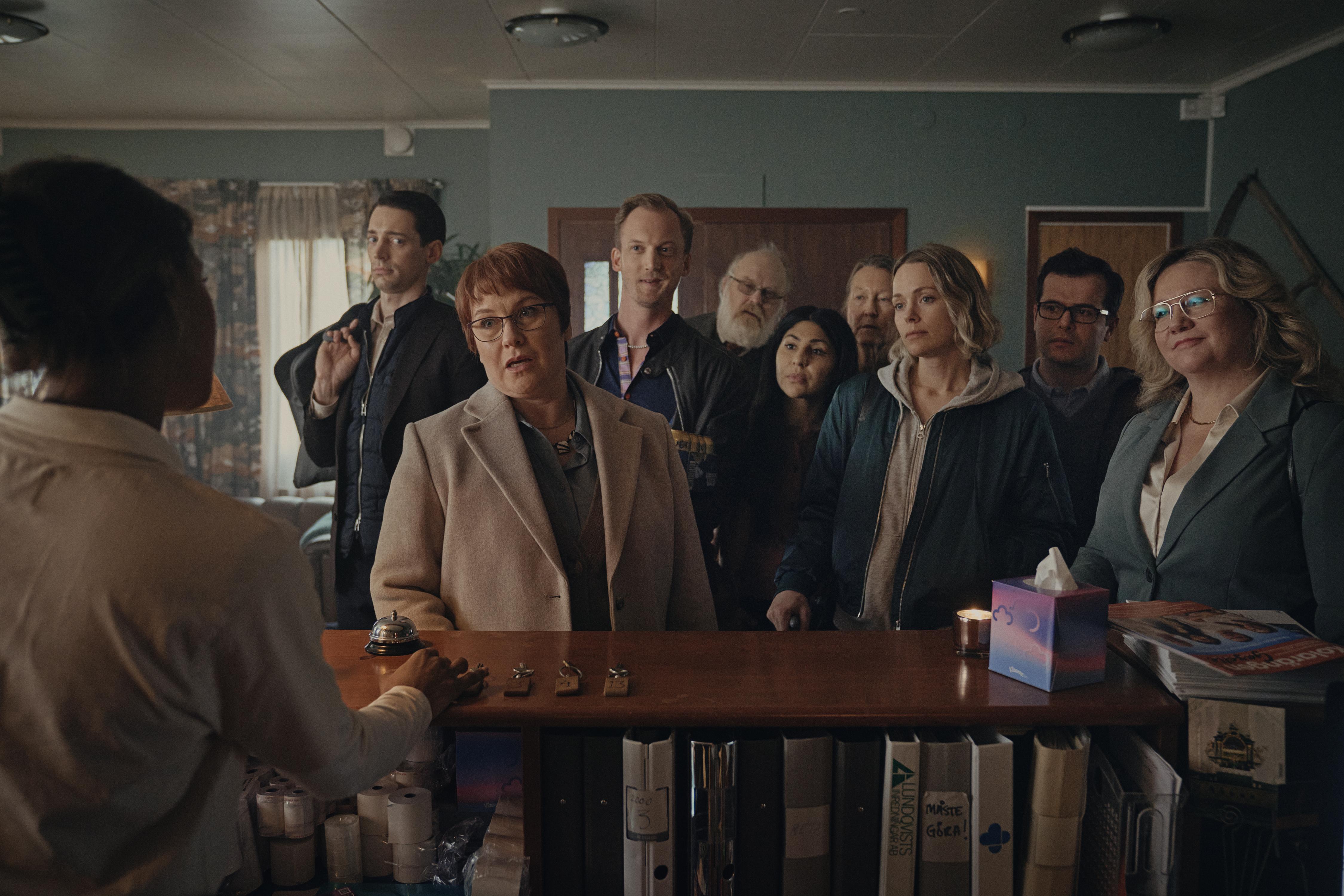
Our principal cast of municipal city employees gather at a local woodland resort to discuss their unethical practices in The Conference.
The slasher isn’t just a United States or English-language cinematic phenomenon, either. Aside from the earlier slasher-adjacent thrillers that constitute the Italian giallo movement, Grave Robbers (1989), High Tension (2003), Cold Prey (2006), and Killer Book Club (2022) are Mexican, French, Norwegian, and Spanish productions that follow the slasher formula, and another recent one by way of Sweden is the Netflix Original Film, The Conference (“Konferensen” in Swedish). Though the subgenre recipe of a large individual wandering around killing people with handheld tools doesn’t allow for much narrative creativity, co-writer-director Patrik Eklund does his best to imbue The Conference with enough personality and diegetic flavor to distinguish itself from the countless slasher descendants that release in theatres to this day (e.g. Halloween and Scream soft reboots, X [2022], etc.); he succeeds in part.
The semi-unique flavor of The Conference stems not from its nationality (Sweden has a rich, well documented filmmaking history) but rather its reserved sense of humor and the professional background of its main cast of characters. Like many related films (see also Hot Fuzz [2007]), The Conference understands the cinematic connection between the thrill of brutal kills and the absurd, almost slapstick humor of how those kills are often staged on screen. Eklund incorporates a variety of physical comedy into his horrific violence, as well as writes The Conference like a sort of satire of workplace retreats in general and municipal workers in particular. The setting for The Conference is a modest, outdoorsy lodge resort where a small group of local government employees meet to discuss plans for the development of a new shopping mall on previously private land that was taken through eminent domain. As film logic dictates, the circumstances of that public works project come under scrutiny at the eponymous conference and accusations of corruption help explain the homicidal motivations of the primary killer (actor and stuntman Robert Follin), but all that is window dressing for a plethora of fun, cinematographically dynamic on-screen murders in the second and third acts.
Most everything in the first 2/3 of the film works, as the limited indoor and outdoor sets provide just enough variety in scenery for creative set-pieces once the killing starts as well as dry, dramatic comedy in the first act. Problems emerge in the final act once it becomes clear that secondary antagonist Adam Lundgren, whose alleged unethical behavior in the first act is indirectly responsible for all the violent mayhem that follows, doesn’t factor much into the rest of the narrative. His performance grows increasingly cartoonish while his expected just deserts didn’t satisfy me at all; by the same token, Katia Winter’s middling protagonist and would-be “final girl” gets lost herself in the third act, having little to do with the finale as Follin’s masked maniac is killed in one of the most anticlimactic deaths of any slasher villain I’ve ever seen.
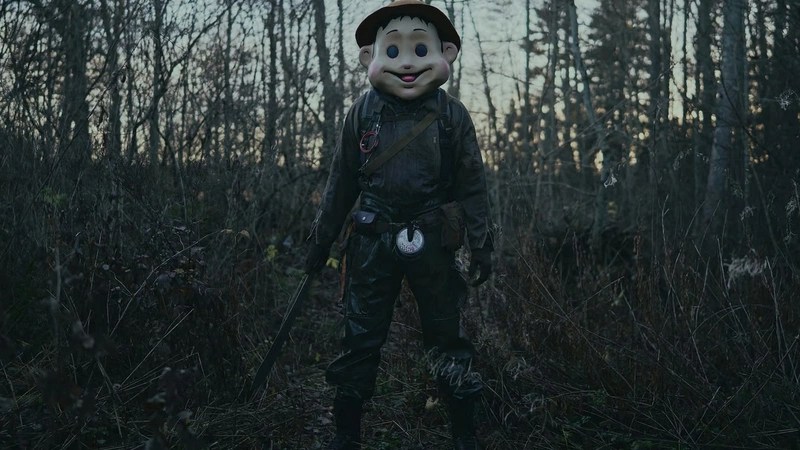
Robert Follin portrays a country killer with an axe to grind — literally — against our starring cast.
The way The Conference builds steam early on and then crescendos into its classical slasher violence before hitting a wall at the end is one of the more puzzling experiences I’ve had as a Netflix subscriber. If you pay for the service already, The Conference is entertaining and channels its parent subgenre’s conventions well enough that you won’t waste your time (the reasonable 100-minute length is also appreciated), but I’d be lying if I said the film’s last act doesn’t undue much of the goodwill the earlier parts of the movie earned. Patrik Eklund appears content to follow the example of earlier subgenre classics than trailblaze his own, in other words, yet I would’ve preferred he copy the endings of Jason Voorhees’ rampages along with everything else, because those movies knew how to end. The Conference does not and pays for it, in my assessment.
——————————————————————————————————————————————————————————–
SUMMARY & RECOMMENDATION: With enough memorable gore, practical stunts, and an effective narrative setup, The Conference should be another foreign (re: non-English language) Netflix Original genre gem a la The Night Comes for Us (2018), Bulbbul (2020), Blood Red Sky (2021), Black Crab, Thar (both 2022), or Lost Bullet (2020, 2022). Inconsistent screenwriting and a haphazard, slapdash ending in the final act, however, make this altogether a modest slasher that’ll fade into horror obscurity in the years ahead like so many of the Friday the 13th copycats of decades past.
—> ON THE FENCE; it’s worth a watch as I said before, but don’t expect a gore-filled roller coaster so much as a curiosity.
? Correct me if I’m wrong, but couldn’t most people survive a scalping long enough to receive medical treatment?

 Express Elevator to Hell
Discussion
No comments yet.