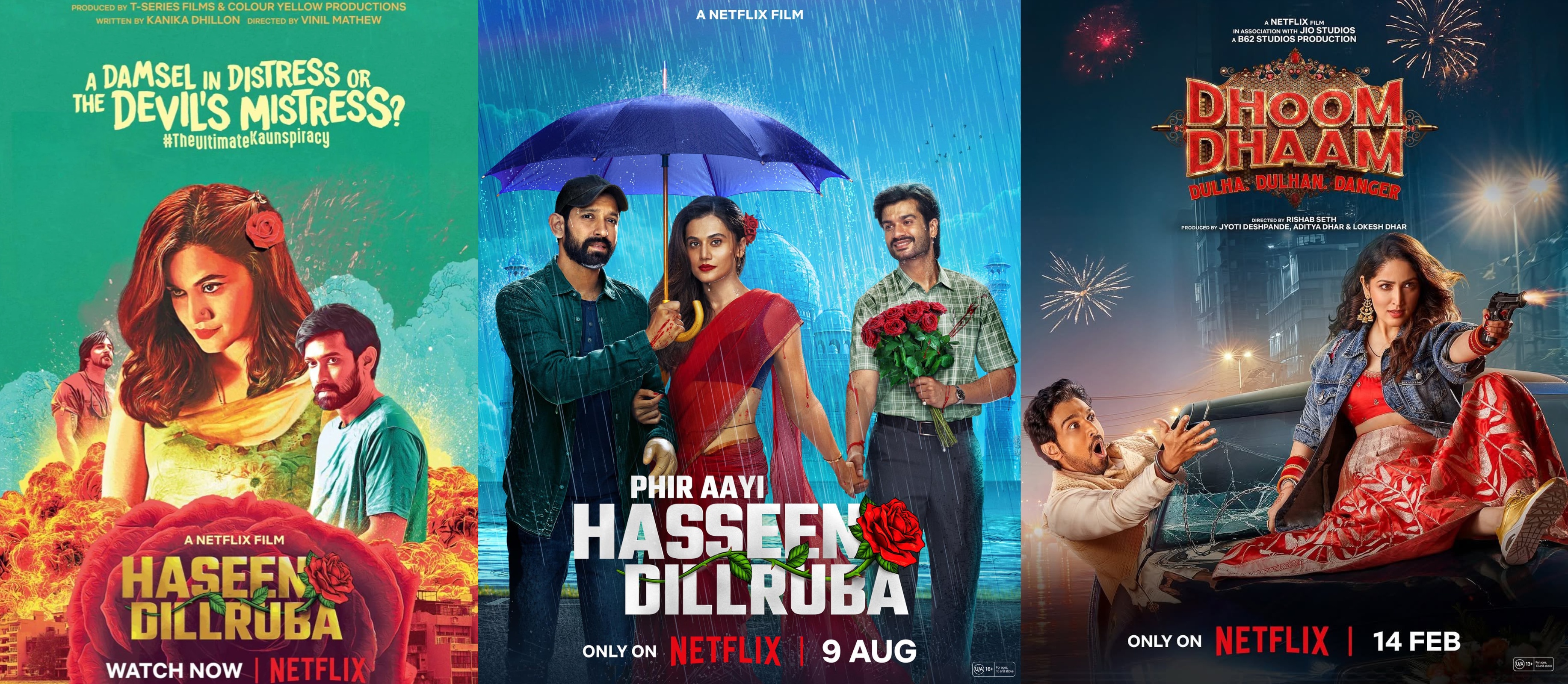
Directed by: Vinil Mathew [1], Jayprad Desai [2], Rishab Seth [3] || Produced by: Aanand L. Rai, Himanshu Sharma, Bhushan Kumar, Krishan Kumar [1, 2], Jyoti Deshpande, Aditya Dhar, Lokesh Dhar [3]
Screenplay by: Kanika Dhillon [1, 2], Aarsh Vora, Aditya Dhar [3] || Starring: Taapsee Pannu, Vikrant Massey [1, 2], Sunny Kaushal [2], Yami Gautam Dhar, Pratik Gandhi [3]
Music by: Amit Trivedi, Amar Mangrulkar [1], Sachet-Parampara, Anurag Saikia [2],Clinton Corejo, Bianca Gomes [3] || Cinematography: Jaya Krishna Gummadi [1], Vishal Sinha [2], Siddharth Vasani [3] || Edited by: Shweta Venkat Matthew [1], Hemal Kothari [2], Shivkumar V. Panicker [3] || Country: India || Language: Hindi
Running Time: 133-136 minutes [1, 2], 108 minutes [3] || 1 = Hasseen Dillruba, 2 = Phir Aayi Hasseen Dillruba, 3 = Dhoom Dhaam
While my patience for so-called “independent (re: non-major Hollywood studio)” feature-films in the United States has largely been exhausted thanks to numerous overblown, self-important awards-bait films over my lifetime, I have found more consistent entertainment from ostensibly similar, quasi-independent productions overseas. India in particular has a notable if underappreciated stable of sidestream, niche, or otherwise non-blockbuster cinema, at least with regards to small-scale dramas. The country’s cinematic culture is not a reliable stream of auteur-driven genre films per se — action, science-fiction, horror, etc. — but the more melodramatic stuff, from romantic comedies to family dramas to suspenseful crime thrillers, appears high in quality once you navigate beyond the bloated big-budget musicals.
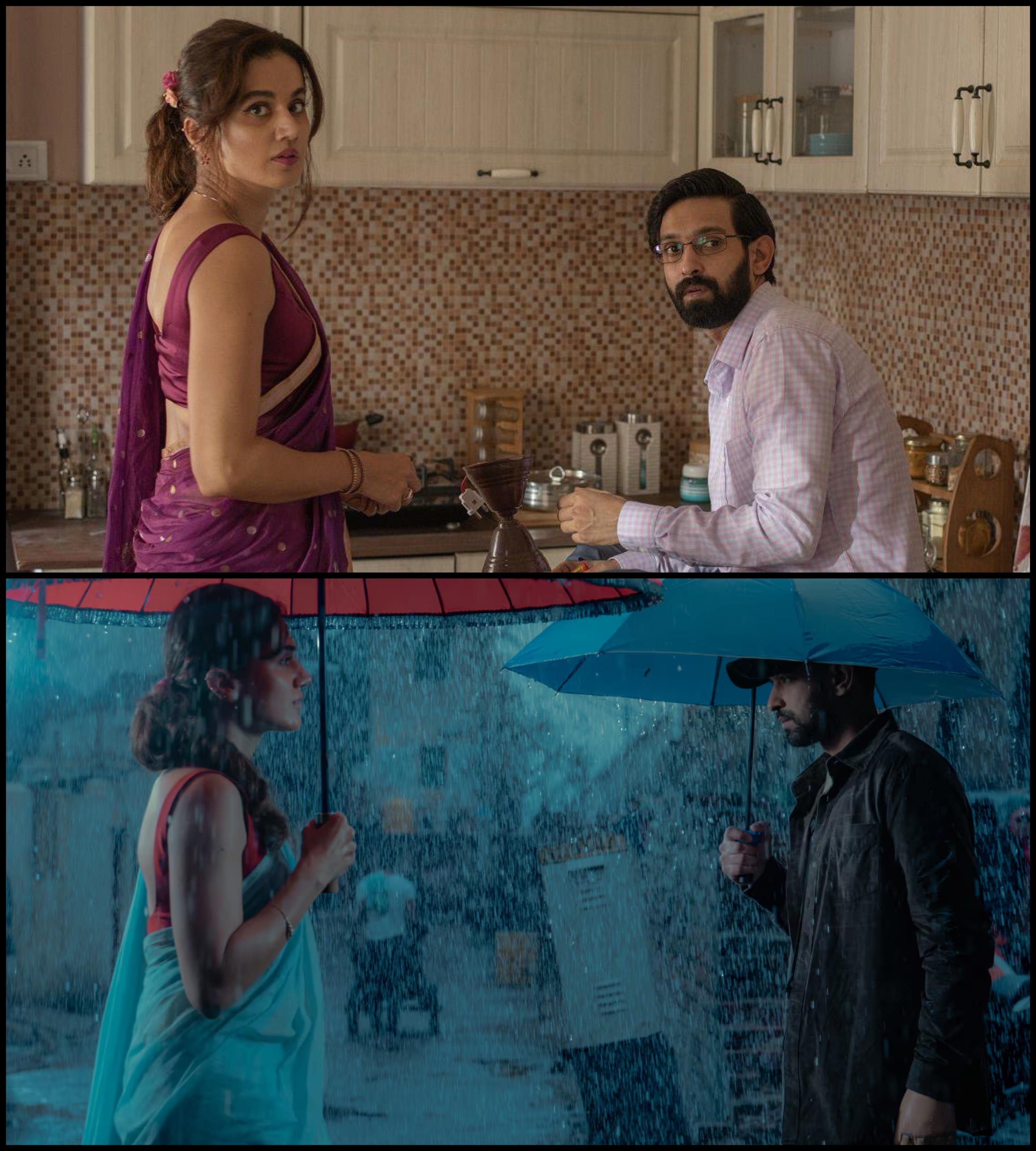
Taapsee Pannu and Vikrant Massey transition from a tense yet otherwise ordinary domestic relationship in the first Hasseen Dillruba (top) to a much weirder, let’s say “atypical” marriage in the sequel film (bottom).
On streaming in general and on Netflix in particular, I have been pleased with the quality of numerous small to mid-budgeted Indian projects exclusive to online film distribution. Most English-language and/or Hollywood works greenlit by Netflix have a much shakier reputation by comparison, but I, for one, am more consistently entertained by Indian Netflix Original features than your typical pan-Indian masala blockbuster.
A big reason why is how many of these Indian Netflix Originals are or feel like truly independent productions free of studio executive meddling and focus group-approved subject-matter. Although two of the three subjects of today’s review — Haseen Dillruba (“Beautiful Beloved”) and its sequel, Phir Aayi Hasseen Dillruba (“Beautiful Beloved is Back”) — were at least coproduced by larger, prolific Mumbai studios (e.g. Eros International and T-Series), all of these movies differ in style and substance from the musical giants that dominate both Bollywood (Hindi-language) and South Indian (Dravidian language) business models. As such, the partial misnomer of “Hindi Indy” will continue to be an ongoing term I use for reviews of movies like Dillruba and Dhoom Dhaam (“Fanfare”) on this site.
The Dillruba films remind me to a certain degree of Paul Feig’s Simple Favor (2018, 2025) movies, which combine awkward social comedy with pulpy crime mysteries into an entertaining whole. The former, like Dhoom Dhaam, lean more into the romantic drama common to most popular Indian filmmaking as opposed to Feig’s nonstop dialogue, but their unpredictable screenplays keep their audiences on their toes.
Direction-wise, the Dillruba movies feel understated and depend more on mise-en-scène and editing to power their visuals. This dynamic allows the memorable performances of the strong cast (see an exception below) to shine without interruptions from showy camera movements. Our two leads, Taapsee Pannu and Vikrant Massey, in particular have great chemistry and are major reasons why the first film is as good as it is.
By the time we reach the sequel, however, their chemistry and the effective narrative twists of the original run out of steam. The increasingly contrived, unrealistic plot developments of Phir Aayi Haseen Dillruba compound on each other while the script’s flashbacks grow more obnoxious. As much as the first movie overcomes its unwieldy 136-minute running time — long by the standards of most conventional thrillers but modest for your average Indian feature — its follow-up struggles with a nearly identical 133-minute length. Newcomer Sunny Kaushal is also tiresome, but the sequel’s main problems are structural in nature.
Dhoom Dhoom, on the other hand, boasts most of the strengths of the Dillruba flicks but few of their weaknesses. Sketched around a reasonable 108-minute length and a classical Taming of the Shrew (1592)-premise, Rishab Seth’s sophomore feature works as a romantic comedy and absurdist crime drama in equal measure. Like Nikhil Nagesh Bhat, Seth appears to specialize in shorter high-concept films that nowadays feel readymade for streaming, so smart pacing, a memorable relationship between leads Yami Gautam Dhar and Pratik Gandhi, and a handful of modest crime set-pieces bring the story home.
The heart of the story is, of course, Dhar and Gandhi’s diegetic relationship, while Seth’s semi-stylized direction of Siddharth Vasani’s cinematography accentuates rather than distracts from that foundation. A cute sequence with drone shots and fireworks FX as well as a goofy male strip tease flesh out their character growth through genuine emotion and visual comedy, respectively; but the film is packed with those types of sequences, to its credit. Dhoom Dhaam is all muscle and no fat.
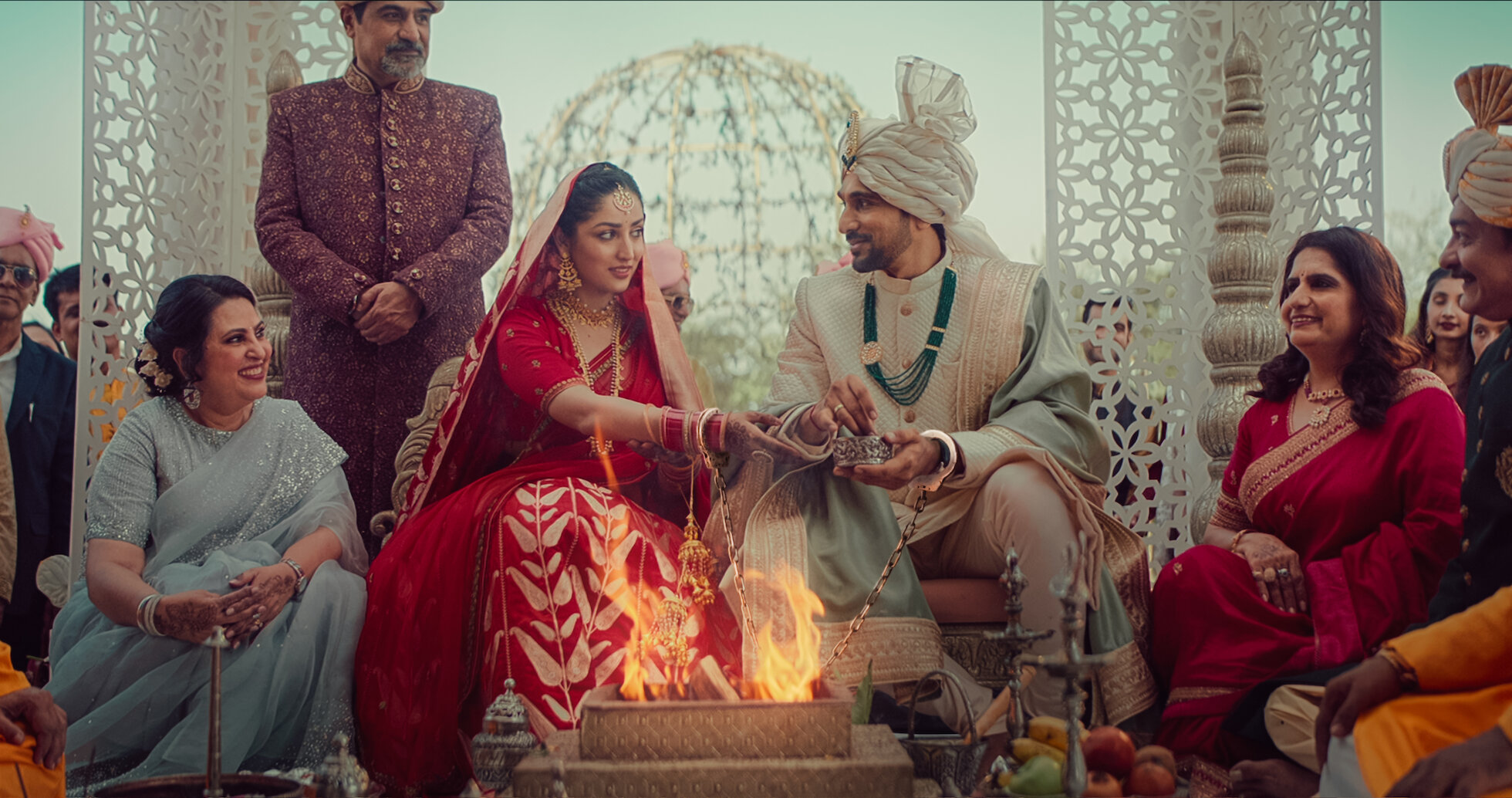
Leads Yami Gautam Dhar (center left) and Pratik Gandhi (center right) neither elope with a secret lover nor climax their story in matrimony in Dhoom Dhaam. Their arranged marriage, instead, is the film’s inciting incident.
That general narrative efficiency is why I tend to prefer smaller Indian productions like these, despite their own occasional shortcomings, even if many “Hindi Indies” are more dramatic than action/sci-fi/horror in flavor. I can be a romantic guy on occasion, and Indian movies like these are a major reason why. Though I would not recommend Phir Aaayi Haseen Dillruba to most audiences, its predecessor and Dhoom Dhaam especially have cross-cultural appeal beyond South Asian viewers. The latter two will stay with you far longer, I reckon, than most blockbusters from either North or South India.
——————————————————–
SUMMARY & RECOMMENDATION: One has to give the likes of Netflix credit when they greenlight movies that take chances relative to the bland, focus-group tested mainstream. Neither the Dillruba films nor Dhoom Dhaam pander to general audiences like most blockbuster cinema does, for better or for worse committing to their filmmakers’ visions of blended romance, dark comedy, and crime drama.
— However… both of the second Dillruba movies overstay their premises’ welcome, the second one in particular, while Dhaam sports some minimal plot contrivances of its own.
—> Dhoom Dhaam comes RECOMMENDED, I am ON THE FENCE with respect to Haseen Dillruba as much as I liked its direction and concept, and Phir Aaayi Haseen Dillruba is NOT RECOMMENDED.
? I assume those crocodiles in Phir Aaayi Haseen Dillruba are mugger crocs (Crocodylus palustris)?

 Express Elevator to Hell
Discussion
Trackbacks/Pingbacks
Pingback: ‘Khakee: The Bihar & Bengal Chapters’ (2022, 2023) & ‘The Family Man’ (2019, 2021): The Expansion of Hindi Streaming Television | Express Elevator to Hell - March 21, 2026