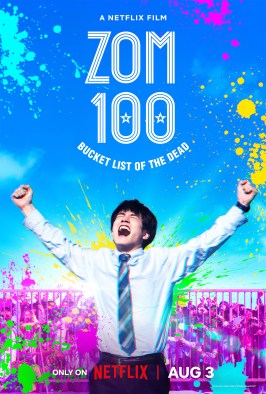
Directed by: Yûsuke Ishida || Produced by: Akira Morri
Screenplay by: Tatsuro Mishima || Starring: Eiji Akaso, Mai Shiraishi, Shuntarô Yanagi, Yui Ichikawa, Kazuki Kitamura, Mayo Kawasaki, Akari Hayami
Music by: Yoshiaki Dewa || Cinematography: Taro Kawazu || Edited by: Eri Usuki || Country: Japan || Language: Japanese
Running Time: 128 minutes
As a doctoral student about to end their seventh(!) year in graduate school, I’ve long wished for a “real job” that pays a halfway decent wage, boasts more professional credibility than being a thirty-something year-old academic, and perhaps even adheres to a predictable 9-5 schedule. I often feel as if I have my feet in the worst of two worlds, seesawing between long, unregular hours of complicated, headache-inducing peer-reviewed scientific research and repetitive, mindless teaching duties like giving the same damned lectures over and over, scheduling student lab makeup substitutions, and grading assignments week after week.
On the other hand, the prospect of a more permanent office job doesn’t elicit excitement from me either beyond the prospects of a substantially higher paycheck (still nothing to sneeze at, I suppose). Nightmare work stories abroad like those of Japanese professionals staying on the clock till the point of hospitalization from exhaustion imply workaholic culture expands beyond national borders, and even informs the background of international cinema as well.
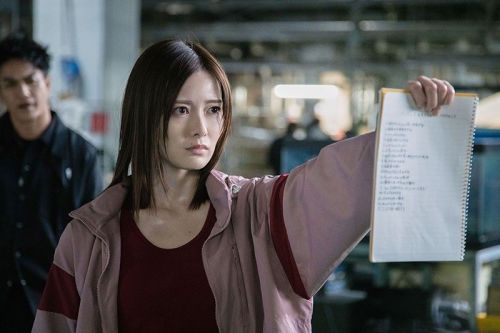
Female lead Yui Ichikawa reminds protagonist Eiji Akaso of his titular bucket list while the latter’s boss, Kazuki Kitamura, glowers at them.
Enter Bucket List of the Dead, Yûsuke Ishida’s live-action feature adaptation of the manga comics of the same name by Haro Aso, a Netflix Original Film that satirizes workplace culture in the East Asian island nation by portraying its zombie apocalypse backdrop as an opportunity for its main characters’ personal fulfillment rather than yet another inconsistent, poorly paced gorefest. Bucket List is equal parts satirical comedy and also a serious undead survival adventure, leaning into its oddball themes of living one’s life to the fullest without sacrificing the tension of undead zombies trying to eat its characters alive. My favorite narrative dynamic of the film is how well it blends those tones, how it shows its social commentary through visual comedy while still treating its antagonists as serious threats to its cast in every set-piece.
To back up a bit, Bucket List opens in media res with its protagonist, the plucky yet often downtrodden Eiji Akaso, on his way to work when a few undead ghouls — and then several moments later, way more than a few — chase him back up his apartment’s outdoor stairwell. That adds to his commute! The film then flashes back to Akaso’s first day at said workplace, a multimedia production company, where his initial excitement at landing his dream job rapidly deflates once he’s forced to work 14-hour+ shifts that make my grad student schedule look like a picnic. Worst of all is his authoritarian boss (Kazuki Kitamura), who rules the office with an iron fist and makes Akaso’s professional life so miserable the later zombie apocalypse makes him realize that… hey, he doesn’t have to go to work anymore!
As far as audiovisual style is concerned, Bucket List combines memorable yet not excessive bloodshed with stylish slow-motion, an energetic pop soundtrack, and the neon backdrops of Tokyo’s urban landscape. Screenwriter Tatsuro Mishima works various eclectic, fun quirks of his protagonist’s backstory into different narrative set-pieces that Ishida directs with aplomb, like Akaso’s past as an American football (gridiron) player in college, adding unique flair to the action that jibes with the movie’s overall weird combination of different genre tones. Montages condense portions of Bucket List’s reasonable 128-minute length to keep the pace snappy and contrast with those aforementioned funky action scenes, which then vanish when the movie hits its abrupt third act twist.
For me, the film’s stylistic and thematic inversion in its last fifty minutes make the movie, tying the whole story, but the character arc of Akaso most of all, together in a nice shiny bow. I won’t spoil the details save for how I think the odd yet relatable social commentary of the finale, in addition to the memorable choice of location (the Aqua World Ibaraki Oarai Aquarium), which seems to have turned off many audiences accustomed to the nihilistic cynicism of a Dawn of the Dead (1978), complete the story’s overarching message without heavyhanded preaching. My only major gripe with the film at all is its bloated final action sequence with an undead, well… let’s say fish, that boasts impressive computer generated imagery but lasts way, way too long.
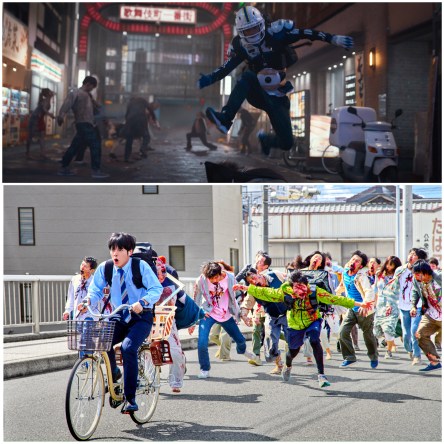
Eiji Akaso has chances to show off both his gridiron (top) and cycling (bottom) skills in the zombie plague now that he doesn’t have to live at the office anymore.
Top to bottom, Bucket List of the Dead isn’t the most ambitious work of zombie fiction a la The Walking Dead’s (2010-2022) endless, disorganized portrayal of the end of the world or Zack Snyder’s high-concept blend of a heist film with Aliens (1986) in Army of the Dead (2021) and is better for it. The film’s unorthodox undead monsters accentuate its unique characters’ growth, indicative of a quality genre film that uses its genre flourishes to power its story rather than the other way around. As someone who has disliked his current occupation for some time now, I appreciate this movie’s creative criticism of the modern professional workplace, even if from within a cultural backdrop far different from mine.
——————————————————————
SUMMARY & RECOMMENDATION: We’ve all felt like mindless zombies at work from time to time, and Yûsuke Ishida’s Bucket List of the Dead’s scathing critique of Japanese work culture feels the right cinematic antidote both for those tired of their job as well as those who need to stop sulking about said job. Blending genres this disparate (comedy and zombie horror) this well is difficult to achieve and yet these filmmakers make it look easy. Through creative action cinematography, an identifiable sense of humor from sound-design to soundtrack to its main characters, and just the right amount of undead blood ‘n gore, Bucket List demonstrates how attitude is the difference between an ordeal and an adventure.
— However… the film’s third act lasts too long, its final action centerpiece most of all.
—> This latest weirdest Netflix Original Film comes RECOMMENDED.
? Did Eji Akaso not have any immediate family members he was worried about during this zombie outbreak?

 Express Elevator to Hell
Discussion
Trackbacks/Pingbacks
Pingback: ‘Fable’ (2019, 2021): The Goofy, Lovable ‘John Wick’ | Express Elevator to Hell - October 3, 2024