;;;;
Directed by: Bandreddi Sukumar [1], Hanu Raghavapudi [2], Nag Ashwin [3] || Produced by: Ram Achanta, Gopichand Achanta, Anil Sunkara [1], Prasad Chukkapalli, Sudhakar Cherukuri [2], Priyanka Dutt, C. Aswani Dutt [3]
Screenplay by: Bandreddi Sukumar [1], Hanu Raghavapudi [2], || Starring: Mahesh Babu, Kriti Sanon [1], Sharwanand Myeni, Sai Pallavi [2], Keerthy Suresh, Dulquer Salmaan, Samantha Ruth Prabhu, Vijay Deverakonda [3]
Music by: Devi Sri Prasad [1], Vishal Chandrasekhar [2], Mickey J. Meyer [3] || Cinematography: R. Rathnavelu [1], Jaya Krishna Gummadi [2], Dani Sanchez-Lopez [3] || Edited by: Karthika Srinivas [1], A. Sreekar Prasad [2], Kotagiri Venkateswara Rao [3] || Country: India || Language: Telugu
Running Time: 177 minutes [1, 3], 156 minutes [2] || 1 = 1: Nennokadine, 2 = Padi Padi Leche Manasu, 3 = Mahanati
I never imagined I would be so interested in South Asian, specifically Indian filmmaking when I was younger. As a group, my favorite type of South Asian cinema are Telugu films despite my earlier affection for Mumbai-based Hindi cinema (i.e. “Bollywood”) and ongoing preference for Sanjay Bhansali’s elaborate period-romance musicals (e.g. Hum Dil De Chuke Sanam [1999], Bajirao Mastani [2015]). Telugu cinema as a whole may have the best batting average in terms of directorial quality and screenwriter fluency at balancing disparate genres into single films, which Indian cinema as a whole seems predisposed despite my protests in favor of straightforward, standalone genre films.
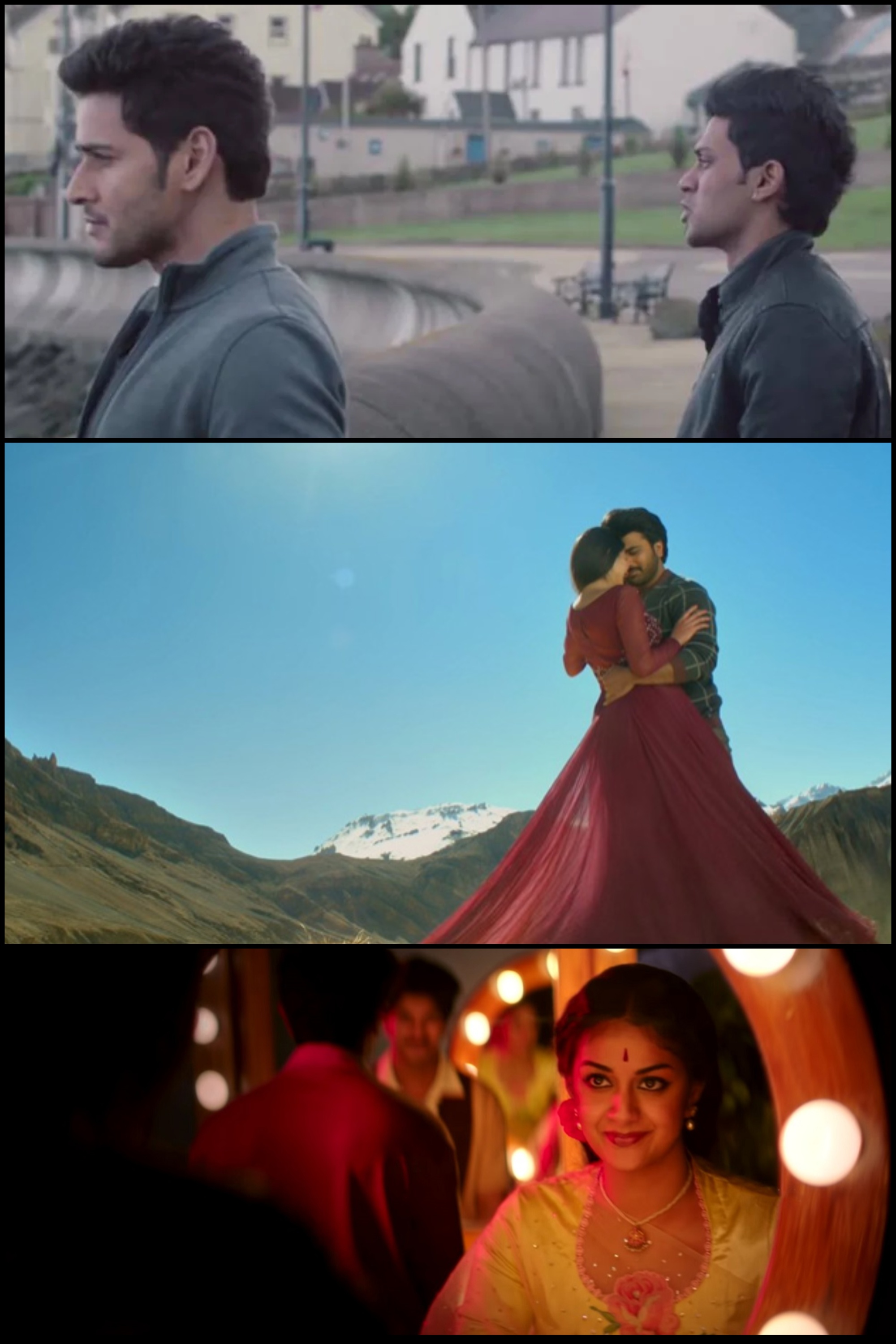
Top: Lead Mahesh Babu (left) receives exposition from Naveen Polishetty (right) that moves the plot of Nenokkadine in its third act. Middle: All of PPLM’s musical numbers are shot in scenic locations, but do little to flesh out its characters or drive the story. Bottom: Star Keerthy Suresh flirts with her protagonist’s diegetic husband, the real-life star and polygamist Gemini Ganesan (Dulquer Salmaan), in Mahanati.
My consumption of great to bad Telugu cinema has been so rapid since the COVID-19 pandemic era that I’ve shifted many of my review formats to “volumes” or trios of shorter, condensed essays of multiple films like those of today’s blog post: 1: Nenokkadine (English = “1: I Am Alone”), Padi Padi Leche Manasu (“A Heart That Keeps Rising and Falling”; henceforth, PPLM) and Mahanati (“The Great Actress”). These movies encompass the last decade or so of Hyderabadi filmmaking (Telugu cinema is based in the capital of the Indian state of Telangana) and provide a decent overview of the Telugu industry’s range of modern shlocky action faire, melodramatic romance, and biographical dramas. Unfortunately for my tastes, none of these are great showcases of South Indian song-and-dance numbers, as two out of the three treat their musical sequences as afterthoughts and one isn’t a musical at all.
First in the lineup is Nenokkadine, one of the weirder Mahesh Babu-vehicles I’ve seen and a good summary of his strengths and weaknesses as a movie star. Babu’s filmography slants towards generic action movies that take advantage of his limited range (e.g. Athadu [2005]) but still, for some reason, emphasize his shaky dance skills (e.g. Okkadu [2003]); Nenokkadine takes a semi-creative route with his character by almost deconstructing the typical South Indian action star persona and showcasing better than average dancing relative to Babu’s career.
Nenokkadine portrays Babu as a schizophrenic rock star also suffering from post-traumatic stress disorder as a result of tortured, orphaned upbringings. Although his eclectic backstory provides a unique spin on the film’s overarching mystery of Babu’s origins, which drive the story, writer-director Bandreddi Sukumar never utilizes this odd setup to its fullest extent. Nenokkadine is essentially a murder-mystery where Babu retraces his British-Indian roots to discover the circumstances of his biological parents’ deaths, a premise of which I approve given its weirdness. Aside from a handful of memorable sequences where Babu’s mental disorders come into play (e.g. an opening action sequence that plays in Babu’s head but still involves extensive fight choreography and stunts), however, Nenokkadine unfolds like a standard-issue South Indian action film; its narrative pace is mediocre, its bad guy (Muhammad Nassar) is flavorless, the storyline grows more convoluted every act, and the film lasts way, way too God damned long, as is the South Asian film culture tradition.
Fairing worse in terms of both musical achievement and screenplay structure is Hanu Raghavapudi’s PPLM, another would-be charming yet tiresome romantic drama featuring the Tamil-Telugu dancing queen herself, Sai Pallavi, this time opposite the forgettable male lead of Sharwanand Myneni. A common criticism of romantic films, dramatic, comedic, or otherwise, is how often they drag out the “will they/won’t they” flirting dynamic of their leads, often going to extended, contrived lengths to stretch their courtship as long as possible. PPLM embodies this narrative trope in full, detailing the absurd scenarios where Sharwanand and Pallavi tease each other in Act One, break up apart with little justification in Act Two amidst the 2015 Kathmandu earthquake, and then stress about Pallavi’s retrograde amnesia (yeah, they went there) in Act Three. By the time the movie wraps at over two and a half hours in length, you’ll realize nothing in this movie justifies the narrative running past 90 minutes, not its forgettable “tourism video“-inspired song numbers nor its tacky digital FX nor Pallavi and Sharwanand’s forgettable chemistry.
Last and the best of these three films is Mahanati, an almost stereotypical biopic about a now deceased legend of the Telugu and Tamil film industries, Nissankara Savitri (Keerthy Suresh), told in the standard awards-bait format that covers the primary subject’s entire adolescent to adult life. This type of script, host to all kinds of formulaic cliches and grossly overrepresented in Western film industry awards shows, normally irritates the hell out of me. Here, Mahanati won me over despite not shooting its rise-and-fall character arc in a novel way, instead taking its sweet time (177 minutes) to portray Suresh’s humble origins and transition from a likable, pretty village girl with stage presence to a theatrical superstar. The narrative pacing didn’t bother me, though, as most every sequence is mined for either visual humor or contributes to Suresh’s arc. If only Mahanati had jettisoned the superfluous framing plot set in the 1980s starring contemporary stars Samantha Ruth Prabhu and Vijay Deverakonda, then my recommendation for the film would be that much stronger.
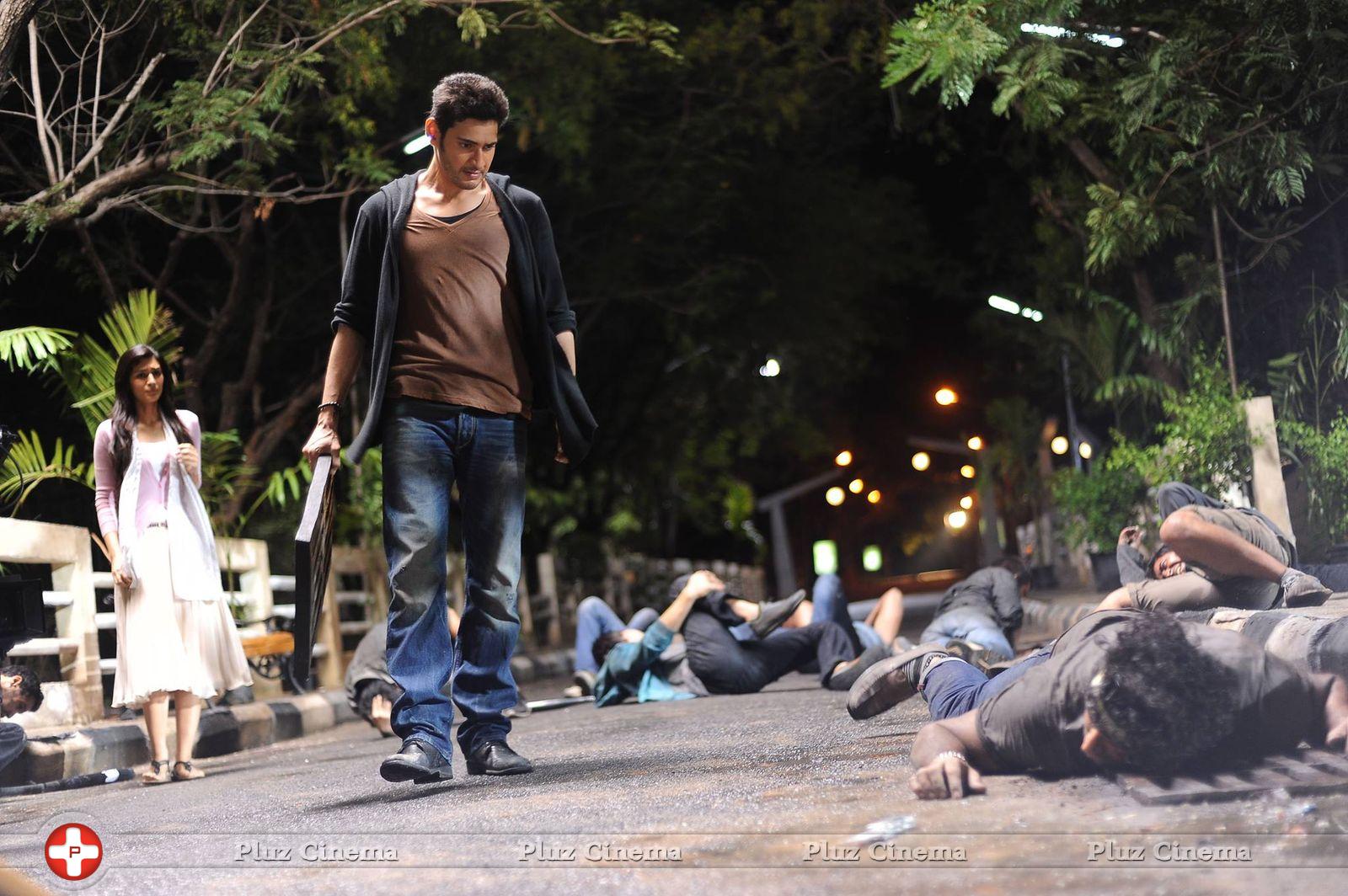
Babu lays the smack down on some goons who harass Kriti Sanon’s uninteresting female lead (far left) in Nenokkadine.
My only universal complaints about these three movies have to do with their passable audiovisual direction. Outside of the memorable, if goofy action sequences of 1: Nenokkadine, a handful of decent performances (Suresh and costar Dulquer Salmaan in Mahanati; Babu gets a chance to emote in Nenokkadine), and the occasional bad special effect (e.g. the Nepali earthquake sequence in Padi Padi Leche Manasu) the workmanlike direction of this bunch is merely serviceable. None of these films are representative of the musical power of South Indian Cinema in particular and Indian filmmaking more broadly, but rather exemplify the highs and lows of Hyderabad’s popular dramatic filmmaking.
————————————————————–
SUMMARY & RECOMMENDATION: 1: Nenokkadine isn’t a bad action movie, and I respect its shlocky, bonkers narrative at times, but lead Mahesh Babu’s better-than-average performance isn’t enough to overcome the movie’s forgettable musical elements, longwinded runtime, and convoluted narrative. I have much less complementary things to say about Padi Padi Leche Manasu, which wastes almost as much of my time as Ante Sundaraniki (2022) on a contrived, one-note relationship with simplistic, dull characters. Mahanati, last of all, surprised me the most with its mature, well paced biographical story about a classical Telugu star, though its unnecessary frame story and use of super 16mm film stock for the 1980s time periods are distracting.
—> I’m ON THE FENCE with respect to 1: Nenokkadine, DO NOT RECOMMEND Padi Padi Leche Manasu, and RECOMMEND Mahanati.
? Why not use the 16mm film for the main plot of Mahanati since that story took place in the 1950s-1970s?

 Express Elevator to Hell
Discussion
No comments yet.