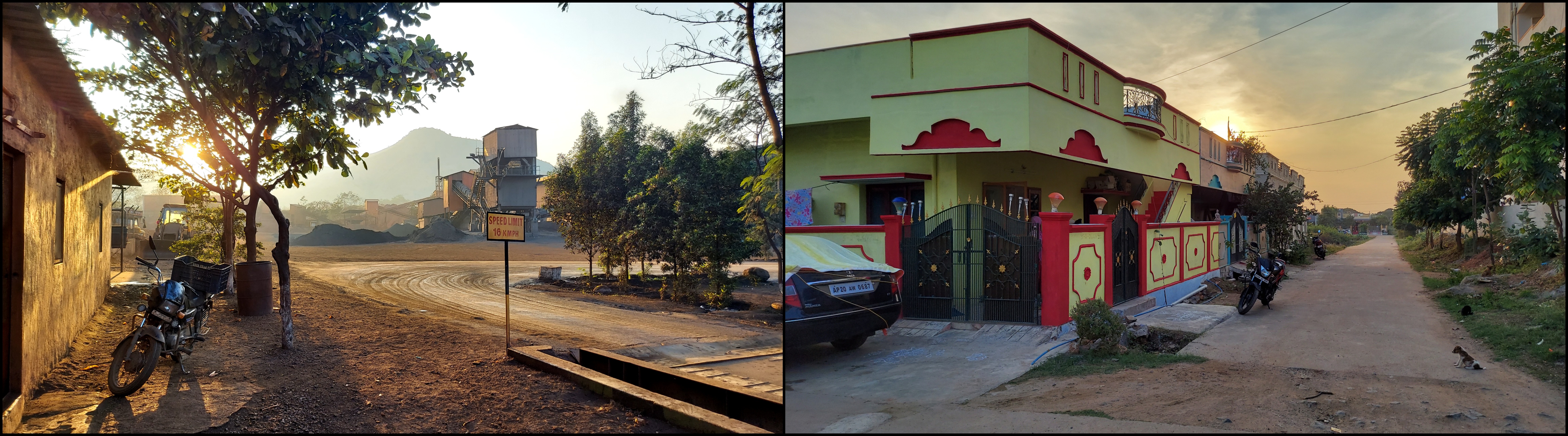
Although I suspect air pollution plays a role, you won’t forgot the hazy, moody sunsets throughout India. Left: A steel mill where my brother-in-law works near Bellari, Karnataka. Right: My parents-in-law’s house in Khammam, Telangana.
As a single adult male and as a family man, I have traveled throughout India multiple times and probably know the culture about as well as one can without living there permanently. My first trip in April-May 2016 centered on an internship at the Madras Crocodile Zoo just south of Chennai; my second was purely a social affair to visit friends from college and the aforementioned zoological park from April-May 2017, which included stints in Mumbai, the Delhi-Agra-Jaipur “Golden Triangle,” travel throughout Uttar Pradesh and Uttarakhand, and a short stay in Bangalore (or is it Bengaluru, now?); last but not least, my most recent trip this past December 2023-January 2024 concentrated on the Telugu nation homeland of my in-laws (Telangana and Andhra Pradesh), plus a sizeable excursion in Karnataka from Ballari to Gokarna.
For those who don’t know, India’s dry season peaks in April-May (re: the hottest part of the year) if you wish to test your heat tolerance and understanding of the urban heat island effect. The rainy season, by contrast, lasts from late May through September depending on the region. That climatic pattern implies the best time to visit India — most tropical areas in the northern hemisphere, really — is in the cooler months of December to January when there’s little to no chance of precipitation.
While I am no expert on South Asian culture or history, nor am I a travel guru for any part of the world, my personal and professional connections to India have made my travels there meaningful. I therefore have formed strong opinions on what I like, loathe, and feel ambivalent towards in the Land of Hindus. See below for my general thoughts on the good, bad, and weird things to expect if you decide to travel to India in the future…
The Good ——————————————————————————————————————————————————————
1a.) The Sheer Variety of Landscapes: This point is kind of a twofer (see below), but one of my favorite aspects of Indian sightseeing is, well, the incredible variety of things, places, people, and nature to see. In terms of natural landscapes, India’s behemoth geography spans an impressive range from the Himalayas to the arid deserts of the northwest to the tropical savannahs and muggy wetlands of the south. Even the most mundane areas boast a different look and feel than your average North American landscape, and the hazy sunsets give the place an almost primordial, otherworldly feel to outsiders.
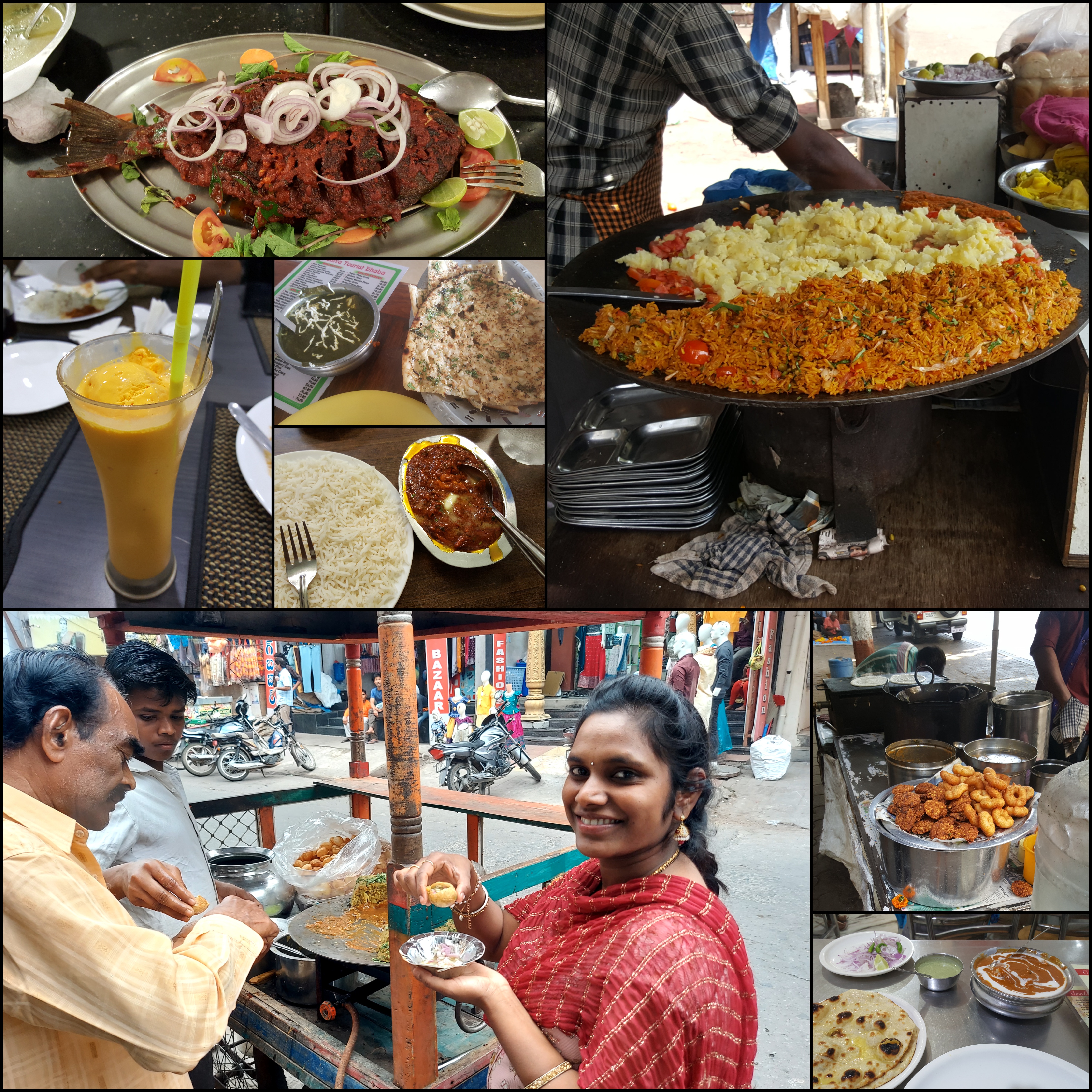
From South Indian fish masala to the creamy North Indian dishes of palak paneer and butter chicken to all the pan and deep-fried street food you could ever ask for, Indian cuisine is a never-ending buffet for lovers of spicy, savory items.
1b.) The Sheer Variety of People & Cultures: India alone — to say nothing of its former association with modern day Pakistan, Bangladesh, Sri Lanka, et al. under the British crown — is a de facto federation of different nation-states as if the entirety of Europe (not just the European Union) + Russia (itself a multiethnic federation) were forced into a single political union. As such, the dominant language can change from state to state, necessitating intercultural communication (see bullet point 3 below) throughout this cornucopia of different religions (Hinduism, Islam, Christianity, Sikhism, Buddhism, etc.) and ethnic groups. This makes well planned, extended trips (3-4 weeks, minimum) required for travelers who wish to cover a halfway representative sample of the country.
2.) Architectural & Cultural Heritage: Fans of archaeology, religious iconography, and history should have a ball across India given the plethora of temples, forts, and centuries to millennia-old heritage sights open to the public. To keep it short, yes, the Taj Mahal lives up to the hype, yet that is simply the tip of the iceberg in terms of the cultural treasures India possesses. History buffs will be as pleased with this feature of India as outdoorsy fans of national parks will love the country’s natural sights.
3.) Ease of Conversation/Travel/Bartering Despite Language Barriers: Unlike regions of the world where a single lingua franca dominates such as, say, Latin America, India’s balanced mosaic of ethnolinguistic groups encourage socioeconomic exchange through a variety of languages and dialects. As such, international travelers can get by on a modicum of local vocabulary plus English given the region’s status as a former British colony.
4.) The Food: Aside from the always questionable local moonshine, the cuisine of India is world famous for a reason. I’ve heard and/or read many a person not recommend street food for fear of cleanliness, but for the life of me, I could never understand why. India’s street food is cheap, often deep-fried, and spicy as hell (any bacteria is history, man), while the various curry entrees from every part of the country kick ass. I have much less flattering comments for Indian desserts outside of gulab jamun, ariselu, and mango ice cream, but those are minor complaints given how many savory, spicy options are at your fingertips. For every oddball dish you may politely ignore (stop recommending daal, already; that’s like white people bragging to Desis about how “delicious” a generic turkey sandwich is), you can gorge on dozens of thick, creamy North Indian curries or oily, zesty South Indian ones.
5.) General Affordability: Aside from the cost of flying there, traveling in-country is an affordable breeze whether you move by plane, train, or automobile, reserve a hotel, or stuff your face with the delicious food all hours of the day. Sure, this point is not wholly unique to India by any means, yet the exchange rate between most developed national currencies and the Indian rupee, plus the sheer size and variety of the place (bullet points 1a-b above), make this upside of Indian trips worth emphasizing.
The Bad ——————————————————————————————————————————————————————
1a.) Overwhelming Pollution: Like bullet points 1a and 1b in the previous section, this first drawback to Indian travel is a one-two punch; overlooking the sheer amount of trash everywhere (1b below), India is one of the most polluted countries in the world and particularly problematic in terms of drinking water. I get sick (upset stomach, diarrhea, prolonged exhaustion) every time I visit no matter how good of shape I am beforehand, to the point where I must accommodate at least one week to acclimate my body to the new, much less healthy environment.
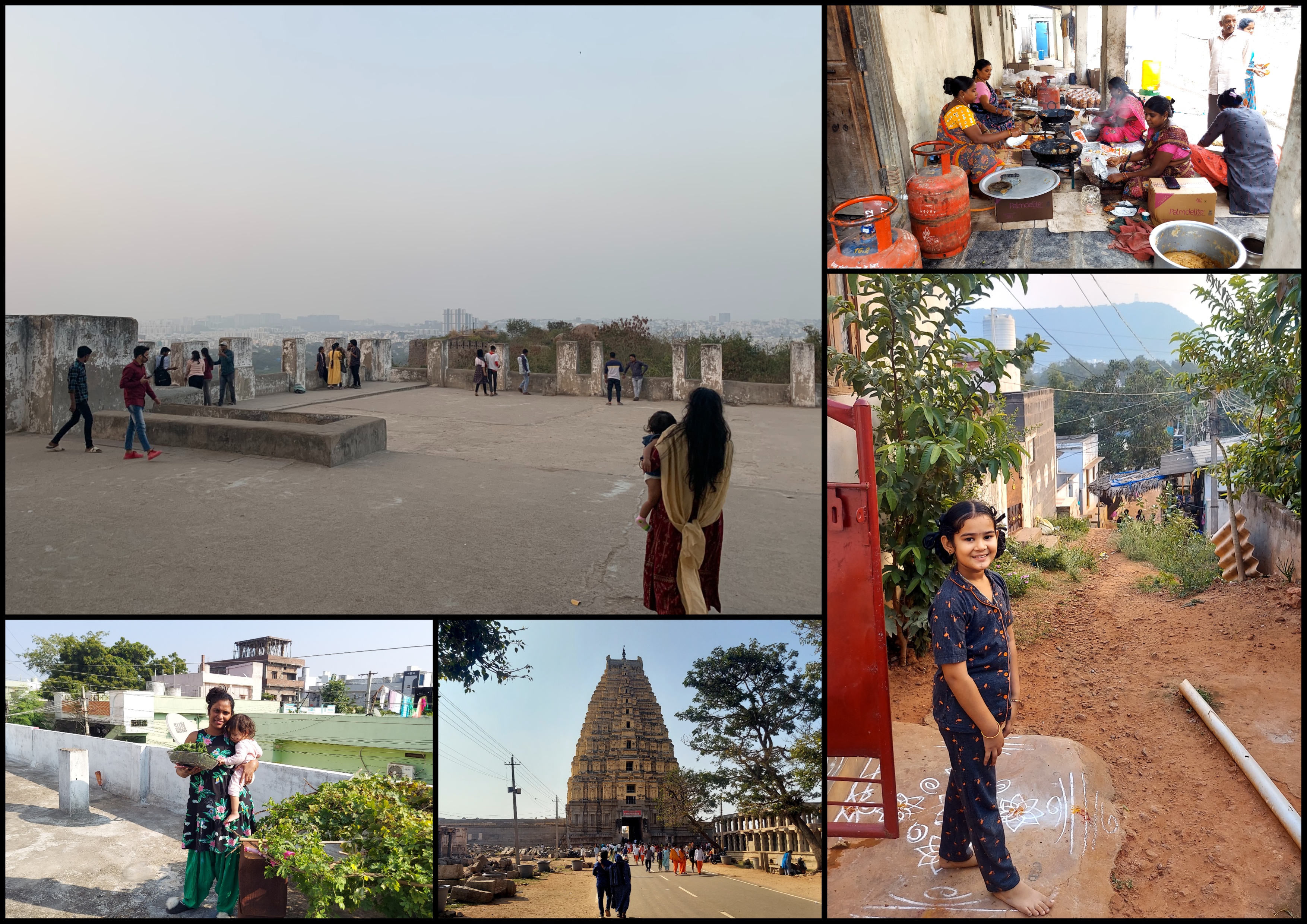
Top left to bottom left, clockwise: The top of Golconda in Hyderabad; ariselu production in Guntur; one of my cousins poses in her hillside neighborhood in Mangalagari; classical South Indian temple architecture in Hampi; and my wife and daughter showcase harvested kakarakaya from my parents-in-laws’ rooftop garden in Khammam.
1b.) Overwhelming Litter & General Filth: Thanks to both the high population density and the surprising lack of basic waste receptacles (we call “trash cans” in the USA what Indians refer to as “dust bins”) in most public spaces, you might well be shocked by the alarming level of trash throughout India. In both rural areas and urban, somewhat pristine to highly developed, you cannot avoid either individual or industrial waste no matter where you go. I cannot imagine travelers’ reaction to this if they hail from famously clean nations like Canada, Iceland, or Japan.
Personal hygiene is also an issue: Many population centers rely on open sewers and open defecation or urination is common. One should keep hand sanitizer on their person too, as public bathrooms are uncommon and often lack basic amenities like soap.
2.) Constant Staring (if you do not ethnically blend in): This is a polite way of saying people will gaze at you nonstop unless you look like you were born to South Asian parents. If you do not pass as Desi by birth, people of all ages, creeds, backgrounds, and sexes will stare at you no matter where you go, although adult males stare the most and in rural areas especially. The upside to this if you’re a male is that it won’t feel that threatening, just odd and off-putting; females from outside South Asia, however, may be unprepared for the sheer level of the male gaze they’ll receive.
3.) Constant Honking (from vehicles): Lay off the f*&%#ing horns, already! To be sure, most urban areas have loud, congested traffic to some degree, but India’s is far more intrusive than anything I’ve encountered in the Americas.
4.) The Surprising Lack of Dairy Products: Cattle may be revered in Hindu folklore and items like cream and paneer are important ingredients in many dishes, but for the most part, westerners accustomed to heavily subsidized meat and dairy industries will struggle to purchase bulk quantities of milk, yogurt, ice cream, and most kinds of cheese in India, many of which pair well with the culture’s spicy entrees.
The Weird (neutral) ———————————————————————————————————————————————————
1.) People, People Everywhere: Perhaps the most identifiable aspect of India to yours truly is the sheer population density of the place. This feature may stick out because I have not traveled extensively elsewhere throughout South or East Asia (most of my international trips are limited to Latin America), but it is worth mentioning. Compared to the USA, India is about 1/3 the geographic size but over 4X the population, meaning an increase in human concentration in excess of 12X. Sure, big cities feel big and crowded almost anywhere, but the constant human presence throughout even rural areas took me by surprise.
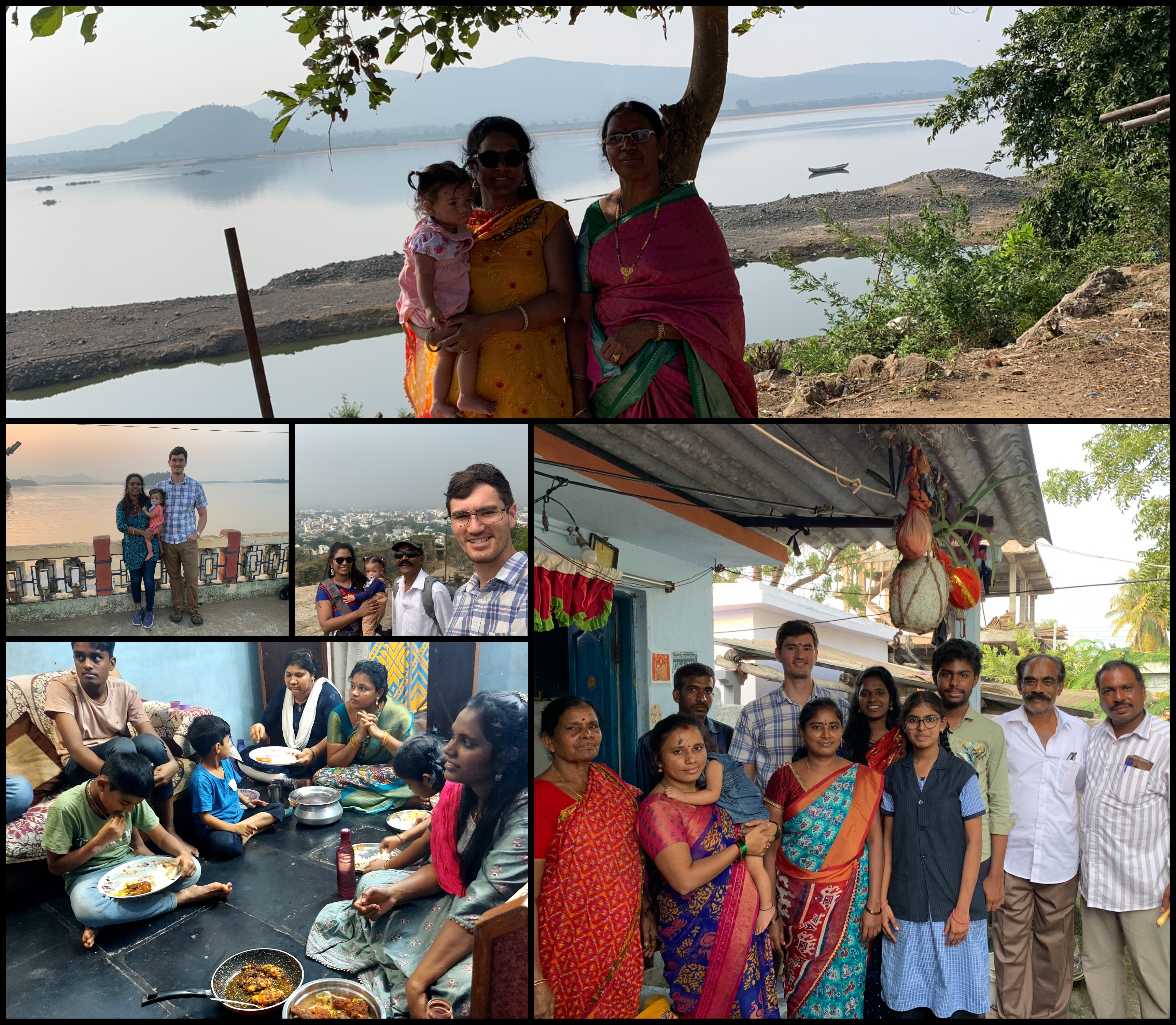
Top: My wife, daughter, and mother-in-law next to the Krishna River in Parnasala. Middle Left: My family and I at the Kinnerasani Dam at the eponymous wildlife sanctuary. Middle Right: My family plus my father-in-law on top of the Khammam Fort. Bottom Left: My wife, Mangalagiri in-laws, and I enjoy freshly made fish curry. Bottom Right: My family and in-laws in Guntur.
2.) Not So Many Socks & Shoes, but Many Flipflops Slippers & Sandals: Something I did not appreciate about South Asian dress until hosting my in-laws Stateside was Indians’ general disinterest in closed-toe shoes in general and socks in particular. Growing up in the Midwestern United States, the epitome of a temperate continental climate, I rarely wore sandals outside of trips to the local public pool in the summer, while fall and wintertime made insulated footwear essential. From what I can tell, however, most Indians only wear shoes with socks for formal occasions.
————————————————–
In summary, all three of my trips to India have been so exhausting that I feel relieved to return home at the end of each one. On the other hand, I find myself eager to return after little more than a couple months’ rest and recuperation given the sheer variety of cultural, cuisine, and natural history experiences to enjoy. India is not a place for a relaxing vacation by any measure — for that, you should either stay home or try domestic getaways — but rather it is ideal for adventurous cultural exchange if you come from outside South Asia. I cannot say that I loved every minute of my time there, but I have not forgotten a single minute of any trip.

 Express Elevator to Hell
Discussion
No comments yet.