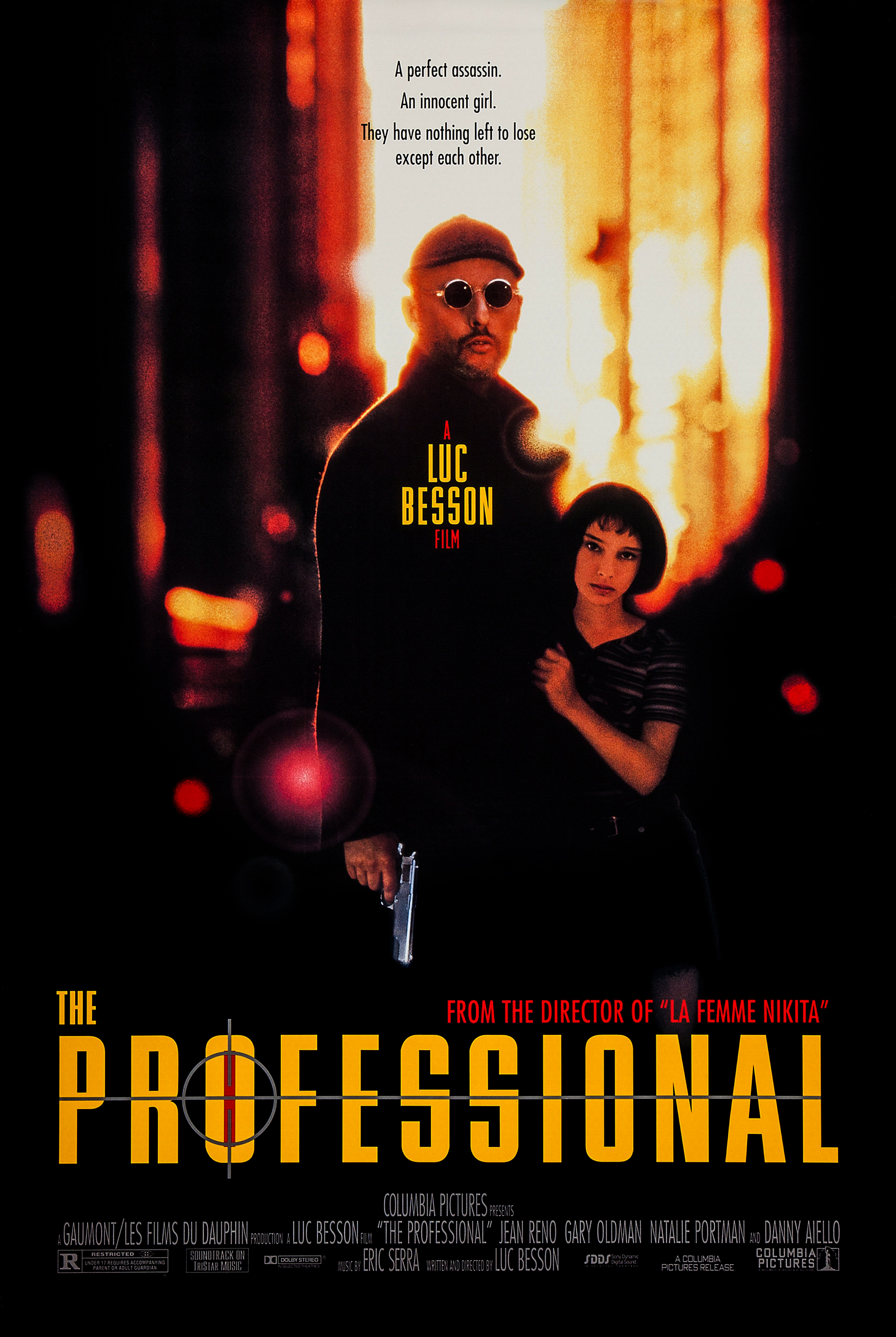
Directed by: Luc Besson || Produced by: Patrice Ledoux
Screenplay by: Luc Besson || Starring: Jean Reno, Gary Oldman, Natalie Portman, Danny Aiello, Michael Badalucco, Ellen Greene, Peter Appel
Music by: Éric Serra || Cinematography: Thierry Arbogast || Edited by: Sylvie Landra || Country: France || Language: English
Running Time: 110 minutes
For the longest time, I was under the false impression that notable genre films by prominent writer-director Luc Besson like Leon, The Fifth Element (1997), The Story of Joan of Arc (1999; an early Milla Jovovich vehicle!), Lucy (2014), and Valerian and the City of a Thousand Planets (2017; the most expensive European and independently produced film of all time) were either Hollywood or independent American productions. They were, in fact, English-language French productions, which I did not realize were much of “a thing” in popular culture until I noted the successful as well as infamous — amongst action fans, at least — Taken (2008, 2012, 2014) franchise. The latter series popularized the now much derided hyperactive editing and shaky cam cinematography of most hand-to-hand fight sequences in Hollywood throughout the late 2000s and 2010s despite Taken not being an American production, but rather another French studio export from writer-producer Besson.
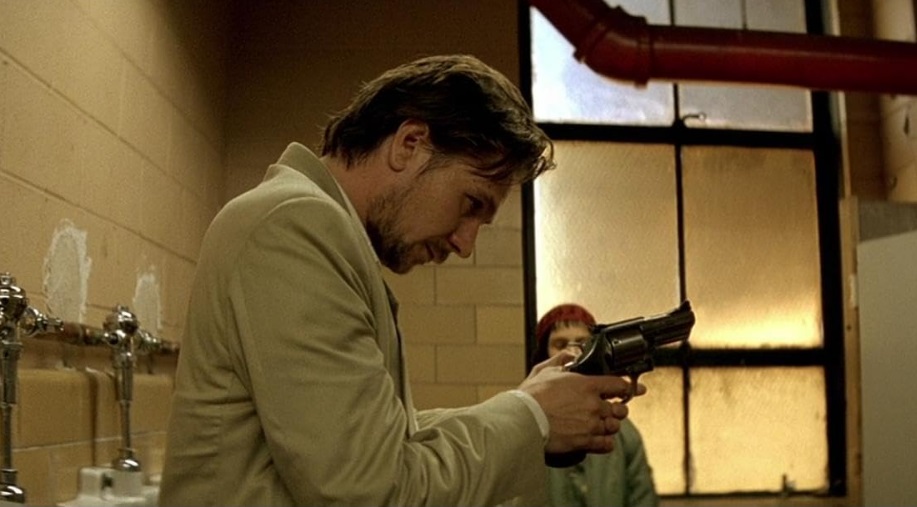
Main antagonist Gary Oldman inspects his oversize snubnose Smith & Wesson Model 629 while intimidating Natalie Portman.
Besson’s multicultural sensibilities appear to enable him to switch between his stylized native French-language productions (e.g. The Big Blue [1988], La Femme Nikita [1990], Angel-A [2005]) and the schlockier yet similarly entertaining aforementioned Hollywood-style pictures. This “most Hollywood of French filmmakers” is perhaps best known for his great acting direction, inconsistent screenwriting, and bloody as well as cartoonish action sequences (see also Louis Leterrier), all facets that are present in perhaps his most famous picture, The Professional, known outside of North American markets as Leon.
Starring Jean Reno as a developmentally disabled hitman and Italian immigrant based in New York City, and costarring a 12-13 year-old Natalie Portman in her film debut, The Professional mixes crime drama suspense, violent action set-pieces, and dramatic Oscar-bait monologues into a melodramatic whole that feels equal parts 1990s cheese and urban tragedy (see West Side Story [1961], Once Upon a Time in America [1984], etc.). Its action sequences feature neither elaborate choreography nor extensive stuntwork, but are notable for their mean spiritedness (even small children aren’t safe from harm), effective bloodwork (note how much better these practical blood squibs compare to contemporary digital ones), great editing (the shootouts aren’t as long as as John Woo’s but are meatier than Denis Villeneuve’s), and memorable pyrotechnics (the movie’s finale concludes with an emotional, well earned explosion).
With regards to general screenplay composition, The Professional exemplifies Besson’s career strengths and weaknesses given how it seesaws between dramatic sequences teeming with suspense (e.g. the introduction of Gary Oldman’s unforgettable villain and his sleazeball cronies) or tenderness (e.g. Portman hiding obvious evidence of father’s physical abuse from Reno) to corny, oddball scenes that don’t go anywhere (e.g. Reno demonstrating to Portman how to shoot a long-distance target). The film also takes a while to build momentum thanks to its longwinded prologue, but also feels as if it wraps the action too soon thanks to a series of abbreviated epilogues where Portman has to more or less pull a halfway “happing ending” like a rabbit out of a hat. In fact, The Professional is one of a select handful of movies — most of them from before the 2000s, as fate would have it — that I think could’ve benefited from a longer cut and a longer, more patient third act in particular.
What makes the movie work is the memorable, emotional core relationship between Reno and Portman. As creepy as the implications of their bond may be (Besson’s first wife, Maïwenn Le Besco, claimed the film drew inspirations from their relationship, which started when she was 15), you buy every sequence of their shared character development thanks to Portman’s blunt personality as well as Reno’s nuanced performance as a criminal on the spectrum.
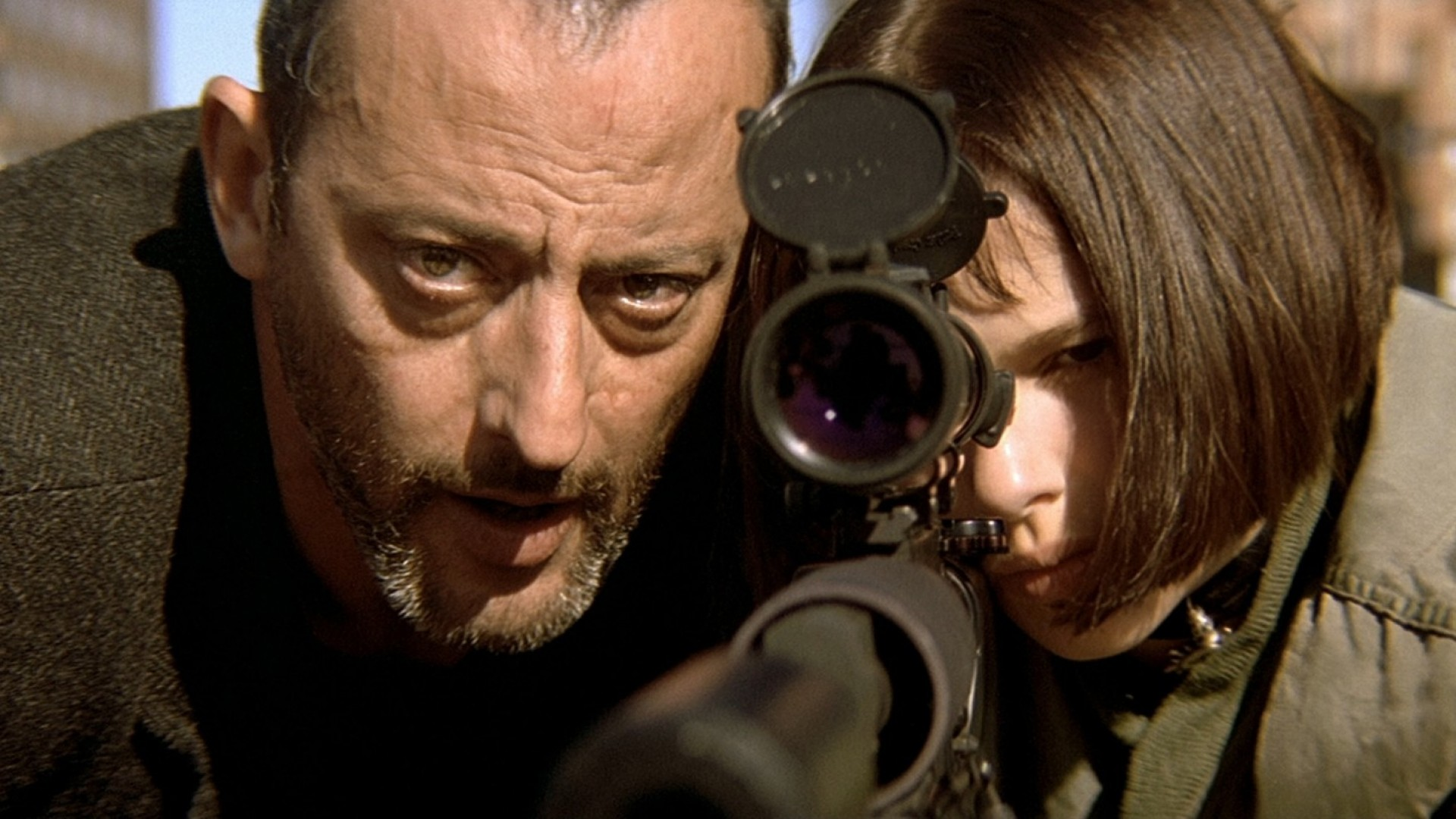
Jean Reno stars as the titular hitman and forerunner of the Transporter (2002), Equalizer, and John Wick (both 2014) protagonists of the 2000s-2010s.
My general take on Luc Besson’s career is that the man’s directorial consistency is on par with the venerated Texan genre filmmaker, Robert Rodriguez; their popular culture goodwill is based on 2-3 halfway decent (re: overblown) entertaining movies whose style help audiences forget the bulk of their filmographies’ underwhelming flops. Leon, The Professional compares well with Rodriguez’s Mexico Trilogy (1993, 1995, 2003), which put their respective auteur filmmakers on the map as the best executed case studies of their over-the-top styles. To say I think both filmmakers are overrated by genre enthusiasts would be an understatement, yet The Professional alone is one of the most successful English-language French movies ever made. It represents the pinnacle of an often seen yet underappreciated movement in the Anglophone world, as well as the career best performances of both Jean Reno and Natalie Portman.
—————————————————————————————————————————————————————————-
SUMMARY & RECOMMENDATION: One of the many cinematic interpretations of the Lone Wolf and Cub (1970-1976)-type narratives (see also Logan [2017], The Mandalorian [2019-2023]) produced over the decades, Luc Besson’s The Professional uses questionable real-life inspirations to color the emotional character development of his two co-leads. Their story works thanks to limited yet powerful sequences of violence, a relatable urban fairy tale setup, and a terrific villainous performance from Gary Oldman.
— However… the film starts and ends awkwardly, and several elongated sequences involving Natalie Portman’s “apprenticeship” could’ve been cut.
—> RECOMMENDED for a violent yet heartfelt good time.
? So, who’s going to “adopt” Portman at the end of the film? Her private school?

 Express Elevator to Hell
Discussion
Trackbacks/Pingbacks
Pingback: ‘The Shadow Strays’ (2024): Timo Tjahjanto Returns to Serious Bloodshed | Express Elevator to Hell - November 30, 2024