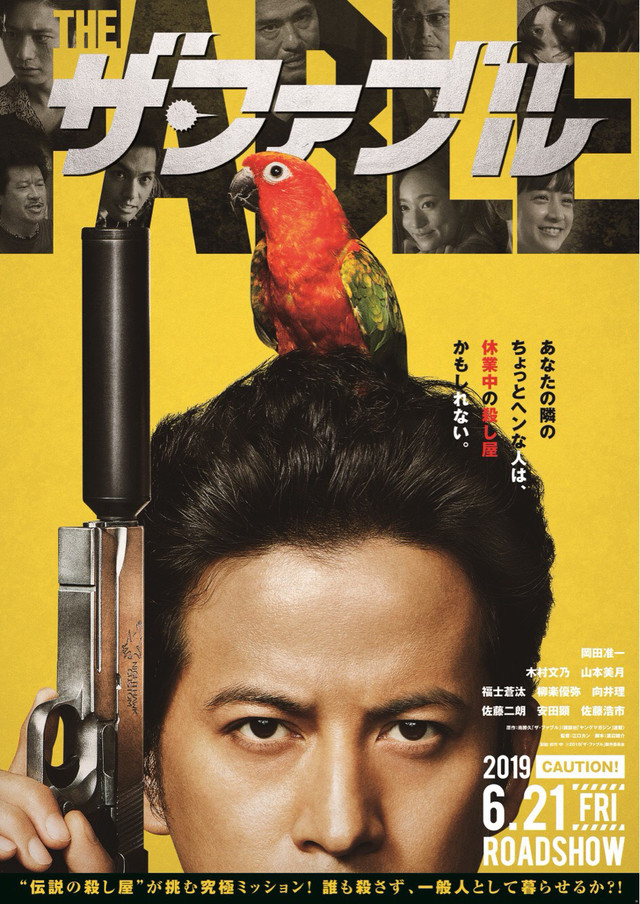
Directed by: Kan Eguchi || Produced by: Naoto Fujimura, Takeshi Udaka, Mitsuru Sato
Screenplay by: Yûsuke Watanabe [1], Kan Eguchi, Masahiro Yamaura [2] || Starring: Jun’ichi Okada, Fumino Kimura, Mizuki Yamamoto [1, 2], Sôta Fukushi, Yûya Yagira, Kôichi Satô [1], Yurina Hirate, Masanobu Andô, Shin’ichi Tsutsumi [2]
Music by: Antongiulio Frulio || Cinematography: Kazunari Tanaka [1], Kôji Naoi [2] || Edited by: Tsuyoshi Wada [1], Naomi Itakura
Takeshi Wada [2] || Country: Japan || Language: Japanese
Running Time: 123 minutes [1], 133 minutes [2] || 1 = Fable, 2 = Fable 2
Whenever I approach modern Japanese filmmaking, I must — or at least feel that I have to — preface my reviews of live-action films with an explanation as to why I am not, instead, reviewing an animated one. The vast, vast majority of Japan’s highest grossing movies are animated (also known as anime, or the specific Japanese style of traditional hand-drawn or computer generated animation), and together with manga comics, are the major cultural exports of the island nation. Unfortunately for me, I care as much about the latest popular anime feature as I do the latest trending K-pop artist, as they’re both growing but still niche interests here in the parts of the United States I’ve lived.
Live-action Japanese action movies are an overlooked subgroup of Japanese filmmaking in the contemporary (2000s-2020s) era, I argue, as they often take advantage of creative stunts, complex yet not showy choreography, and modern filmmaking technology (e.g. effective computer generated imagery, lightweight handheld camerawork, etc.). Bucket List of the Dead (2023), I Am a Hero (2015), and Rurouni Kenshin (2012-2021), among others, utilize diverse action set-pieces ranging from vehicle chases to hand-to-hand melee combat to bombastic gunplay. Some, like Alice in Borderland (2020, 2022), are action showcases comparable to Extraction (2020, 2023), the better Daniel Craig-era Bond films (2006–2021), the Indonesia pencak silat films of the 2010s (e.g. The Raid [2011], The Night Comes for Us [2018]), John Wick (2014–2023), or acclaimed Korean New Wave action movies (e.g. The Man from Nowhere [2010], The Witch [2018]).
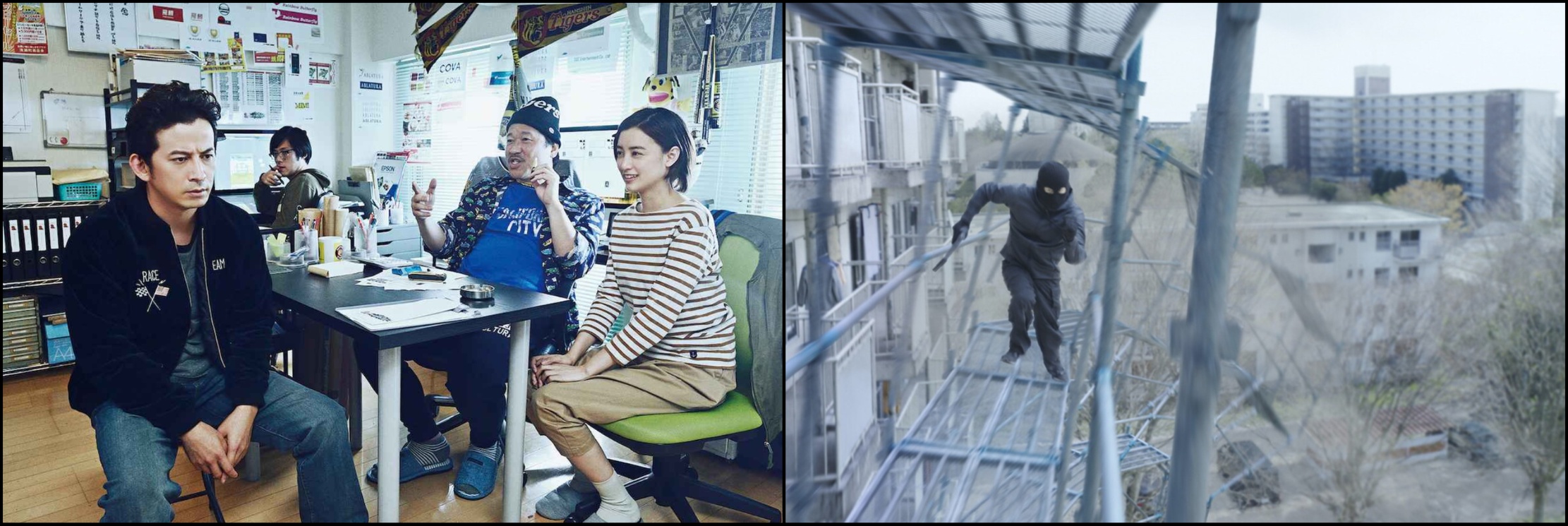
The 2021 Fable sequel struggles to make use of its modest supporting cast (left), but still packs a punch in its two — yes, just two! — memorable action set-pieces (right).
Somewhat recent live-action Japanese gangster/hitman/shoot-’em-up flicks that flaunt action sequences on par with many of the aforementioned are Kan Eguchi’s Fable movies. Released in 2019 as an adaptation of the long-running manga series of the same name, the primary gimmick of the first live-action Fable adaptation is how its titular hitman protagonist (“Fable” is lead Jun’ichi Okada’s underworld codename) is ordered to “retire” in an unorthodox way: His yakuza boss, handler, and surrogate father-figure (Kôichi Satô) commands Okada to lay low after assassinating an entire group of rival mafiosos in a bonkers introductory action sequence, posing as a civilian for at least a year. Unbeknownst to Okada’s borderline autistic assassin, the true goal of his undercover operation is to socially condition him to permanent nonviolent civilian life, as Satô forbids him from killing anyone during this open-ended assignment. Limited yet well placed flashback sequences flesh out this understated but sweet mentor-mentee/father-son relationship, adding nuance to Okada’s character arc while lending an emotional heart to the story.
Other parts of the story are not as strong, like the forgettable personalities of the villainy in the 2019 film (we’ll touch on the sequel in a moment) and one of my biggest ongoing pet-peeves as cinephile, unnecessary supporting characters (e.g. Fumino Kimura as Okada’s quirky “best friend”). Outside the memorable premise and the character development of Okada, the screenplay doesn’t have much to offer.
With regards to action filmmaking, however, the direction of Eguchi and the photography of Kazunari Tanaka have so much to offer. We don’t get much vehicular action until the sequel, but the 2019 movie features a plethora of acrobatic close-quarters combat and fun shootouts that feel equal parts The Matrix (1999) and The Killer (1989). The movie’s numerous attempts at comedy also work best in these set-pieces, where the physical performance of Okada shines throughout multiple goofy stunts and his character’s commitment to nonlethal submission of his opponents.
The 2021 sequel, subtitled unnecessarily as The Killer Who Doesn’t Kill in English, is a dour, morbid, and needless coda to the 2019 original a la Deadpool 2 (2018) compared to Deadpool (2016). I’ll go a step further, in fact, and liken it to the killjoy sequels of Alien 3 (1992), 28 Weeks Later (2007), and Elite Squad 2 (2010), which either lessened the most effective, personable elements of their predecessors or just ignored them altogether.
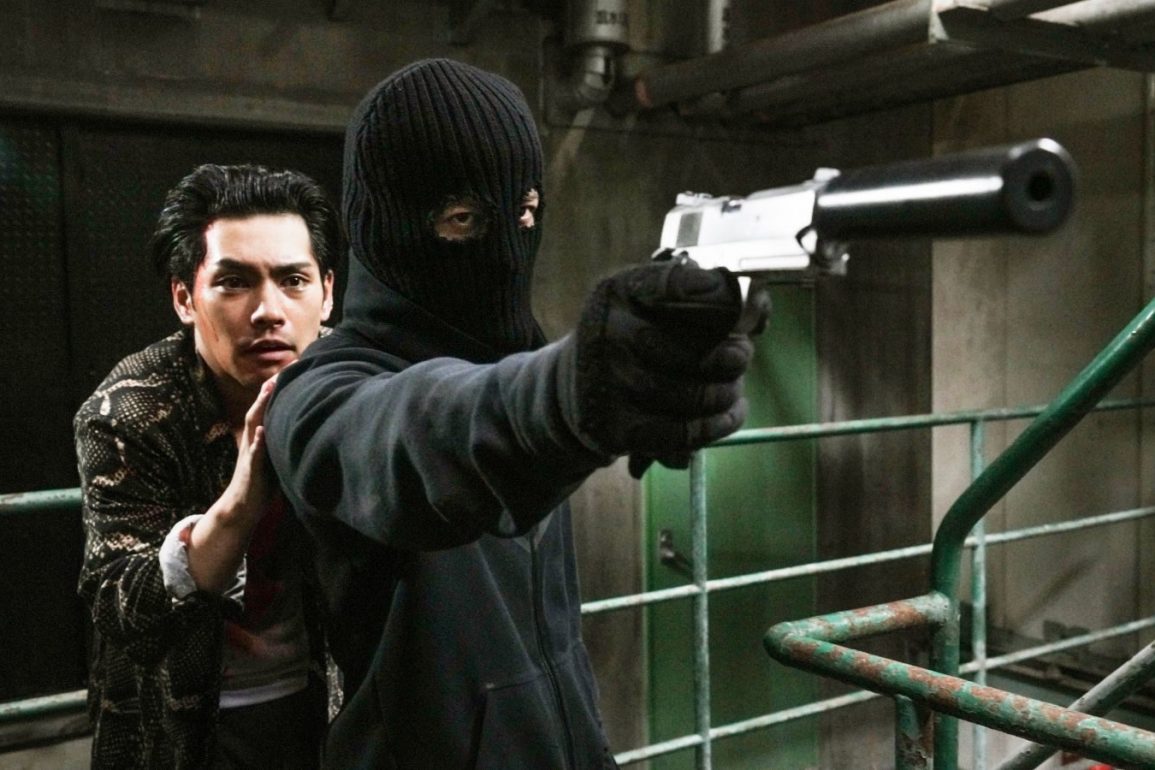
The 2019 original feature adaptation ends with a banger of a climax, taking place inside a decommissioned power plant and using over a dozen stuntmen.
Aside from an impressive opening set-piece that recalls the strong start of Fable, Fable 2 wallows in mundane dramatic comedy that doesn’t translate across cultures thanks to its dependence on dialogue, while the crux of its narrative — Okada runs into a civilian bystander (Yurina Hirate) who was handicapped by one of his hitjobs years ago, prompting guilty self-reflection in our protagonist — is anemic. Combine all the aforementioned with an overly long runtime (133 minutes) and antagonists even more forgettable than those in the 2019 film, and Fable 2 becomes yet another example of the “more is less” underwhelming sequel.
My recent string of live-action Japanese genre films has been interesting, particularly for the action fan in me. Most every 2000s-2020s Japanese action film I’ve watched in the post-COVID era has entertained me with their cinematic violence even if their screenplays leave much to be desired (e.g. Hell Dogs [2022], Samurai Marathon [2019], Versus [2000]), and the same dynamic goes for these Fable movies. Even in the unnecessary, lackluster 2021 sequel, I did not feel like I wasted my time even though I would not recommend the film to others, while the 2019 original is a strong genre film that takes advantage of its protagonist’s atypical personality.
——————————————————————————————————————————————————————————
SUMMARY & RECOMMENDATION: Powered by stellar, inventive action sequences and modern cinematographic techniques, both Fable movies live up to their action filmmaking hype when the bullets fly and the fists connect, though the 2019 original has plenty of narrative heft, including nontraditional character development for an action hero, to support its story throughout its quieter moments.
— However… even the original struggles with common screenwriting missteps like a forgettable supporting cast, but that’s just the beginning of the sequel’s problems. The 2021 follow-up doesn’t justify its existence with weak character motivation for lead Jun’ichi Okada, an overextended story, and a bizarre, dour conclusion.
—> The first Fable comes RECOMMENDED, though its sequel is NOT RECOMMENDED.
? Notice how, with facial hair, Jun’ichi Okada looks 50-some years old in Hell Dogs, while without facial hair, here he looks no older than 35.

 Express Elevator to Hell
Discussion
Trackbacks/Pingbacks
Pingback: Current Cinematic Comfort Food | Express Elevator to Hell - March 14, 2025