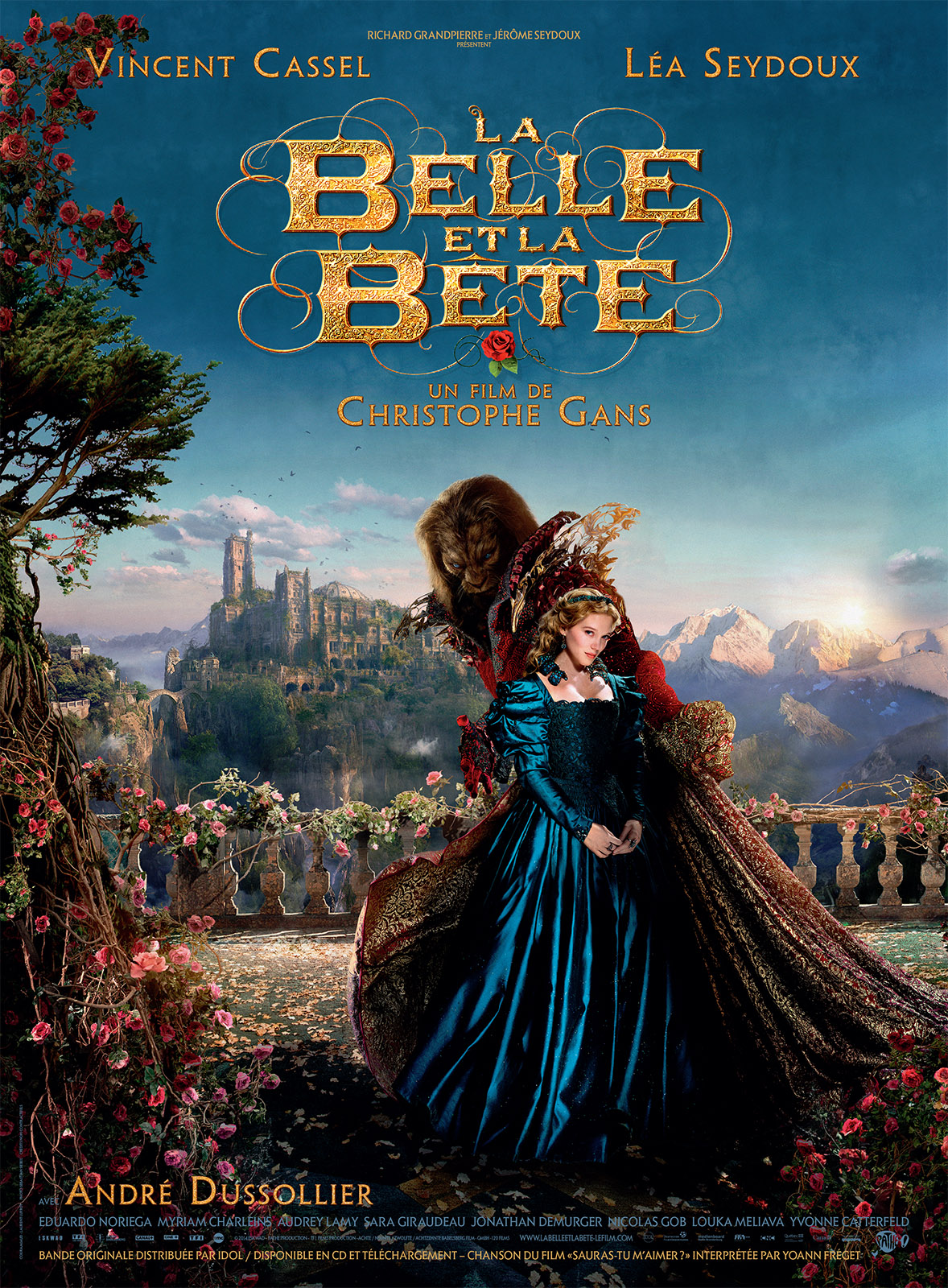
Directed by: Christophe Gans || Produced by: Richard Grandpierre
Screenplay by: Christophe Gans, Sandra Vo-Anh || Starring: Vincent Cassel, Léa Seydoux, André Dussollier, Eduardo Noriega, Audrey Lamy
Music by: Pierre Adenot || Cinematography: Christophe Beaucarne || Edited by: || Country: France, Germany || Language: French
Running Time: 112 minutes
Much like The Three Musketeers (1844) by Alexandre Dumas, Beauty and the Beast (1740) by Gabrielle-Suzanne Barbot de Villeneuve is a classical, ubiquitous adventure tale whose French origins I often forget. Perhaps the expansive big-budget reach of Walt Disney, at least in the case of the latter, explains the ubiquity of the English-language animated musical in much of the Anglophone world if not Western cinema in general; Jean Cocteau’s 1946 black-and-white film adaptation, on the other hand, the first cinematic take on the property to my knowledge, is also well regarded and considered a hallmark of French filmmaking to this day.
In recent years, much has been made Stateside of the 2017 live-action redux of the 1991 Disney animated film that either reinvigorated or outright plagiarized its secondary musical source material, depending on your view. As others on the blogosphere have noted, however, the 2017 blockbuster was not the only live-action adaptation of the property in the modern era, as Christophe Gans’ 2014 French production preceded the Disney remake by several years. The latter did not make much of an international impact by comparison (it grossed ~$47 million on a €35 million budget), as I never heard of the movie until a few months ago while exploring the filmography of its cowriter-director.
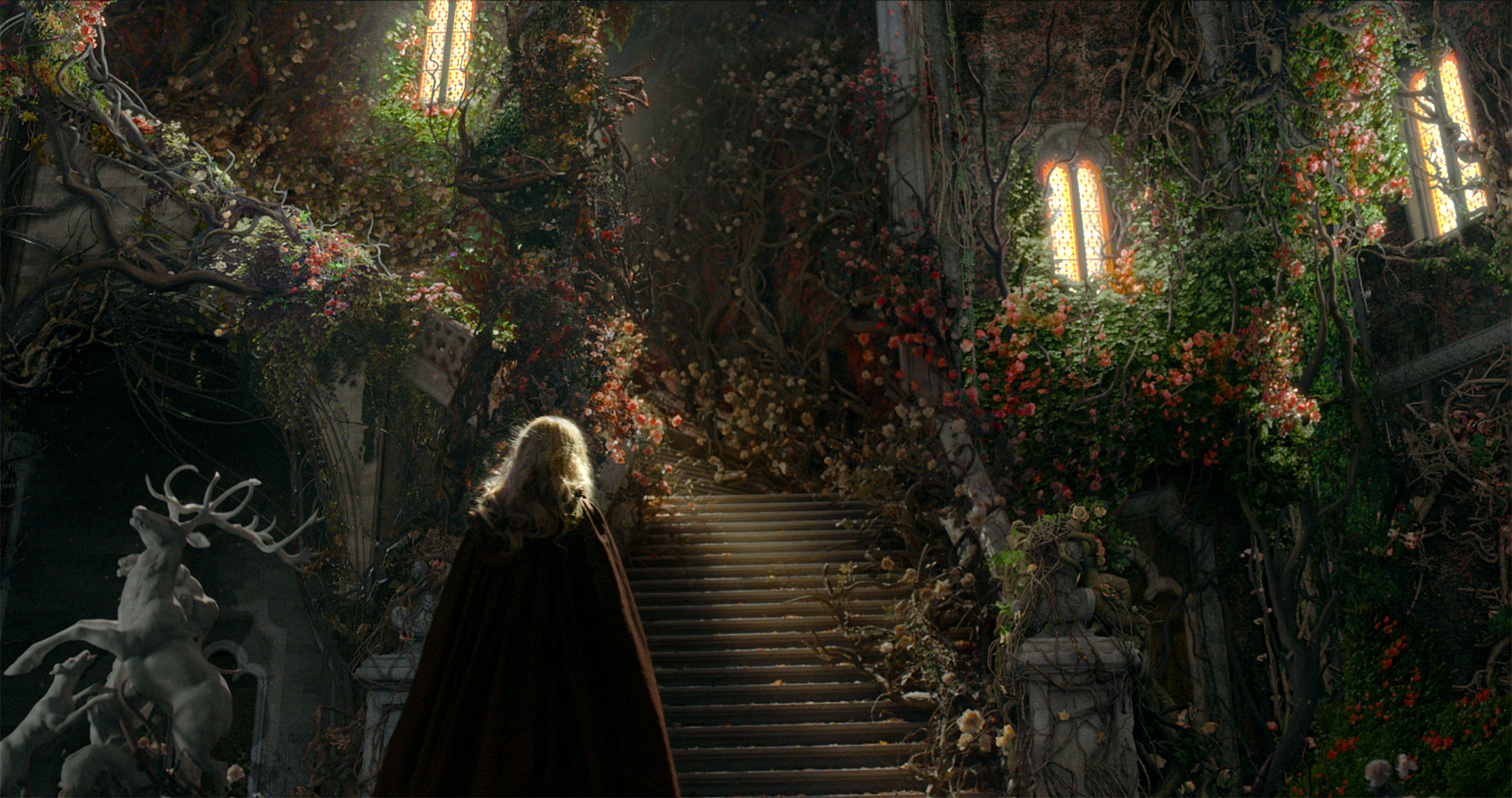
Our eponymous beauty, Léa Seydoux, explores a mysterious baroque palace overtaken by fantastical vegetation in the first act.
Gans isn’t the most prolific filmmaker, having directed only three movies since his directorial debut in 1995. My first exposure to his work, the quasi-historical fiction/swashbuckling adventure movie that was Brotherhood of the Wolf (2001), turned out to be a good summary of his identifiable auteur style, or rather his disposition toward minimalist fantasy (also known as “low fantasy”) aesthetics. These preferences for relatable yet striking fantasy realms that intrude upon our own make Gans a natural fit for movies like Silent Hill (2006; my favorite work of his thus far) and the 2014 Beauty and the Beast. His primary struggles as a filmmaker, however, are that his films are only as strong as the screenplays he directs; and like many well known filmmakers (J. J. Abrams comes to mind), he is not nearly as effective a screenwriter as he is a director.
Examining Beast (2014) while ignoring the expectations of a Hollywood animated musical, Gans’ command of visual diegetic storytelling and narrative mood are evident from the plethora of beautiful practical sets, artful computer generated background enhancements, and overall distinct art-design of the picture. Our primary setting, the iconic castle of the titular beast (Vincent Cassel), looks great and has ambiance for days, lending more character to the story than either of our two leads. The digital FX on Cassel’s monstrous figure aren’t seamless but do the job, and in my assessment feel better realized than the inconsistent facial expressions of the 2017 Disney version. Capturing all the above is venerable director of photography Christophe Beaucarne, a man talented enough to make the slapdash Outside the Law (2010) one of the better-looking bad movies I’ve ever seen. His use of lighting, reflections, and weather FX to shroud characters in mystery accentuate the ominous, almost Guillermo del Toro-esque tone (see also Hellboy [2004], Pan’s Labyrinth [2006], Crimson Peak [2015], etc.) established by the low fantasy diegesis.
Aside from the production values, general artistic design, and impressive cinematography, Beast paces itself well over a reasonable 112-minute running time. I’ve stated before and I’ll state again, I cannot stand the modern trend toward 2.25-2.5 hour-long films in mainstream Hollywood, to say nothing of the 2.5-3 hour-long popular films in Indian cinema.
What will undo this incarnation of Beauty and the Beast for most people, I suspect, is what I previewed above: The characters, their development, and the titular central romance. While Cassel is alright as the tortured anthropogenic monster, Léa Seydoux gives perhaps her worst performance in a mainstream movie that I’ve seen. Their chemistry is furthermore a flatline, with little emotional development for Cassel; and the rest of the cast give similarly bland performances as similarly forgettable characters.
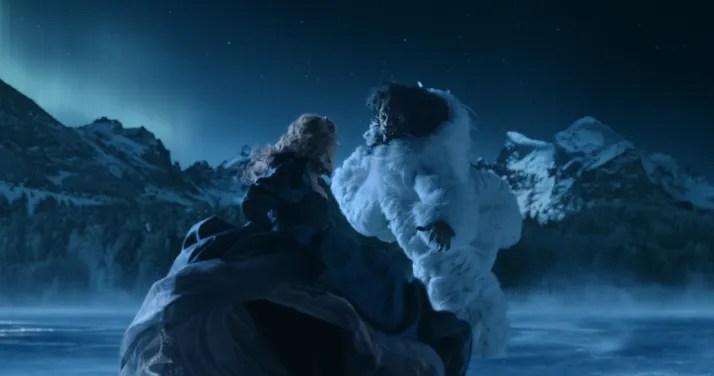
A tale as old as time… oh wait, this movie isn’t a musical!
That last paragraph is the death knell of most conventional FX-driven crowdpleasers, unless of course they boast unforgettable special FX and/or feature tremendous set-pieces (e.g. Titanic [1997], Avatar [2009, 2022]). Though this 2014 Beauty and the Beast has greater artistry than its forgotten status might indicate, it is the least of the three Christophe Gans films I have seen and isn’t easily recommendable even to those tired of Walt Disney’s recent mining of the source material. Gans’ directorial style is memorable and his filmography is more entertaining than most genre directors whose works are distributed by major Hollywood studios or Netflix today, but that is not enough to overcome Beauty and the Beast’s weak romantic heart for what is, at the end of the day, a romantic drama.
——————————————————————————————————————————————————————————-
SUMMARY & RECOMMENDATION: This contemporary French live-action take on the Beauty and the Beast fable is a breath of fresh air from a special FX, cinematographic, art-design, and narrative pacing perspective. It is hard to overstate how refreshing it feels to watch a fantasy-adventure film where the visual FX are designed to enhance tone, mood, and tension rather than act as the stars of the show.
— However… the film’s sensible artistic design is incapable of developing the script’s major characters, with our central romance a nonstarter and venerable leads Vincent Cassel and Léa Seydoux showing anemic chemistry.
—> ON THE FENCE; Christophe Gans’ adaptation is worth a watch for diehard fans of classical fairy tales, but the execution here isn’t consistent enough to recommend to general audiences.
? When is a Beauty and the Beast adaptation going to analyze the Stockholm Syndrome implications of this premise?

 Express Elevator to Hell
Discussion
No comments yet.