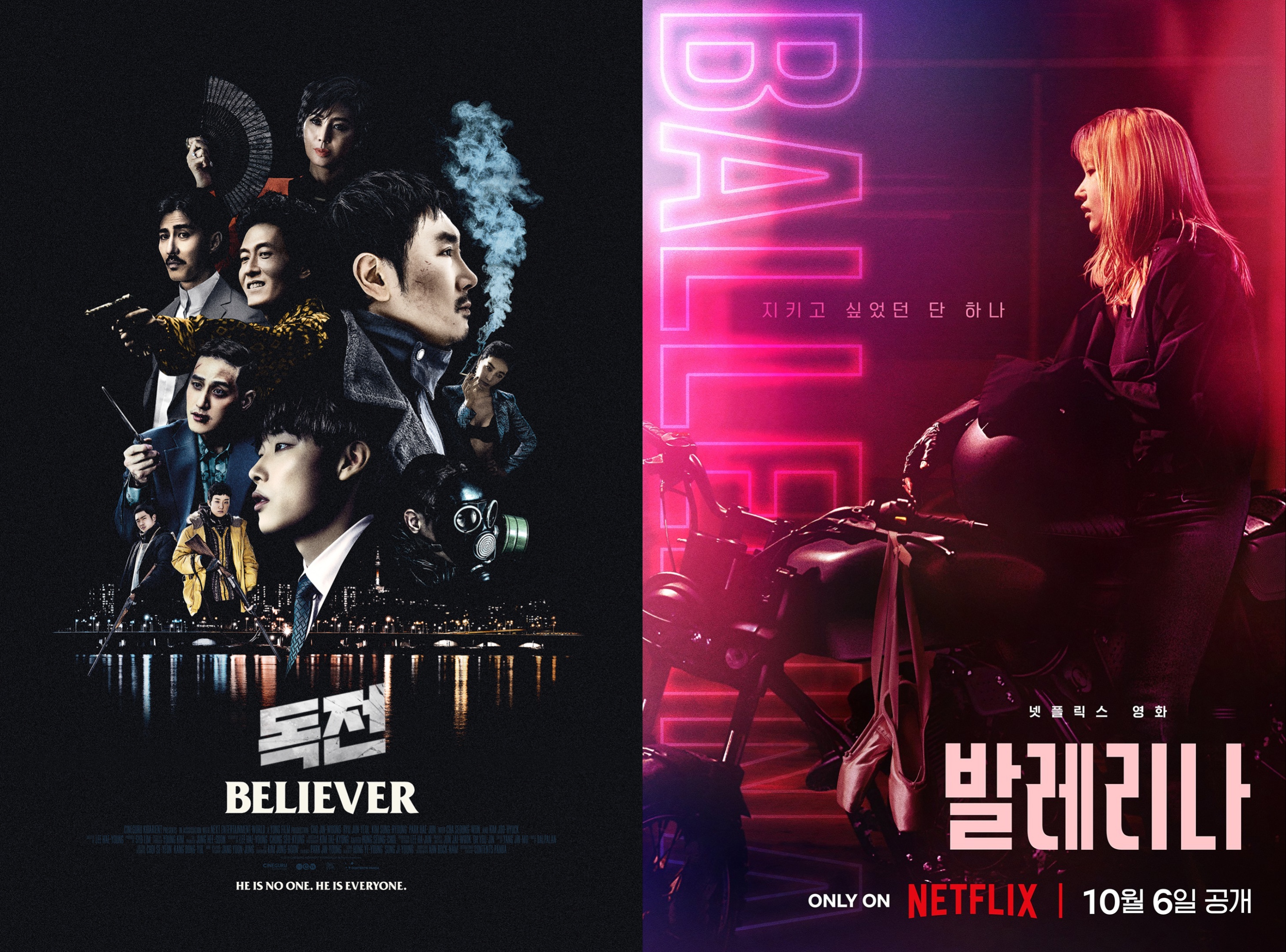
Directed by: Lee Hae-young [1], Lee Chung-hyun [2] || Produced by: Jung Hee-soon [1], Choi Ji-young [2]
Screenplay by: Jeong Seo-kyeong, Lee Hae-young [1], Lee Chung-hyun [2] || Starring: Cho Jin-woong, Ryu Jun-yeol, Kim Sung-ryung, Park Hae-joon, Cha Seung-won, Kim Joo-hyuk [1], Jeon Jong-seo, Kim Ji-hoon, Park Yu-rim [2]
Music by: Dalpalan [1], Gray [2] || Cinematography: Kim Tae-kyung [1], Jo Young-jik [2] || Edited by: Yang Jin-mo [1], Cho Han-wool [2] || Country: South Korea || Language: Korean
Running Time: 123 minutes [1], 93 minutes [2] || 1 = Believer, 2 = Ballerina
The more Korean media I’m exposed to, the more I realize I prefer the concise, self-contained format of Korean feature-films. Other prominent media of the modern Korean Wave (~2000s-2020s) such as K-pop music and K-dramas (e.g. Joseon period series, Sweet Home [2020, 2023, 2024], Killer Paradox [2024], etc.) I’ve found somewhat entertaining but comparable to the often mediocre, inconsistent quality of generic popular music and long-format television (streaming) shows from other cultures. Since I focus on feature filmmaking on this site, the unpredictable, bonkers narrative style and ballsy directorial execution of the better post-new millennium Korean features stand apart relative to other regional cinematic industries.
To be more specific, Korean feature-films are often at their best when they’re either crime dramas or revenge-driven action flicks or a combination of the two. Because of the inherent cinematic merit of these genres — the suspense of potential violence, the visual storytelling and movement of actual violence, the drama that precedes both, etc. — Korean filmmakers with a decent budget and enough creative freedom have produced some of this century’s finest hard-boiled classics (e.g. The Chaser [2008], Mother [2009], I Saw the Devil, The Man from Nowhere [both 2010], The Witch [2018], The Call [2020]).
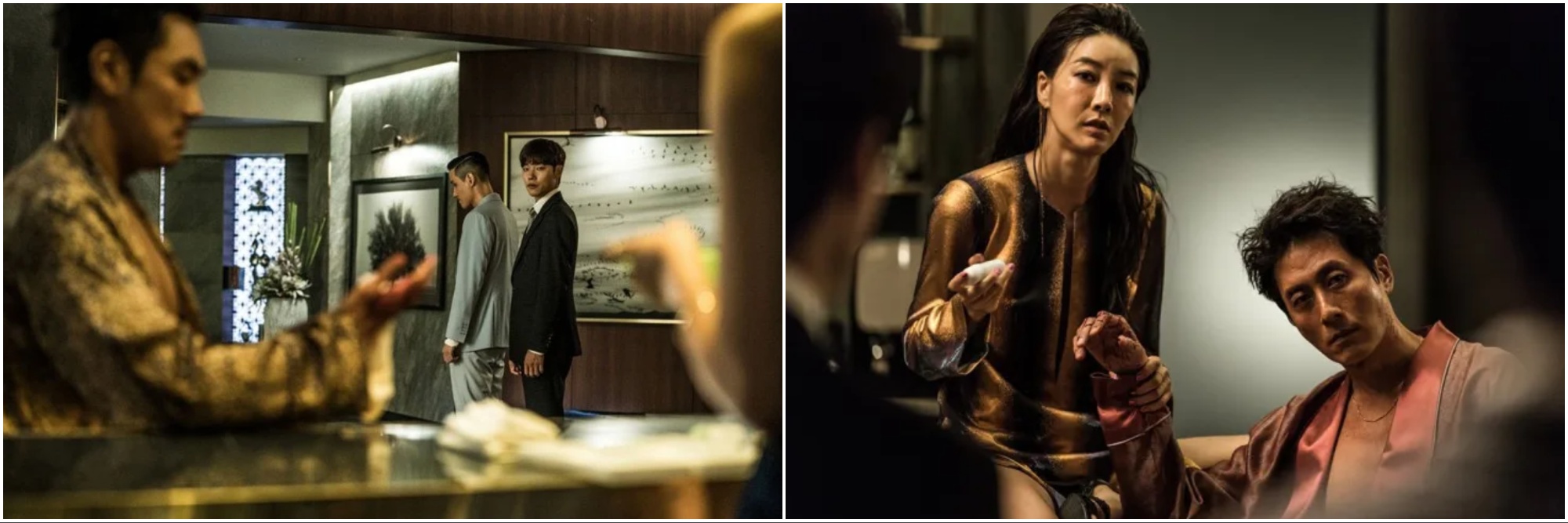
In Believer, most of the weaker parts of the script are those that closely echo Drug War, such as when Ryu Jun-yeol and Cho Jin-Woong (left) perform as undercover versions of certain drug dealers they met earlier (right) to fool other drug dealers.
Two somewhat recent Korean crime dramas that incorporate revenge-driven action storytelling are Lee Hae-young’s Believer and Lee Chung-hyun’s Ballerina. The former is a loose remake of Johnnie To’s Drug War (2012), one of the best mainland Chinese pictures released this past decade, while the latter is a slim (93-minute) Netflix Original that boils the DNA of John Wick (2014) and Kill Bill (2003-2004) to their bare essentials.
Perhaps unsurprisingly, the best parts of Believer are its narrative components that have the least to do with its Chinese source material and its weakest moments are when it recreates certain key sequences from Drug War almost beat for beat. Believer maintains the overarching plot of a treacherous, unpredictable confidential informant (Ryu Jun-yeol) recruited by a narcotics detective (Cho Jin-woong) to take down a powerful drug syndicate; but frames the action as a function of the personal agenda of the lead officer. This more conventional, character-driven approach to the material isn’t as effective as To’s impersonal, almost detached directorial style, which spreads the narrative focus to almost the entire ensemble cast of Drug War and features superior action sequences. Believer also suffers by comparison due to its less interesting protagonist and antagonist performances (compare Ryu and Cho’s chemistry in Believer to Louis Koo and Sun Honglei’s playful love-hate relationship in War), despite how much more Cho’s arc drives the story compared to Sun’s reactionary decisions toward the sociopathic Koo.
These unflattering comparisons aside, Believer’s action sequences are still varied and unpredictable even if you have seen Drug War’s vehicular mayhem. Moreover, the pace of Believer accelerates throughout the second and third acts despite a shaky beginning, and the reveal of Ryu’s ultimate identity has emotional payoff.
Much brisker than Believer’s 123-minute running time yet sporting far more stylized cinematography, Ballerina runs the gamut of screenplay tropes related to angsty, grief-ridden heroes who seek to punish their respective film’s villains for various social transgressions. Writer-director Lee Chung-hyun combines the aforementioned ingredients with the equally common “girls-with-guns” setup (see also: Ghost in the Shell [1995], Atomic Blonde [2017], Furies [2022]), but thankfully the feminine personality of our heroine (Jeon Jong-seo) comes into play at several points of the film.

Top: Jeon Jong-seo uses guns, knives, fists, and makeshift cloths to subdue multiple assailants in a drug lab in Ballerina’s action-packed finale. Bottom: The backstory portions of Jeon (right) and Park Yu-rim (left) aren’t the most interesting, but they’re visually well composed, efficient, and provide enough motivation for Jeon to drive the story.
Jeon’s relationship with principal victim Park Yu-rim isn’t the most interesting backstory in the world, but it functions well enough for the former’s vengeful tirade to work. This successful adventure is overall a function of (a) great pacing across a trim, taught runtime, (b) diverse, impactful action sequences powered by dynamic camerawork, and (c) some fun despicable villainy courtesy of antagonist Kim Ji-hoon. I could also toss in director of photography Jo Young-jik’s beautiful lighting and color-grading given the movie’s memorable neo-noir aesthetic, not to mention Gray’s (Lee Seong-hwa) bouncing hip hop soundtrack.
What I won’t compliment, however, is the movie’s complete waste of a guest appearance by notable character actor Kim Mu-yeol, not to mention Jeon’s apparent refusal to bulk up at all for her VIP bodyguard role. I don’t need my action heroes/heroines to be the size of Danny Glover or Arnold Schwarzenegger in their prime, but I do not understand why numerous Korean actresses (see My Name [2021], Kill Boksoon [2023]) learn extensive fight choreography without putting on significant muscle mass.
While I am somewhat disappointed that the modern Korean Wave feels rather quaint outside the nation’s feature-film industry, a thriving theatrical cinematic ecosystem is still an embarrassment of riches. For a fan of crime dramas and grounded, violent action movies like I me, the situation is particularly rewarding when so-so remakes of modern classics are as entertaining as Believer and a “generic” revenge-fueled actioner like Ballerina has this much spunk over 90-some minutes.
———————————————————————–
SUMMARY & RECOMMENDATION: When Korean movies start to consistently underwhelm, I’ll stop raving about their entertainment value. Until then, Believer is a memorable, if inferior take on Drug War thanks to its quality action scenes and potent chemistry between its two stars. Ballerina, on the other hand, is the fun-size version of Kill Bill, clocking at 93-minutes instead of four hours and starring the 5’6″ (168 cm) Jeon Jong-seo instead of the 5’11” (180 cm) Uma Thurman.
— However… Believer takes its time to build narrative momentum but transitions away from its Johnnie To-source material enough that cowriter-director Lee Hae-young probably could’ve written the movie as an original script. Jeon Jong-seo has no excuse not to bulk up for Ballerina when actresses like Natalie Portman and Gal Gadot transform themselves for their superhero roles; I also don’t understand why you cast someone like Kim Mu-yeol only to kill him off as a bad joke.
—> I’m ON THE FENCE with respect to Believer and Ballerina comes RECOMMENDED.
? Why couldn’t the filmmakers think of a way for Jeon to use that flamethrower in the final action scene?

 Express Elevator to Hell
Discussion
Trackbacks/Pingbacks
Pingback: ‘The Shadow Strays’ (2024): Timo Tjahjanto Returns to Serious Bloodshed | Express Elevator to Hell - November 30, 2024
Pingback: ‘Kingdom’ & ‘Ashin of the North’ (2019-2021): Unique Genre-Blending Joseon Drama | Express Elevator to Hell - May 25, 2025